Answering 24/7 across LA and Orange County
Pest control in Los Angeles that works the night shift too
Roaches, rats and bed bugs do their worst after dark, so waiting for business hours just gives them a head start. Call when you actually see the problem. We inspect, treat and follow up on ants, roaches, rodents, termites, bed bugs, stinging insects and wildlife at homes and businesses across the LA Basin and north Orange County.
- Phones answered day and night
- Same-day treatments for active problems
- Offices in Los Angeles and Huntington Beach
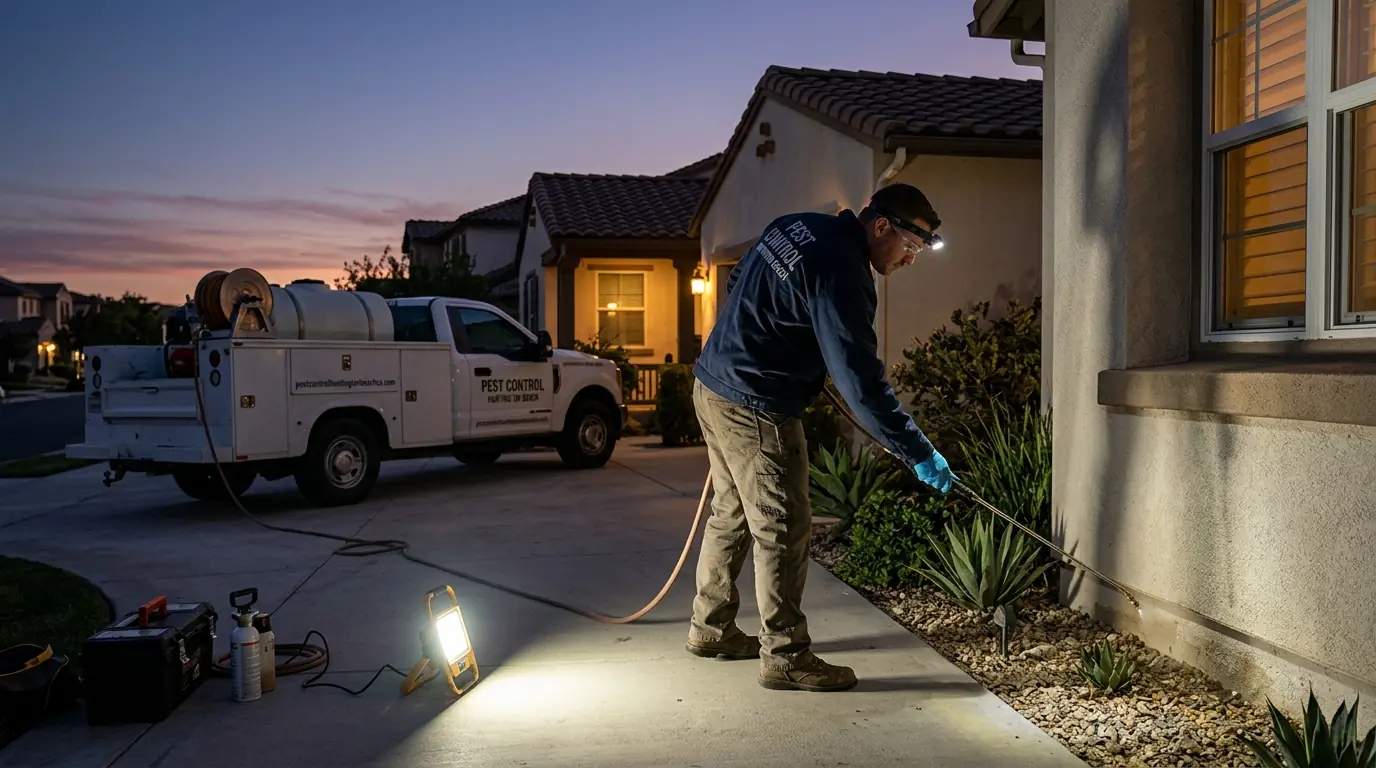
If ants are trailing through the kitchen, roaches are showing up after dark, or something is scratching in the attic, call (323) 329-3792 any hour. A technician inspects, identifies the pest, treats it with the right product for that species, and schedules follow-up until activity stops. We cover Los Angeles County and Orange County from offices in Los Angeles and Huntington Beach, with same-day visits for active infestations.
Every treatment we run
Forty-six treatments, eight kinds of problem
Each page below explains what the job involves, what it tends to cost in this market, and when a one-time visit is enough versus when it is not. Ant work leans on non-repellent products like Termidor and gel baits like Advion so colonies collapse instead of scattering.
Service plans & coverage
7 treatmentsAnts & roaches
5 treatmentsRodents
5 treatmentsTermites
7 treatmentsBed bugs & fleas
4 treatmentsHousehold insects
6 treatmentsWildlife & birds
8 treatmentsWorth a call if you see these
Six signs a problem is already established
Ant trails that come back after cleaning
Wiping the counter kills the workers you see, not the colony. Argentine ants run supercolonies here, so trails reappear within days until the nest itself is baited.
Roaches in the kitchen when the light flips on
Seeing one or two at night usually means dozens behind the fridge and stove. German roaches breed fast enough that a week of waiting changes the size of the job.
Scratching overhead after sunset
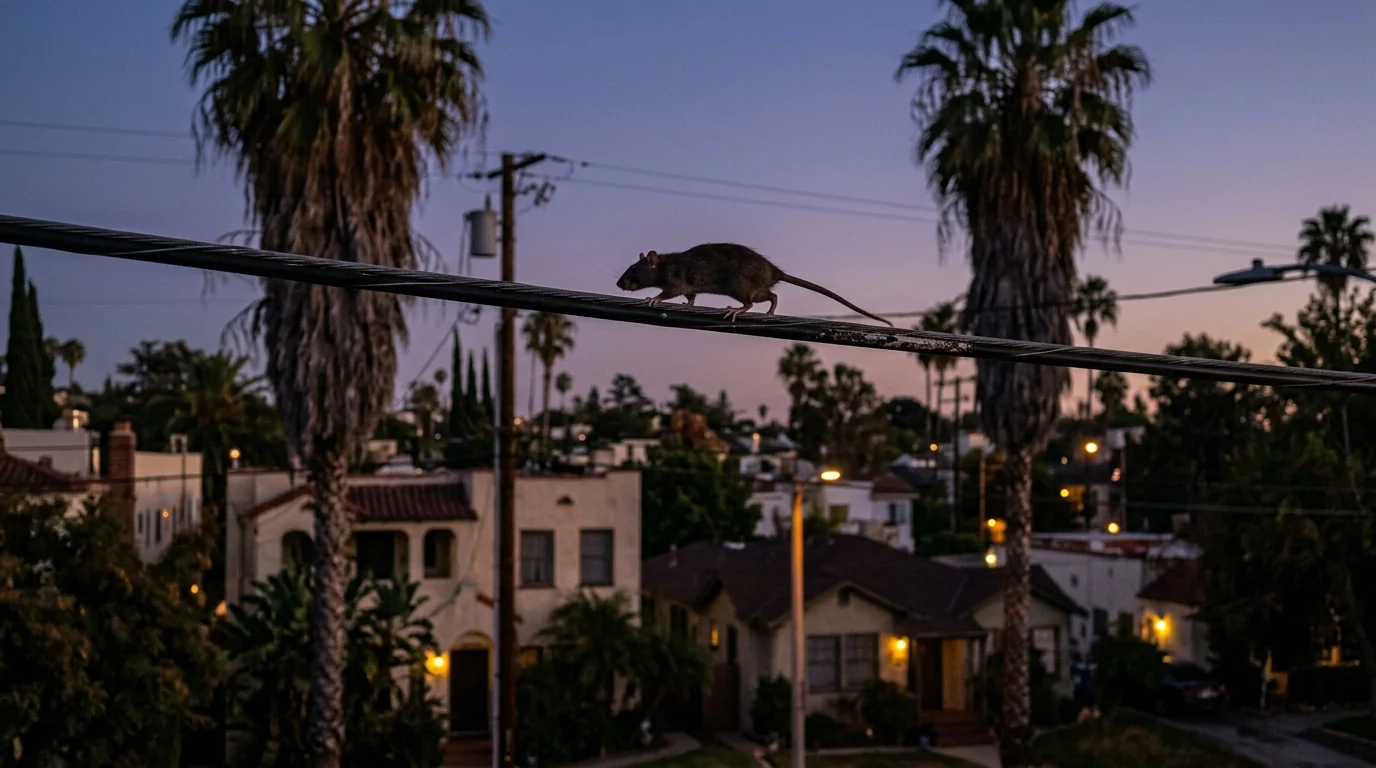
Roof rats enter along utility lines and fence tops, then nest in attic insulation. Noise at night in the ceiling is the classic first sign, droppings in the garage the second.
Piles of tiny pellets under window sills
Drywood termite droppings look like coarse sand or coffee grounds and collect below kick-out holes. Finding them means a colony is already feeding in the wood above.
Mud tubes climbing the foundation
Pencil-width earthen tubes on a stem wall or in the crawl space are subterranean termites commuting between soil and framing. Breaking the tube does not stop the colony.
Itchy bites in a line after sleeping
Rows of bites on arms or shoulders, small blood spots on sheets, and dark specks along mattress seams point to bed bugs. They spread between rooms faster than people expect.
Why LA pest pressure is different
This region never gets a hard freeze, so pests never get a season off
Three invasive Aedes mosquito species are now established in Los Angeles County, and unlike the native species they bite aggressively in daytime and breed in a teaspoon of standing water. County vector control districts run surveillance and treat public spaces, but with roughly 140 field staff covering about 8.1 million residents, private yards are largely on the homeowner, which is why Huntington Beach Pest Control runs mosquito, rodent and ant routes year round instead of seasonally.
The housing stock adds its own load. Older framing across the LA and Long Beach belt carries the highest drywood termite prevalence in the continental US, and many homes face subterranean termites at the foundation at the same time, so one house can genuinely need two different treatment systems. On the rodent side, California's AB 1788 restricts the strongest rodenticides, so lasting rat work here is built on trapping, sealing entry points and monitoring rather than bait alone.
How a job actually runs
Five steps from first call to a quiet house
Call, any hour
Describe what you are seeing. We can usually tell you over the phone whether it sounds like ants, roaches, rodents or termites and what the visit will involve.
Inspection
The technician traces the activity to its source: nest sites, entry points, moisture, and the conditions feeding the problem.
Identification
Species decides treatment. An Argentine ant trail, a carpenter ant satellite nest and a drywood termite colony each get a different product and placement.
Targeted treatment
Baits, dusts, non-repellents, traps or exclusion work, placed where the pest lives rather than sprayed broadly where you happened to see it.
Follow-up
Re-checks until activity stops, and for neighborhood-pressure pests, a quarterly schedule that keeps the perimeter held.
How we work
What stays true on every visit
The phone gets answered
Day, night, weekend, holiday. Pest problems announce themselves at 11 pm more often than at 11 am, and the schedule is built around that.
Family and pet aware
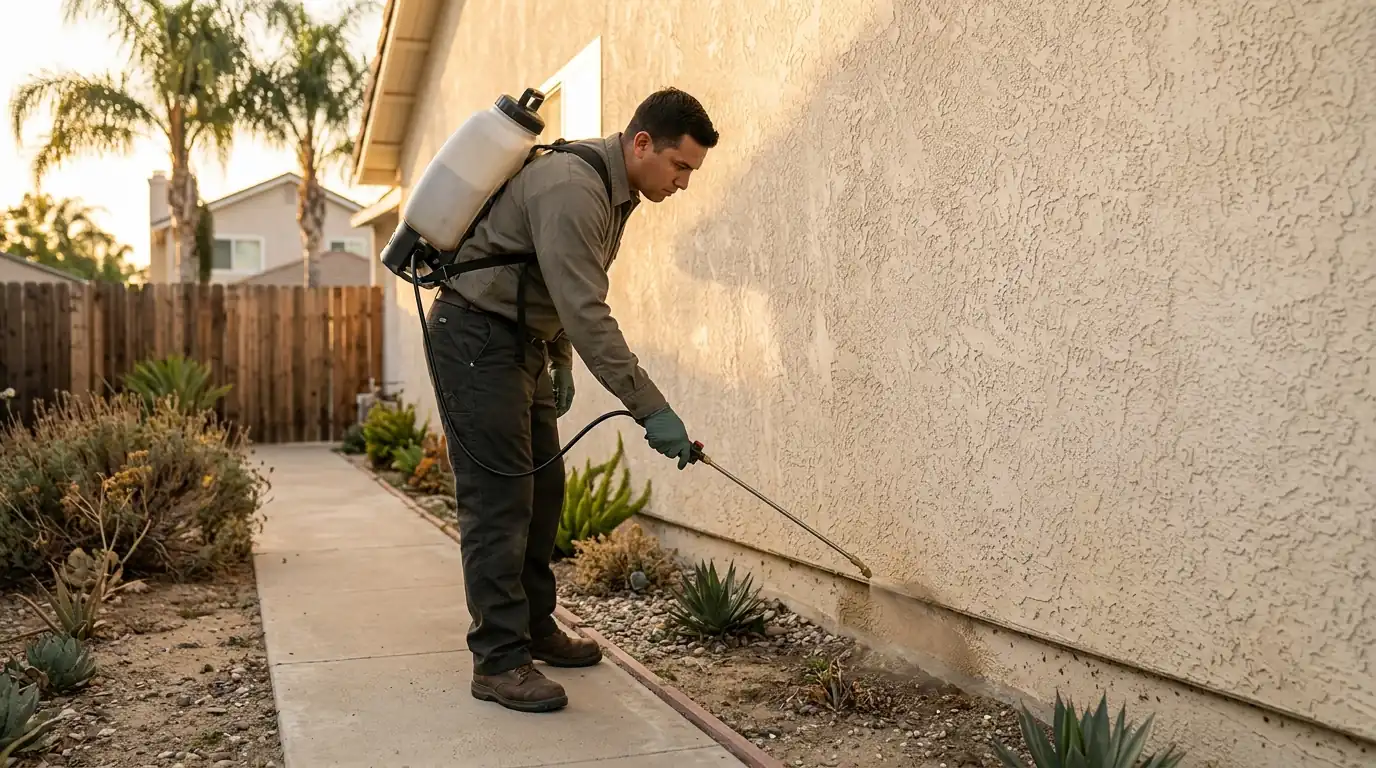
Targeted placements in cracks, voids and stations, label rates, and clear re-entry guidance before anything is applied, not after.
Straight answers on scope
If a wasp nest is a one-visit job, we say so. If ant pressure will return without a plan, we say that too, with the reasoning, before you commit.
Two offices, one routing
Routes run out of Cahuenga Blvd in Los Angeles and Atlanta Ave in Huntington Beach, which keeps drive times short across both counties.
Most infestations we treat were visible weeks before anyone called. The earlier the call, the smaller the job.
Call (323) 329-3792Where we work
Covering LA, Orange County and the counties around them
From Hollywood and Glendale down through Long Beach into Huntington Beach, Anaheim and Irvine, and out to Ventura, Riverside and San Bernardino counties, the two-office setup means no part of the coverage area sits at the far end of a long drive.
The Bug Report
Know what you are dealing with before you call
Short, local guides on the questions people actually search: what things cost here, what the law requires at escrow, and what to do first when something turns up at midnight.
What pest control costs in Los Angeles
Real market ranges for quarterly service, one-time treatments, termite work and bed bug jobs, and the factors that move a quote up or down.
Read the guideDrywood vs subterranean termites in LA homes
How to tell which one you have from the evidence, and why the two need completely different treatments even in the same house.
Read the guideThe ankle-biter mosquitoes taking over LA yards
Why daytime mosquito bites are new here, where invasive Aedes breed on a normal property, and what actually reduces them.
Read the guideCommon questions
Answers before you pick up the phone
Yes. The line is answered around the clock, every day of the year. Roaches, rats and bed bugs are most active after dark, which is also when most people finally see how bad a problem is, so night and weekend calls are a normal part of how we schedule.
We work across Los Angeles County and Orange County from two offices: a service office on Cahuenga Blvd W in Los Angeles and a head office on Atlanta Ave in Huntington Beach. Long Beach, Anaheim, Santa Ana, Irvine, Glendale, Pasadena and Torrance are all inside the normal routes.
The products we use are applied at label rates in targeted placements such as cracks, voids, bait stations and exterior perimeters rather than broadcast sprays indoors. The technician explains any re-entry time before treating, and for most general services pets only need to stay off treated areas until they dry.
A single visit fits a contained problem such as a wasp nest or a one-off ant trail. Pressure that comes from the neighborhood itself, like Argentine ants, roof rats and mosquitoes, usually returns within a season, which is where a quarterly plan earns its cost. We will tell you plainly which case yours is after the inspection.
Same-day service is normal for active problems called in during the morning, and emergency visits run after hours for stinging insects, rodents in living areas and similar situations. Exact timing depends on where you are on the route between our Los Angeles and Huntington Beach offices.
Market pricing in the LA area typically runs $150 to $250 for a standard quarterly visit, with one-time general treatments higher and specialty work such as fumigation priced by the structure. The honest answer for your home depends on the pest, the size of the property and how established the problem is, which is why we confirm pricing after an inspection rather than guessing over the phone.
The line is on right now
Whatever you just saw, tell us about it
Describe it in one sentence and we will tell you what it probably is, what treating it involves, and when a technician can be there. No obligation comes with the call.
Answered 24/7, including weekends and holidays.
Call us or find us
- Phone
- (323) 329-3792
- Hours
- Open and answering 24/7, every day
- Service office
- 3123 Cahuenga Blvd W #390, Los Angeles, CA 90068
- Head office
- 7623 Atlanta Ave, Ste 284, Huntington Beach, CA 92646
- Coverage
- Los Angeles, Orange and neighboring counties