Argentine, carpenter and more
Ant control that reaches the colony, not just the trail
The ants on your counter are the end of a supply line, not the problem itself. Treatment that the colony carries home is what ends it; spray just reroutes it into your walls.
Updated October 2026
This treatment, at a glance
- Job type
- Colony treatment and baiting
- Main species
- Argentine ant
- Results
- Trails collapse in about a week
- Line
- Answered 24/7
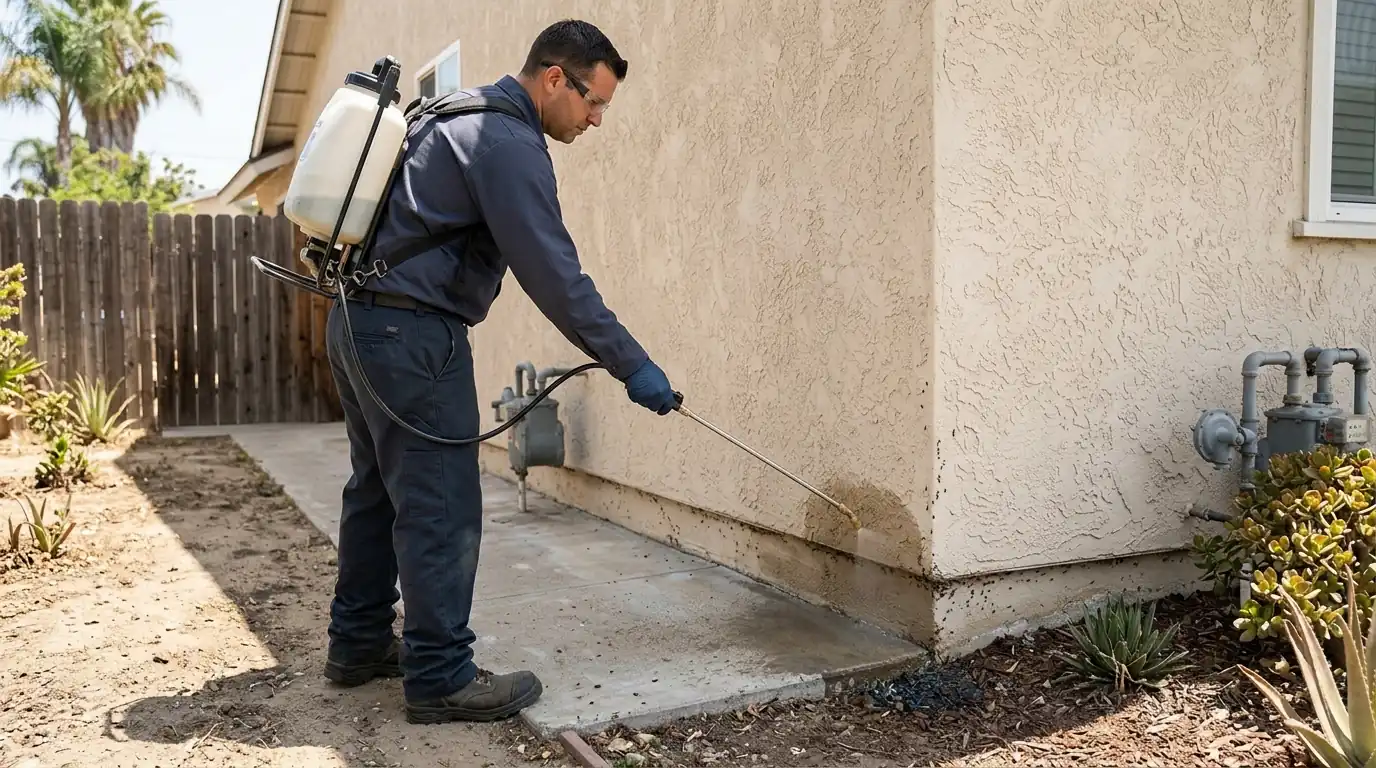
Effective ant control in Los Angeles means non-repellent treatment and colony baiting, not surface spray: the colony, usually Argentine ants networked across the whole street, has to take the product home. Expect trails to collapse within about a week of treatment. Call (323) 329-3792 any hour; morning calls usually get same-day service.
First response
If the kitchen is covered in ants right now
Do not spray the trail
Repellent sprays scatter the colony into satellite nests inside your walls. Wipe visible workers with soapy water if you must, and leave the trail route readable for the technician.
Cut the food line
Rinse what they found, seal it, and dry the sink. Argentine ants in a dry LA summer are often after water as much as food.
Trace it back
Note where the trail enters: window frame, outlet, plumbing gap. That entry point is where treatment starts.
How treatment works
Working with ant biology instead of against it
Nearly every serious ant problem in Los Angeles is the Argentine ant, and Argentine ants break the rules most ant advice assumes. Their colonies have many queens, they do not fight neighboring nests, and across Southern California they form supercolonies that stretch far beyond any one property. Kill the visible workers and the network reroutes around you.
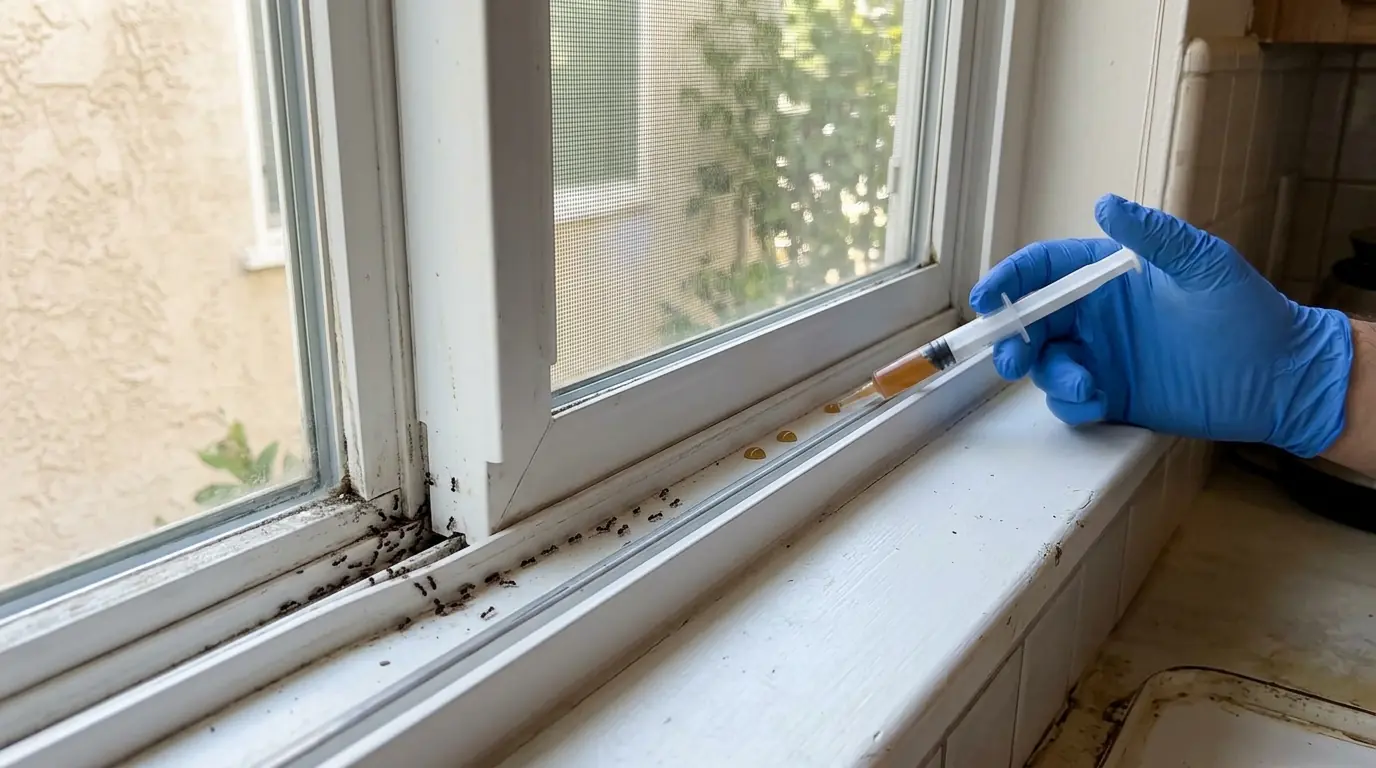
Treatment that works goes through that network. A non-repellent like Termidor along the foundation, entry points and trail routes is invisible to the ants, so workers walk through it and transfer it nest to nest. Gel and granular baits like Advion and Maxforce ride the same logistics: foragers carry them back and feed the queens. The two together collapse activity at the source, which is why the trail gets briefly busier before it dies.
Other species get their own handling: carpenter ants excavating damp wood need the nest found and treated directly (see carpenter ant control), and velvety tree ants coming off mature landscaping need the landscape line treated, not just the house.
The visit
What ant service looks like
Trace
Trails followed to their entry points and, wherever possible, back toward the nest line outside.
Identify
Argentine, carpenter, velvety tree or harvester: species decides product and placement.
Treat
Non-repellent perimeter and entry treatment plus baiting matched to what the colony is feeding on.
Seal and advise
Obvious entry gaps get flagged or sealed; moisture conditions feeding the problem get named.
Follow up
A two-week check for established infestations, with covered re-treatment if trails persist.
Local pressure
The ant capital of the country
Southern California's Argentine ant supercolony is one of the largest cooperative insect networks ever mapped, and Los Angeles sits inside it. That is why ant invasions here arrive street by street with the weather: heat waves and the first fall rains push colonies to move brood and hunt water indoors at the same time, every house on the block at once. One treated house in an untreated territory stays quiet only as long as its perimeter holds, which is why ant work here pairs naturally with a quarterly plan and why we say so plainly rather than selling one-time visits twice a year.
What it costs
Current LA market ranges
Figures are current Los Angeles market ranges from published pricing surveys, not a quote. Property size, construction, how established the problem is and access all move the number; we confirm pricing after an inspection.
Common questions
Asked before booking this service
Store-bought sprays are repellents: they kill the workers you can see and split the colony into satellite nests you cannot. Argentine ant colonies in LA also span whole blocks, so the trail in your kitchen is one finger of a network. Non-repellent treatment and baiting work through the colony instead of scattering it.
Trails usually get busier for two or three days as workers carry bait like Advion back to the queens, then collapse. Most kitchens are quiet inside a week, with a follow-up if anything is still moving at two weeks.
Placements go into cracks, voids, bait stations and the exterior perimeter rather than open surfaces, applied at label rates. The technician tells you the few spots that need drying time before anyone touches them.
Weather moved them, not your housekeeping. Argentine ants push indoors during heat waves, drought stretches and the first rains, which is why whole streets get invaded the same week.
Yes. Wall-void trails get treated through the routes ants actually use, and slab-level activity is traced to its entry: expansion joints, plumbing penetrations, sliding-door tracks. Finding the highway matters more than treating the exit.
Related treatments
Often booked alongside this one
The line is on right now
Trail moving across the counter right now?
Call and describe where it enters. You will get an honest read on whether it needs same-day service and what the treatment will involve.
Answered 24/7, including weekends and holidays.
Call us or find us
- Phone
- (323) 329-3792
- Hours
- Open and answering 24/7, every day
- Service office
- 3123 Cahuenga Blvd W #390, Los Angeles, CA 90068
- Head office
- 7623 Atlanta Ave, Ste 284, Huntington Beach, CA 92646
- Coverage
- Los Angeles, Orange and neighboring counties