Pellets, galleries and straight answers
Drywood termite treatment for Los Angeles homes
Drywood colonies live sealed inside your framing, and the pellets on the sill are their only confession. Mapping the galleries decides everything: a contained colony gets a contained fix, and a scattered one gets the truth.
Updated October 2026
This treatment, at a glance
- Job type
- Gallery injection or fumigation call
- Key sign
- Six-sided pellet piles
- Spot range
- $300-$800 LA market
- Line
- Answered 24/7
Drywood termite treatment in Los Angeles is a mapping problem first: these colonies live entirely inside wood, so the inspection determines whether infestation is localized, treatable by direct gallery injection in the $300-$800 LA spot-treatment range, or widespread enough that fumigation is the honest answer. Pellet piles that rebuild after vacuuming mean active galleries. Call (323) 329-3792 to book the inspection.
Know the enemy
A colony that never touches the ground
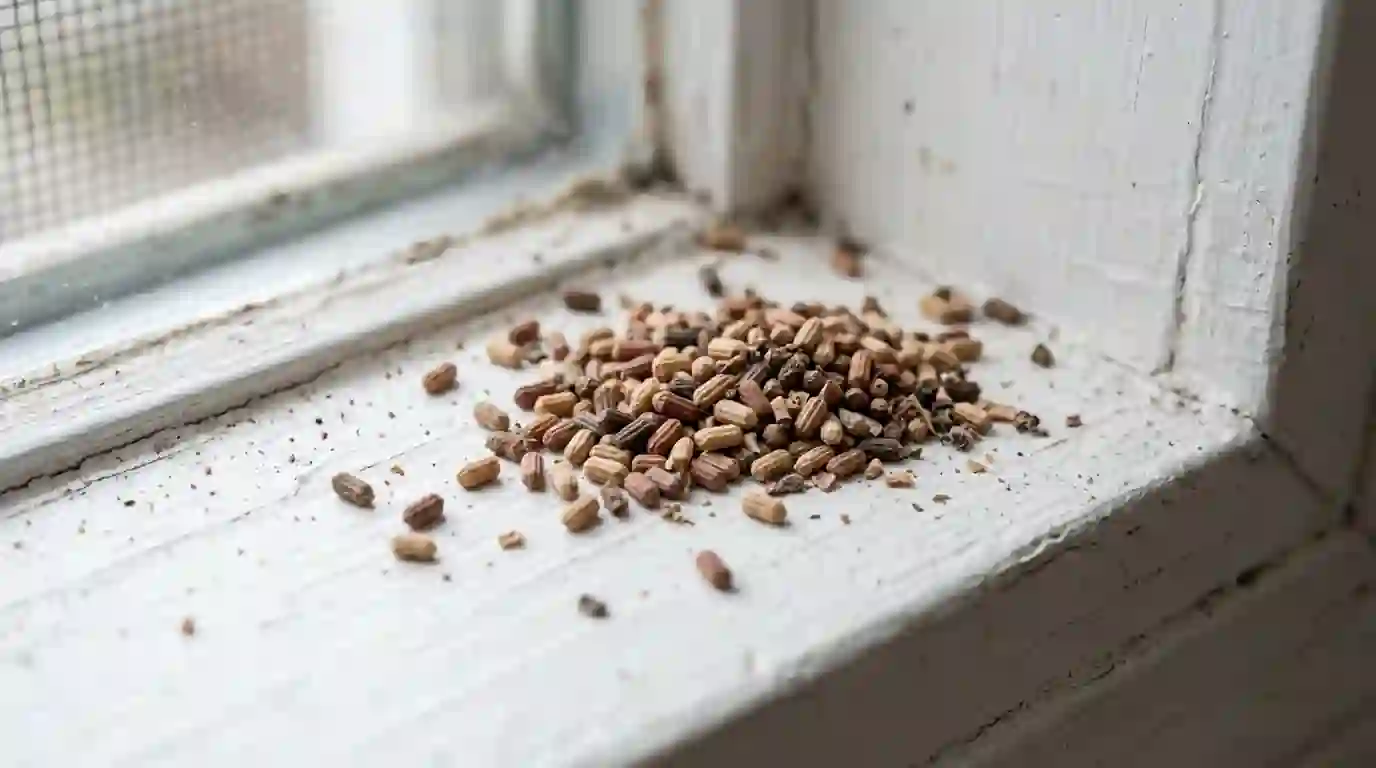
Drywood termites are Southern California's signature termite, and the continental US sees its heaviest drywood pressure right here. Unlike their subterranean cousins, they need no soil, no moisture line and no mud tubes: a pair of swarmers lands on your eaves on a warm October afternoon, finds a joint or checking crack, seals themselves in and starts a colony that will spend years eating outward through the member. Everything happens inside the wood. The only exterior evidence is what they throw away: hard, six-sided fecal pellets ejected through kick-out holes, collecting in neat piles on sills, floors and attic insulation.
That biology drives the treatment logic. There is no soil barrier to apply and no central nest to find, only galleries to locate, which is why the inspection matters more than the product. Accessible, mapped colonies get drilled and injected directly, with borate treatment of surrounding raw wood while access is open. What changes the conversation is count and reach: a structure with pellet evidence at four corners is not a spot-treatment candidate, and saying so plainly, with the evidence on the table, is the job.
Signs of drywood activity
What to look for between inspections
Pellet piles
Sand-like, six-sided pellets in rebuilding piles under sills, eaves and attic framing. The definitive LA sign.
Kick-out holes
Pinholes in painted or bare wood above the piles, sometimes resealed and reopened as the colony cleans house.
Fall swarmers
Winged termites or shed wings indoors on warm late-summer and fall days mean a colony is mature enough to reproduce.
Blistered surfaces
Paint or veneer bubbling over galleries running just beneath, which probing confirms in seconds.
The visit
How drywood treatment runs
Inspect and map
All accessible wood read for pellets, kick-outs and gallery sound; findings photographed.
Scope honestly
Localized and reachable gets a spot plan with a firm price; widespread gets the fumigation conversation with evidence.
Treat the galleries
Drill-and-inject into active galleries, plus borate treatment of exposed adjacent wood.
Close and monitor
Treated holes sealed, pellet sites cleared so recurrence is visible, follow-up scheduled.
Verify
Fresh pellets after treatment mean we come back; quiet sites close the job out.
Local pressure
Why LA is drywood country
Los Angeles hands drywood termites their ideal range: mild coastal-basin temperatures year-round, enormous stock of pre-1980 wood framing, and no winter cold to suppress the fall swarming season. The region carries both termite families at once, which the inspection always respects, but drywood is the one most LA homeowners actually meet, usually as a mystery pile of pellets on a sill. It is also why escrow WDO reports here flag drywood evidence so often, and why the difference between a $300-$800 spot job and a whole-structure treatment usually comes down to how many seasons passed before someone looked.
What it costs
Current LA market ranges
Figures are current Los Angeles market ranges from published pricing surveys, not a quote. Property size, construction, how established the problem is and access all move the number; we confirm pricing after an inspection.
Common questions
Asked before booking this service
They fly. Winged swarmers launch on warm afternoons, mostly late summer into fall here, land on exposed wood, pair up and bore in through a crack or joint smaller than a matchhead. The colony then lives entirely inside the wood: attic framing, eaves, window frames, furniture, no mud tubes, no ground connection.
By what the inspection can map. Infestations that are localized and accessible, one eave section, a window frame, an attic member, are honest spot-treatment candidates. Multiple colonies, evidence scattered across the structure, or galleries running into inaccessible framing push toward whole-structure fumigation, because spot-treating one colony of five fixes a fifth of the problem. You get the evidence and the reasoning, not just a recommendation.
Galleries get drilled and treated directly with materials labeled for drywood work, borate-based products and targeted termiticides among them, so the treatment reaches the colony where it lives. Exposed raw wood can get a borate surface treatment as a preventive layer while access is open.
Very likely. Drywood colonies push waste pellets out through kick-out holes, and the pile rebuilding on the same sill or floor spot is the classic sign of an active gallery above it. Hard, six-sided, sand-like pellets distinguish them from sawdust; photograph the pile and call.
Almost never: policies treat termite damage as preventable maintenance, not a covered peril. That is the financial case for annual inspections here, because the whole cost lands on the owner and it grows with every year a colony runs undetected.
Related treatments
Often booked alongside this one
The line is on right now
Photographed a pile you cannot explain?
Send your eyes over it once more, then call. Pellets versus sawdust is a thirty-second phone answer, and the inspection takes it from there.
Answered 24/7, including weekends and holidays.
Call us or find us
- Phone
- (323) 329-3792
- Hours
- Open and answering 24/7, every day
- Service office
- 3123 Cahuenga Blvd W #390, Los Angeles, CA 90068
- Head office
- 7623 Atlanta Ave, Ste 284, Huntington Beach, CA 92646
- Coverage
- Los Angeles, Orange and neighboring counties