Lawns, gardens and slopes
Gopher control by targeted tunnel trapping
A single gopher can wreck a lawn and a garden from underneath. Trapping in the active tunnel removes it without leaving bait in the yard, and simple protection keeps the next one from starting over.
Updated October 2026
This treatment, at a glance
- Job type
- Tunnel trapping
- Clear time
- Typically 1-2 weeks
- Bait in yard
- None
- Line
- Answered 24/7
Gopher control in Los Angeles is done by trapping in the active tunnel, which is targeted, works year-round and puts no bait in the yard for pets or wildlife. Most yards clear in one to two weeks, then wire baskets and hardware cloth protect plantings from the next arrival. Call (323) 329-3792 to book a visit.
What the service covers
Find the run, trap the run
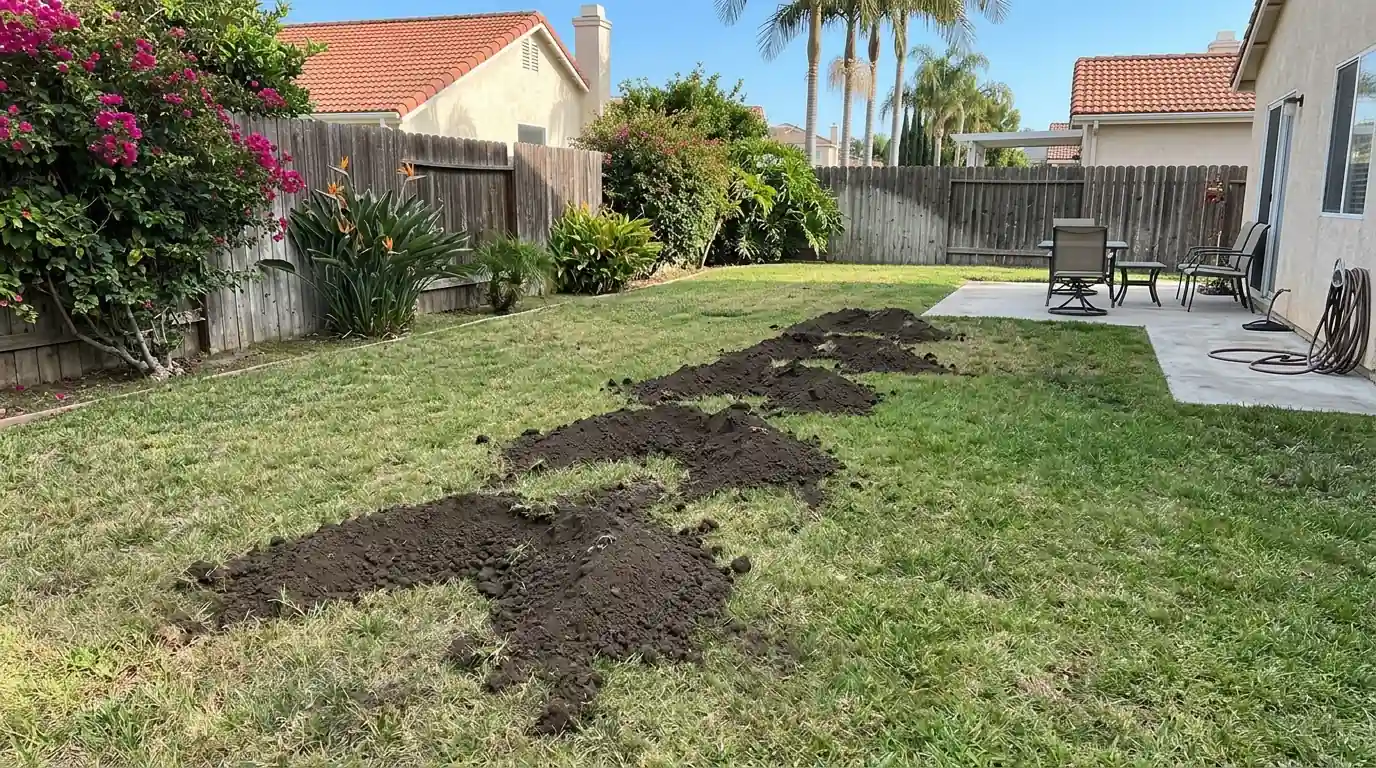
Pocket gophers spend almost their entire lives underground, digging a network of feeding tunnels just below the root zone and pushing excess soil up into the fan-shaped mounds that ruin lawns. One gopher can produce dozens of mounds, eat roots out from under shrubs and vegetables, chew drip lines and girdle young trees, all without ever being seen.
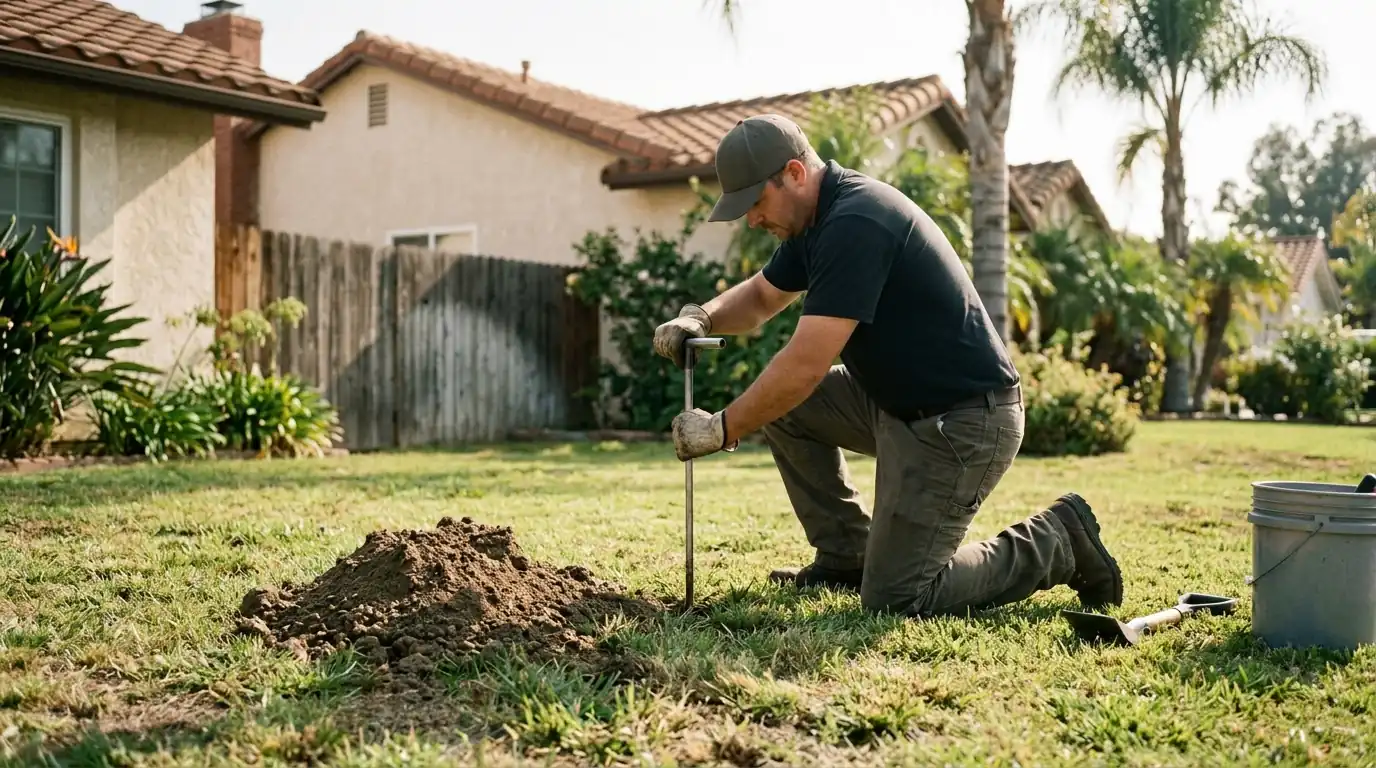
Trapping works because it goes where they live. The technician reads the freshest mounds, probes to locate the main tunnel connecting them, opens it and sets traps inside the active run, then closes it back up to block light. Traps are checked on follow-up visits until activity stops. Once the yard is clear, the conversation turns to protection: wire baskets for new trees and shrubs, hardware cloth under raised beds and new lawns, and monitoring for fresh mounds so a new gopher is caught before it digs a full system.
Signs of gophers
What to look for in the yard
Fan-shaped mounds
Fresh soil pushed into crescent mounds with a plugged hole at one side.
Wilting plants
Shrubs or vegetables collapsing suddenly with roots chewed off below.
Soft spots
Ground that sinks underfoot along a line where tunnels run.
Damaged irrigation
Chewed drip lines and sprinkler pipes leaking underground.
The visit
How gopher control runs
Inspect
Fresh mounds mapped and the main runs located with a probe.
Set traps
Traps placed in the active tunnel and the openings sealed.
Check and reset
Follow-up visits until mounding stops.
Protect plantings
Wire baskets and hardware cloth advised for vulnerable areas.
Monitor
Optional visits for yards bordering open land.
Local pressure
Irrigated yards and open edges
Gophers do well in Los Angeles and Orange County because irrigated lawns, gardens and landscaping provide soft, moist soil and steady food in a dry climate. Yards next to parks, school fields, golf courses, flood channels and hillside open space see the most pressure, as young gophers disperse into neighboring properties. With California restricting many rodenticides under AB 1788, trapping has become the practical standard for safe, targeted control.
What it costs
How gopher control is priced
Gopher work is priced by yard size, number of active systems and how many follow-up visits are needed, quoted after the first inspection. For scale, one-time pest jobs in the LA market start from about $300, and ongoing monitoring for yards beside open land is quoted as a recurring visit.
Common questions
Asked before booking this service
Gophers push up crescent or fan-shaped mounds of fresh soil with the hole plugged off to one side, and you rarely see the animal. Moles leave volcano-shaped mounds and raised ridges, and are uncommon in most of LA. Ground squirrels leave open burrow holes and are active above ground in daylight.
They eat roots, bulbs and whole plants from below, girdle young trees, chew irrigation lines, and leave mounds that ruin lawns and create tripping hazards. Tunnels can also channel irrigation water and undermine slopes and hardscape edges.
Trapping in the main tunnel is the most reliable method: the technician probes to find the active run, sets traps in it, and checks them on follow-up visits. It is targeted, works in all seasons and leaves no bait for pets or wildlife to find.
Not completely, since neighboring yards and open land keep supplying them. Wire baskets around new plantings, hardware cloth under raised beds and lawns, and regular monitoring catch newcomers early before they rebuild a tunnel system.
One gopher typically occupies one tunnel system, so most yards clear in one to two weeks of trapping. Large properties or yards next to open land may need ongoing monitoring visits.
Rarely for long. Gopher tunnels are extensive and often sealed off in sections, so smoke and gas cartridges leak out or miss the animal, flooding mostly wastes water and softens soil for more digging, and vibrating or sonic stakes have little evidence behind them. Gophers adapt quickly to disturbance. Trapping in the active run, followed by physical protection of plantings, is the method that consistently ends the problem.
Related treatments
Often booked alongside this one
The line is on right now
New mounds every morning?
Call and the visit will locate the active tunnel and start trapping the same day where possible.
Answered 24/7, including weekends and holidays.
Call us or find us
- Phone
- (323) 329-3792
- Hours
- Open and answering 24/7, every day
- Service office
- 3123 Cahuenga Blvd W #390, Los Angeles, CA 90068
- Head office
- 7623 Atlanta Ave, Ste 284, Huntington Beach, CA 92646
- Coverage
- Los Angeles, Orange and neighboring counties