Bathrooms, garages and storage
Silverfish control that starts with the humidity
Silverfish are a moisture problem wearing an insect costume. Treating the voids they live in and drying out the spaces that feed them is what keeps papers, books and stored clothing safe.
Updated October 2026
This treatment, at a glance
- Job type
- Void treatment and moisture fixes
- Damage
- Paper, books, fabrics
- Key cause
- Indoor humidity
- Line
- Answered 24/7
Silverfish control in Los Angeles combines treatment of the voids, baseboards and storage areas where they hide with fixing the humidity that draws them in. They damage paper, books, photos and stored fabrics rather than people. Call (323) 329-3792 to book a visit.
What the service covers
Moisture first, then the hiding places
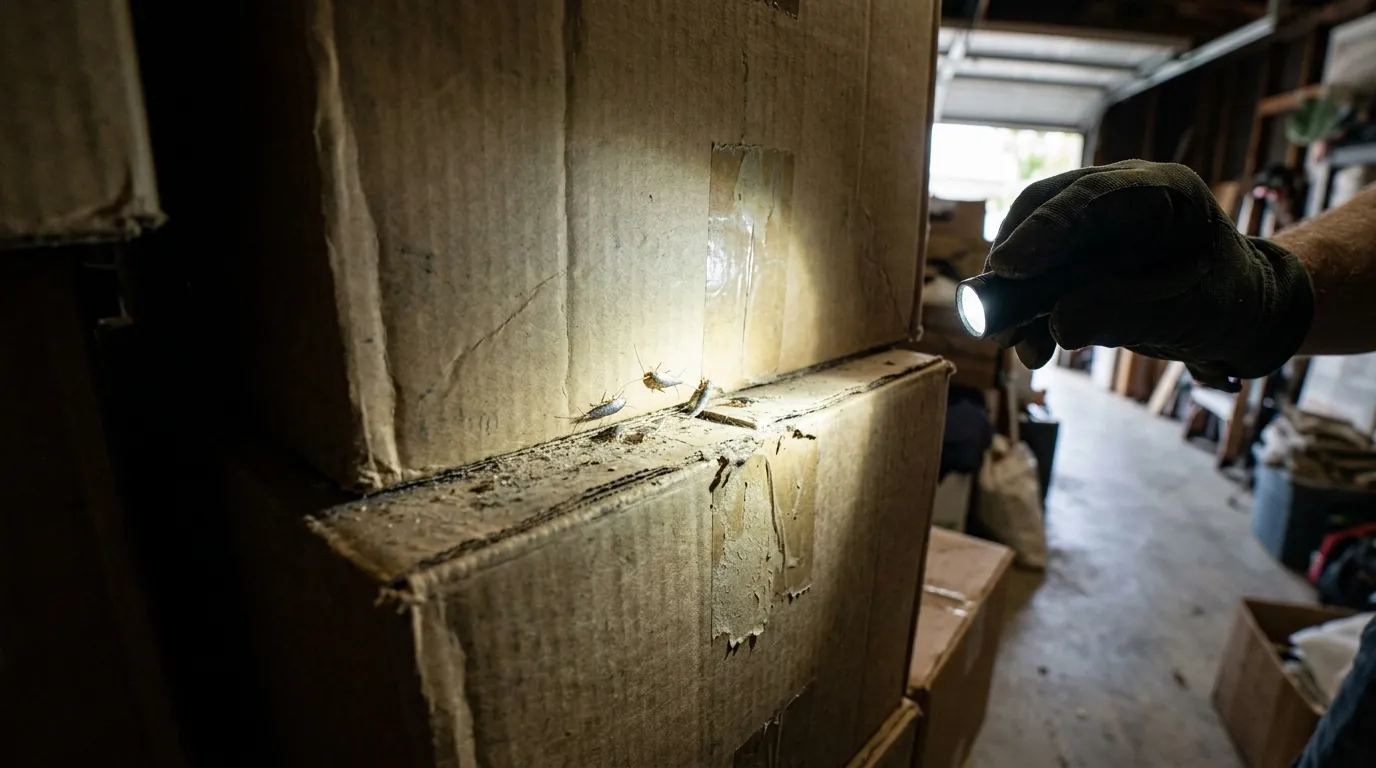
Silverfish are slow, ancient, nocturnal insects that live where the air is damp and the food is starch. In a typical Los Angeles home that means bathrooms and laundry rooms, garages full of cardboard boxes, closets with stored papers, and the attic where insulation backing and roof leaks meet. They can live for years, which is why a small population becomes a large one quietly.
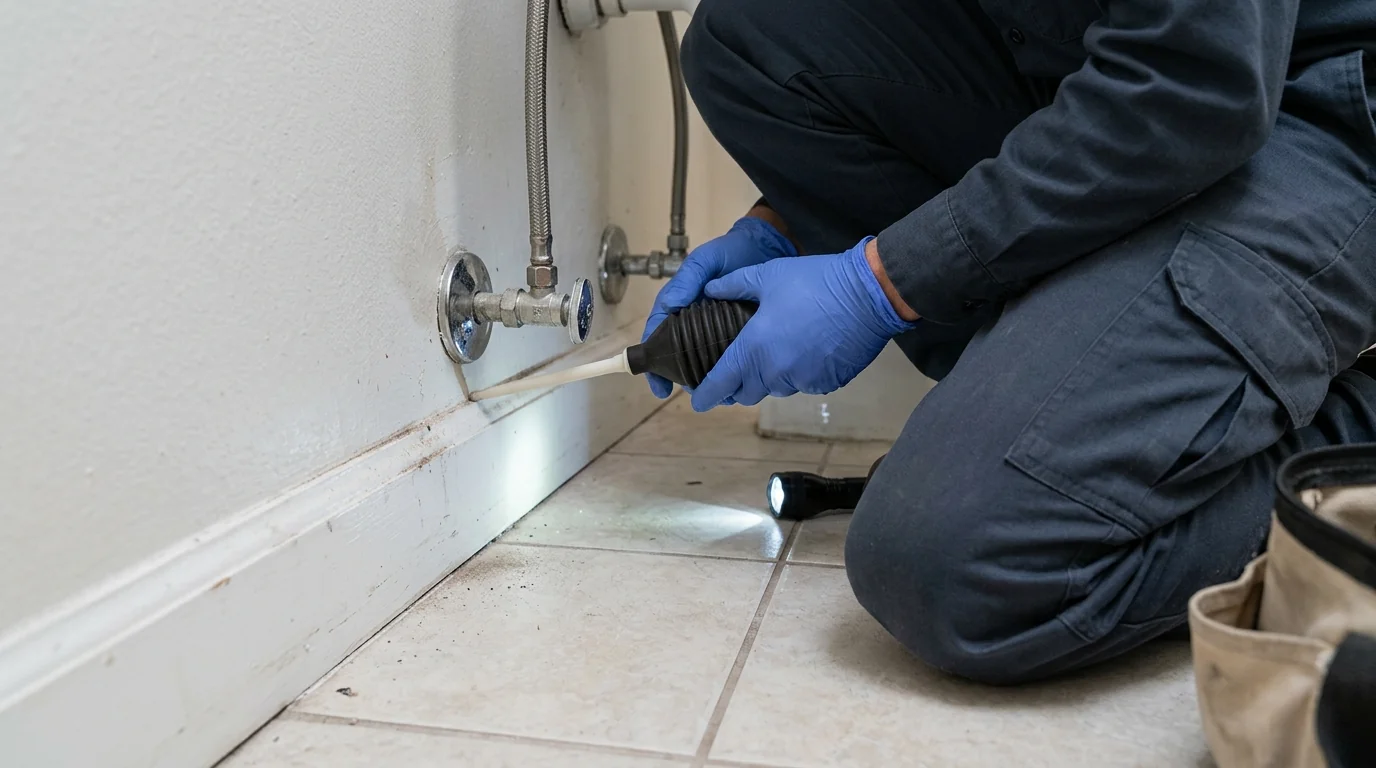
Treatment goes into the places they actually live: dust formulations in wall voids, behind baseboards, around plumbing penetrations and in attic edges, where silverfish pick it up as they move. Bait placements cover storage areas. Then the conditions get addressed, because humidity is the reason they are there: bathroom ventilation, slow plumbing leaks, damp garages and stored paper in cardboard boxes all get named, with practical fixes like sealed plastic bins and better airflow.
Where they show up
Common silverfish zones
Bathrooms and laundry rooms
Steady humidity, plumbing voids and cardboard packaging make these the usual starting point.
Garages and storage
Boxes of papers, books, holiday decorations and old clothing give them food and cover.
Closets and bookshelves
Paper, book bindings and stored fabric get grazed, often discovered only when something is unpacked.
Attics
Paper-backed insulation and any history of roof leaks support populations that drift down into the house.
The visit
How silverfish service runs
Inspect
Damp areas, storage and voids checked for silverfish, their damage and moisture sources.
Treat voids
Dusts placed in wall voids, baseboards and plumbing gaps where they travel.
Bait storage areas
Placements in garages, closets and attics near stored paper and fabric.
Fix the conditions
Ventilation, leaks and storage changes identified so humidity drops.
Follow up
A check after a few weeks to confirm the population is falling.
Local pressure
Coastal humidity and old storage
It surprises people that a dry-climate city has silverfish problems, but Los Angeles has plenty of indoor humidity: the marine layer that keeps coastal neighborhoods and Orange County beach towns damp much of the year, bathrooms with weak ventilation, slab homes with laundry in the garage, and older houses with decades of stored paper. Mild winters keep them active year-round. Homes near the coast and in older neighborhoods see the most, and they pair naturally with the moisture-driven pests covered in earwig control.
What it costs
Current LA market ranges
Figures are current Los Angeles market ranges from published pricing surveys, not a quote. Property size, construction, how established the problem is and access all move the number; we confirm pricing after an inspection.
Common questions
Asked before booking this service
Humidity and starch. They need damp air and feed on paper, book bindings, wallpaper paste, cardboard, fabric sizing and stored dry goods, so bathrooms, laundry rooms, garages, closets with stored boxes and attics with paper insulation backing are where they settle.
They do not bite or carry disease. The damage is to belongings: yellowed holes in papers and photos, grazed wallpaper and book bindings, damaged stored clothing. A large population also tends to mean a moisture problem worth fixing.
They are not coming up the drain. Silverfish fall into tubs and sinks while hunting for moisture at night and cannot climb the slick sides back out, so the tub is simply where they get trapped and seen.
Lowering humidity is one of the most effective parts of the job, especially in garages, closets and bathrooms. On its own it slows them down; combined with treatment of the voids and baseboards where they hide, it ends the problem.
Dust and bait placements in voids keep working as silverfish move through them, and most homes see a clear drop over a few weeks. They are long-lived insects, so a follow-up check is part of a proper job.
Move anything valuable out of cardboard and into sealed plastic bins, keep it off garage floors and out of damp closets, and give bookshelves a little airflow away from exterior walls. Silverfish rarely get into sealed containers, so storage changes protect irreplaceable items even while treatment brings the population down. Vacuuming shelves and closet floors regularly also removes the eggs they lay in cracks and corners.
Related treatments
Often booked alongside this one
The line is on right now
Finding damage in stored papers?
Call and tell us where. The inspection finds the population and the moisture source behind it.
Answered 24/7, including weekends and holidays.
Call us or find us
- Phone
- (323) 329-3792
- Hours
- Open and answering 24/7, every day
- Service office
- 3123 Cahuenga Blvd W #390, Los Angeles, CA 90068
- Head office
- 7623 Atlanta Ave, Ste 284, Huntington Beach, CA 92646
- Coverage
- Los Angeles, Orange and neighboring counties