Kitchens, garages and wall voids
Mouse control for Los Angeles homes and garages
A mouse sighting is a census of one from a nest of many. Trapping the runways clears the family, sealing at pencil-width keeps the next one out, and the house is usually quiet in two weeks.
Updated October 2026
This treatment, at a glance
- Job type
- Trapping and sealing
- Entry size
- A quarter inch is enough
- Clear time
- Typically 1-2 weeks
- Line
- Answered 24/7
Mouse control in Los Angeles runs the same proven sequence as rat work, scaled down: snap-trap the runways, seal every dime-sized gap, verify with monitoring. Most homes clear in one to two weeks. One mouse sighted usually means a nest within 30 feet, so it is worth the call today: (323) 329-3792, answered 24/7.
First response
Before the first visit
Protect the food, not the mouse
Move pantry staples into hard containers tonight. A mouse that cannot feed ranges wider and hits traps faster.
Leave the droppings for now
Their pattern is the map of runways and nest distance. Photograph, do not scrub, until after the inspection reads them.
Skip glue boards
They catch juveniles, miss the breeding adults, and leave you handling a live animal. Snap traps on the right runway outperform them every time.
How removal works
Small animal, same discipline
House mice are the miniature version of the rodent problem and the easy version to underestimate. They live within a few dozen feet of their food, run the same wall-hugging routes nightly, and squeeze through quarter-inch gaps, which means a typical LA house has a dozen usable doors a homeowner has never noticed: the stove gas-line hole, the dishwasher kick space, garage door corners, weep screeds, the gap under a water heater closet door.
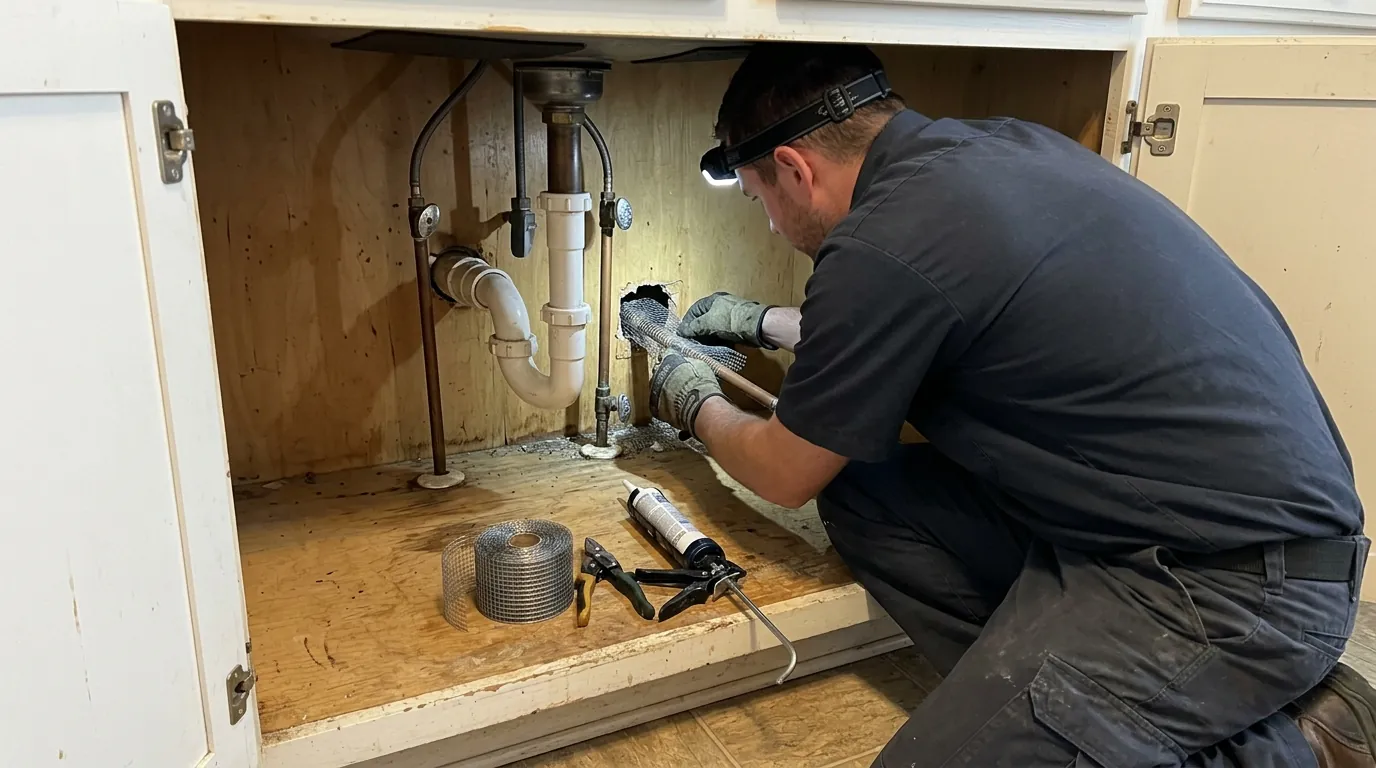
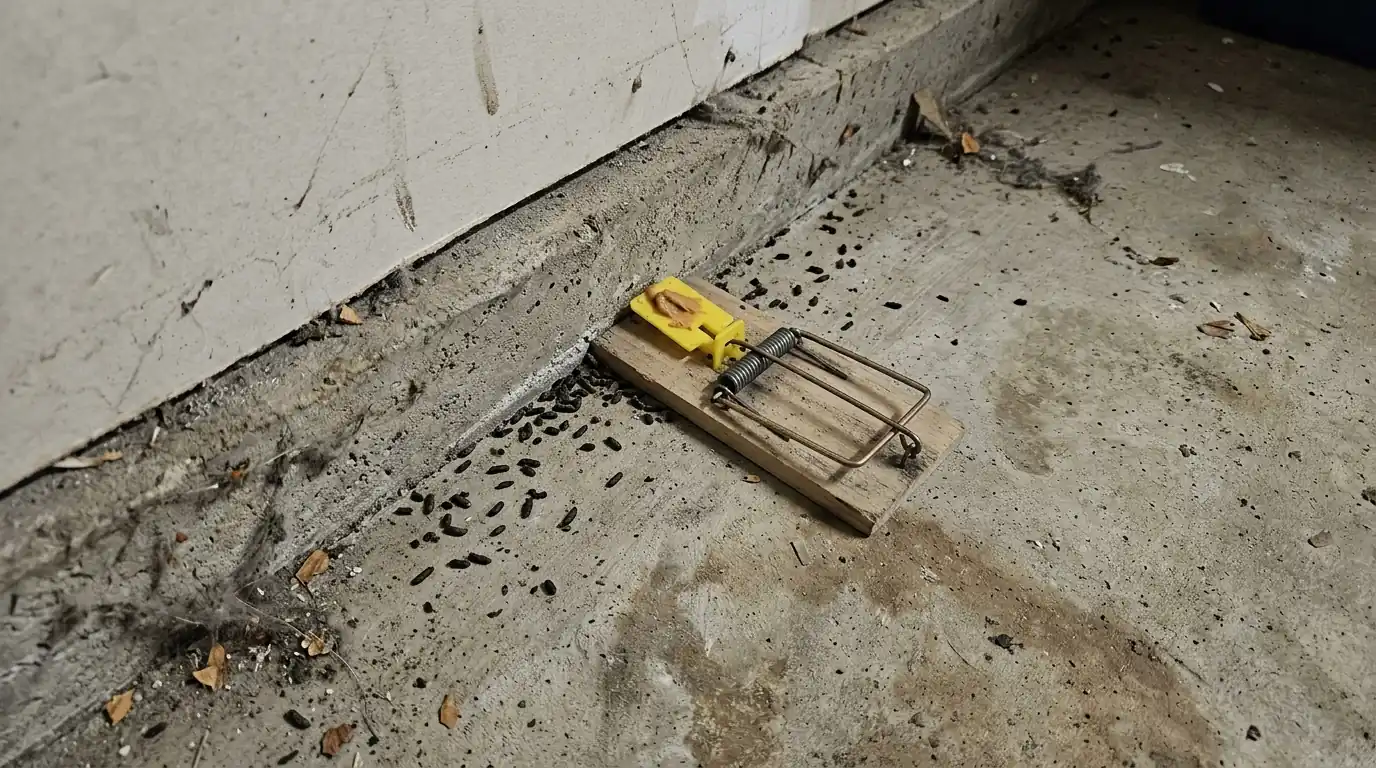
The work mirrors rat control at mouse scale. Snap traps go on the actual runways, perpendicular to the wall where rub marks and droppings say traffic runs, and get checked across follow-ups until catches stop. Sealing happens in parallel with materials mice cannot chew: metal mesh, hardware cloth and sealant rated for the job, not foam alone, which a determined mouse treats as a suggestion. Where the garage or kitchen tells a bigger story, long-term food storage, pet food, bird seed, those conditions get named so the next generation has no reason to try.
The visit
From sighting to sealed
Inspect
Droppings, rub marks and gnaw holes read to place the nest and the runways.
Trap the runways
Snap traps on live routes, checked and reset across follow-up visits.
Seal at mouse scale
Every quarter-inch gap closed in chew-proof materials as counts fall.
Remove attractants
Food storage and garage conditions corrected so the house stops advertising.
Verify
Monitoring through a quiet period confirms the clear before the job is called done.
Local pressure
The LA mouse picture
Mice in Los Angeles are the ground-floor and garage counterpart to the roof rat overhead. Mild winters mean breeding never pauses, and the region's attached-garage housing stock gives mice a protected staging area one door from the kitchen. Older neighborhoods add decades of accumulated gaps in stucco and trim, and dense multi-unit buildings move mice between units through the same shared chases German roaches use. Because droppings and dander are also an allergen and contamination issue, cleanup of heavier infestations is scoped honestly as its own step through cleanup and sanitation.
What it costs
Current LA market ranges
Figures are current Los Angeles market ranges from published pricing surveys, not a quote. Property size, construction, how established the problem is and access all move the number; we confirm pricing after an inspection.
Common questions
Asked before booking this service
Size of the evidence. Mouse droppings are rice-grain sized with pointed ends; rat droppings run two or three times larger. Mice gnaw small, clean holes about the size of a dime and work close to their nest, while roof rat sign concentrates overhead. The inspection confirms it, and the treatment differs enough that it matters.
Plan for many. Mice breed every three weeks, litters run five to six, and a sighting usually means the nest is already established within about 30 feet, typically behind the stove, under the dishwasher or in a garage wall void.
Anything a pencil fits through: a quarter inch. Door sweep corners, the gap beside the garage door, stucco weep screeds, pipe penetrations under sinks and the hole around the stove gas line are the standard LA entries.
Same logic as rats: California's AB 1788 restricts the strongest rodenticides, and a mouse dying in a wall still smells, just for less time. Snap traps on the runways kill where we can retrieve, and sealing is what makes it permanent.
Most houses clear in one to two weeks of trapping with the entry points sealed as counts fall. Mice are easier to trap than rats, less suspicious of new objects, so knockdown is usually fast once placement follows the rub marks and droppings.
Related treatments
Often booked alongside this one
The line is on right now
Found droppings this morning?
Call and describe where. You will get a straight read on mouse versus rat and a visit scheduled before the nest grows another litter.
Answered 24/7, including weekends and holidays.
Call us or find us
- Phone
- (323) 329-3792
- Hours
- Open and answering 24/7, every day
- Service office
- 3123 Cahuenga Blvd W #390, Los Angeles, CA 90068
- Head office
- 7623 Atlanta Ave, Ste 284, Huntington Beach, CA 92646
- Coverage
- Los Angeles, Orange and neighboring counties