Black widows, brown widows and more
Spider control built around widows and their prey
Spiders live where the insects are, and widows live where nobody looks. Treating the harborage, clearing every egg sac and cutting the insect supply is what keeps them from coming back.
Updated October 2026
This treatment, at a glance
- Job type
- Harborage treatment and removal
- Main concern
- Black and brown widows
- Egg sacs
- Removed by hand
- Line
- Answered 24/7
Spider control in Los Angeles centers on the two widows, the native black widow and the invasive brown widow, plus the everyday house spiders that follow insect prey. It combines direct treatment of harborage, removal of webs and egg sacs, and a perimeter that cuts the insects spiders feed on. Call (323) 329-3792, answered 24/7.
What the service covers
Webs, egg sacs and the food chain
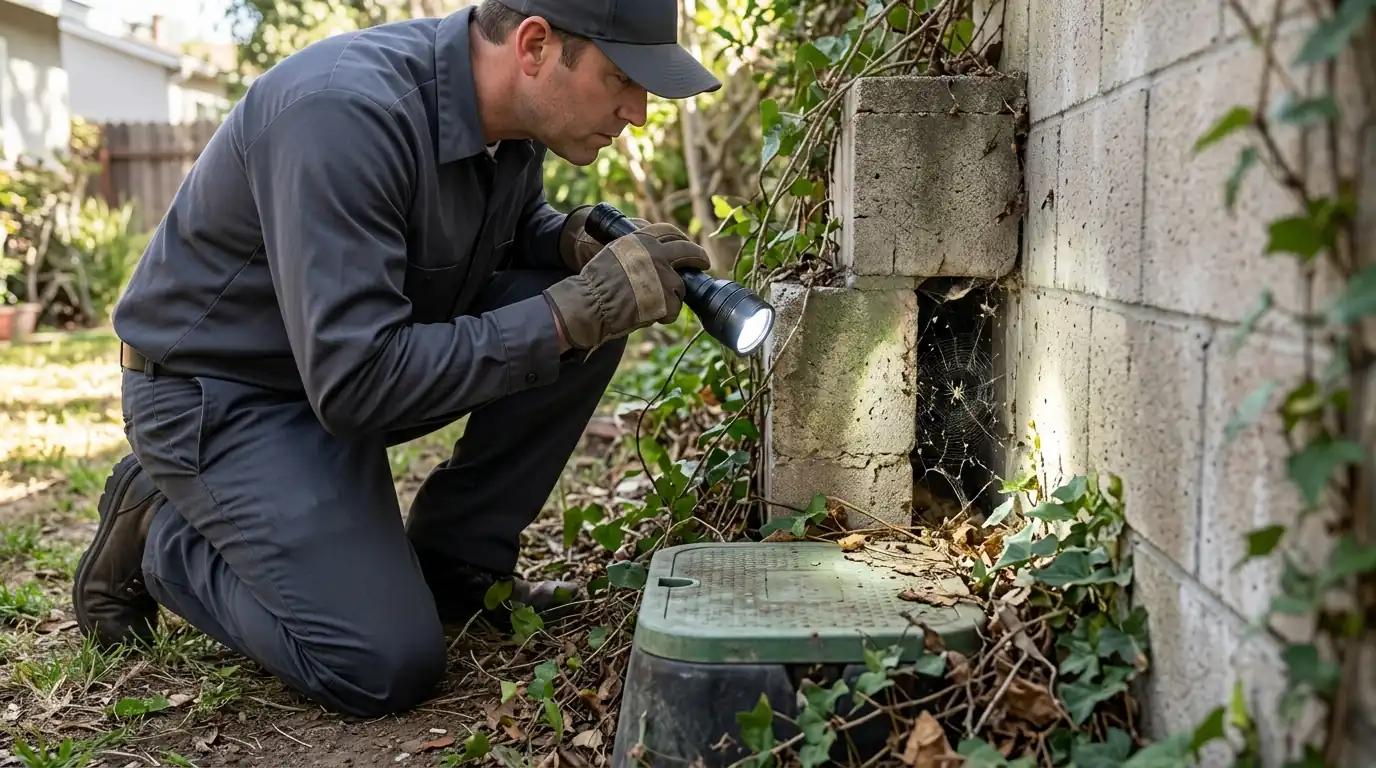
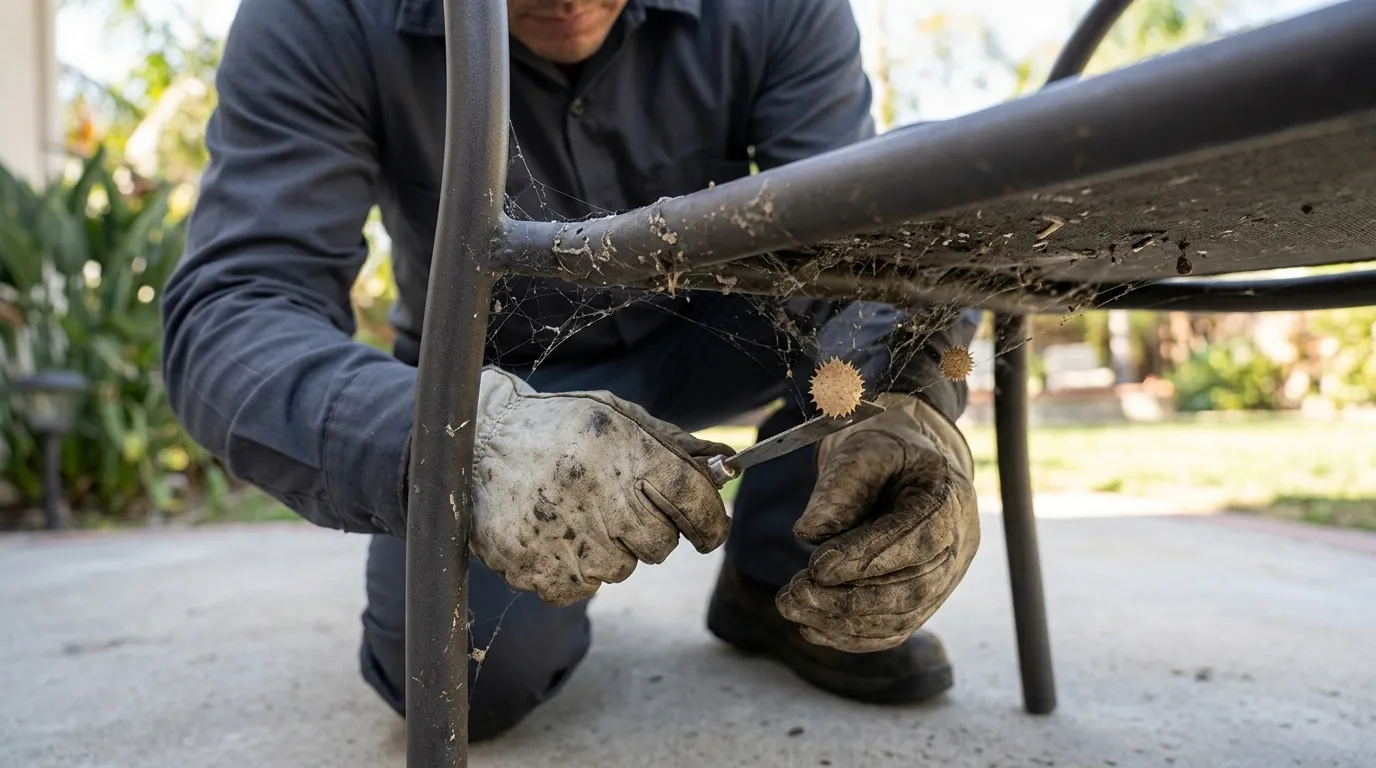
Spider work fails when it treats spiders like ants. Spiders do not groom and walk trails the way insects do, so a light perimeter spray that crushes an ant problem barely touches them. What works is going to where they live: the irregular webs in block wall gaps, meter boxes, garage corners, pool equipment and under patio furniture get treated directly, and webs and egg sacs get swept away by hand, because every brown widow sac can release hundreds of spiderlings.
Then comes the part that makes the result last. Spiders settle wherever food is reliable, and the brightest, buggiest parts of a house, porch lights, window frames, eaves, are spider restaurants. A perimeter treatment that cuts that insect traffic, sometimes paired with a switch to warmer-colored exterior bulbs that draw fewer insects, takes away the reason spiders set up there. Clutter in garages and along fences gets named plainly, since a stack of untouched pots is a widow apartment block.
Know what you are seeing
The LA spider lineup
Western black widow
Glossy black, red hourglass below, messy strong web low to the ground in dark gaps. Medically significant bite.
Brown widow
Tan to brown with an orange hourglass, spiky round egg sacs. Invasive and now widespread across Southern California.
House and cellar spiders
Long-legged cellar spiders and common house spiders in corners and ceilings. Harmless, mostly a nuisance and a sign of insect prey.
Not a recluse
Brown recluses are not established in California. Most suspected recluses are harmless look-alikes, which the visit identifies.
The visit
How spider service runs
Inspect
Garage, eaves, block walls, meter boxes, pool equipment and patio furniture checked for webs and sacs.
Treat harborage
Direct treatment into gaps and webs where widows and other spiders live.
Remove sacs and webs
Egg sacs and webs swept from the structure so the next generation never emerges.
Cut the prey
Perimeter treatment around lights, doors and windows to reduce the insects spiders follow.
Advise
Clutter, lighting and storage changes that remove spider real estate.
Local pressure
The brown widow takeover
Southern California's spider story over the past two decades has been the brown widow's spread. First noted locally in the early 2000s, it now outnumbers the native black widow in many LA and Orange County neighborhoods, favoring human structures: under patio chairs, in railings, in children's play equipment and around pool areas, places black widows tended to avoid. Combined with year-round insect activity that never lets prey populations crash, that makes spider control in LA a standing part of keeping a yard usable rather than a one-time cleanup, and a natural fit with a quarterly plan.
What it costs
Current LA market ranges
Figures are current Los Angeles market ranges from published pricing surveys, not a quote. Property size, construction, how established the problem is and access all move the number; we confirm pricing after an inspection.
Common questions
Asked before booking this service
Two get real attention: the western black widow, glossy black with a red hourglass underneath, and the brown widow, an invasive relative now common across Southern California. Widow bites need medical attention. Brown recluse spiders are not established in California despite frequent misidentification, and most other house spiders are harmless.
Low, dark, undisturbed spots with an irregular, strong web: under patio furniture, in block wall gaps, meter boxes, garage corners, pool equipment, stacked pots and woodpiles. Brown widows add spiky round egg sacs under railings, chairs and eaves.
Spiders follow food. A house with steady insect traffic around lights, windows and doors feeds spiders, so cutting their prey through perimeter treatment and light changes reduces spiders more lastingly than chasing webs.
Yes. Webs and egg sacs are swept from eaves, windows and exterior structures as part of the visit, because each brown widow sac can hold hundreds of spiderlings and removing them is as important as treating adults.
Spiders do not groom like insects, so they pick up surface treatments less readily. Effective work combines direct treatment of harborage and webs, egg sac removal, a perimeter that cuts their insect prey, and decluttering the hiding spots.
Related treatments
Often booked alongside this one
The line is on right now
Found an hourglass in the garage?
Leave it alone and call. Widow nests are a same-week job, and the technician clears the egg sacs you have not found yet.
Answered 24/7, including weekends and holidays.
Call us or find us
- Phone
- (323) 329-3792
- Hours
- Open and answering 24/7, every day
- Service office
- 3123 Cahuenga Blvd W #390, Los Angeles, CA 90068
- Head office
- 7623 Atlanta Ave, Ste 284, Huntington Beach, CA 92646
- Coverage
- Los Angeles, Orange and neighboring counties