Moths, beetles and weevils
Pantry pest control that finds the source first
One infested bag can seed a whole kitchen. Finding it, cleaning the shelves where larvae hide and monitoring for stragglers ends the moths without spraying a single thing near your food.
Updated October 2026

This treatment, at a glance
- Job type
- Source search and cleanout
- Common source
- Pet food, birdseed, grains
- On food
- Never treated
- Line
- Answered 24/7
Pantry pest control in Los Angeles means finding the infested product first, usually flour, cereal, nuts, spices, pet food or birdseed, removing it, cleaning the shelves and cracks, and using pheromone monitoring to confirm the moths or beetles are gone. Nothing gets sprayed on food. Call (323) 329-3792 to book a visit.
What the service covers
Find the source, then clean it out
Pantry pests are a sanitation and detective job, not a spraying job. Indian meal moths, cigarette and drugstore beetles, flour beetles and rice weevils all live inside the food they eat, so the one infested bag of birdseed or forgotten box of pancake mix is the whole problem, and everything else in the kitchen is just collateral.
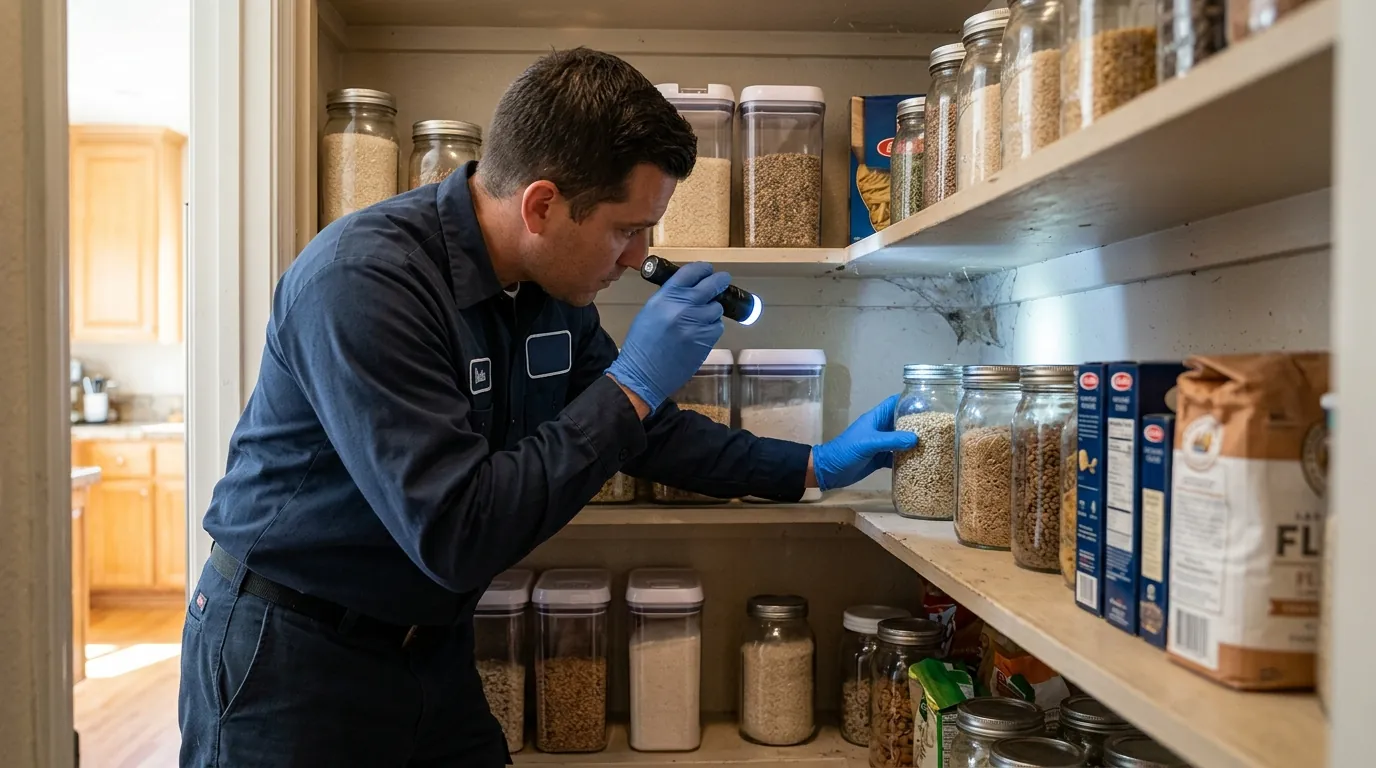
The visit starts with a shelf-by-shelf search: webbing in corners and package folds, larvae in seams, tiny beetles in spice jars, holes in bags. Pet food, birdseed and dried flowers get checked first, since they are the most common source. Once the source is out, shelves get vacuumed into the cracks and corners where larvae pupate, crack-and-crevice treatment goes only into the voids away from food, and pheromone traps stay behind to show whether any moths are still breeding.
Know what you have
The common pantry invaders
Indian meal moths
Small moths with copper-tipped wings, webbing in grains, nuts, dried fruit and pet food.
Cigarette and drugstore beetles
Tiny brown beetles in spices, flour, dried herbs, tea and even books.
Flour beetles
Reddish-brown beetles in flour, cake mixes and baking supplies, often unnoticed until heavy.
Rice and grain weevils
Snouted beetles that develop inside whole grains like rice, corn and wheat berries.
The visit
How pantry service runs
Search
Every shelf, package and pet-food bin checked for webbing, larvae and adults.
Remove the source
Infested items identified and bagged out; borderline items flagged for freezing.
Deep clean
Shelves, corners and cracks vacuumed where larvae pupate.
Targeted treatment
Crack-and-crevice placement away from food; nothing on food or food surfaces.
Monitor
Pheromone traps confirm the moths have stopped breeding.
Local pressure
Warm kitchens, bulk buying
Pantry pests develop fastest in warm conditions, and Los Angeles kitchens stay warm most of the year, so an infestation that would stall in a cold-winter city keeps cycling here. Bulk buying, large bags of pet food stored in garages and backyard bird feeders add more sources. Restaurants and food businesses face the same insects at a larger scale, covered under restaurant pest control.
What it costs
Current LA market ranges
Figures are current Los Angeles market ranges from published pricing surveys, not a quote. Property size, construction, how established the problem is and access all move the number; we confirm pricing after an inspection.
Common questions
Asked before booking this service
Almost always Indian meal moths. The adults flutter around kitchens in the evening, but the damage is done by their larvae, which spin webbing in flour, cereal, rice, nuts, dried fruit, spices and especially pet food and birdseed.
Most arrive already inside a product from the store or warehouse, as eggs too small to see. Once established, larvae chew through thin paper, cardboard and plastic bags, which is why one infested box can spread through a whole cabinet.
No product goes on food or food-contact surfaces, and spraying would not reach larvae inside packages anyway. The fix is finding and removing the infested source, cleaning the shelves and cracks, then using targeted crack-and-crevice treatment and pheromone monitoring where appropriate.
Only what is infested or cannot be confirmed clean. Unopened cans and glass jars are fine. Dry goods in paper or thin plastic get checked; anything with webbing, larvae or tiny beetles goes. Freezing questionable items for several days kills eggs and larvae in many dry goods.
Store dry goods, pet food and birdseed in sealed glass, metal or heavy plastic containers, buy smaller amounts you use quickly, and wipe up spills in the back corners of shelves. Pheromone traps left in the pantry give early warning if a new infested product comes home.
Indian meal moth larvae wander away from the food source to pupate, crawling up walls and into ceiling corners, closets and even neighboring rooms, so moths and cocoons turn up far from the kitchen. The source is still a food product somewhere; a bag of birdseed in the garage, dog food in a hall closet or a decorative arrangement of dried corn or flowers are common culprits. The inspection checks the whole house for those secondary sources, not just the pantry.
Related treatments
Often booked alongside this one
The line is on right now
Moths fluttering out of the cupboard?
Call and describe what you are seeing. The visit finds the source package and clears the kitchen out properly.
Answered 24/7, including weekends and holidays.
Call us or find us
- Phone
- (323) 329-3792
- Hours
- Open and answering 24/7, every day
- Service office
- 3123 Cahuenga Blvd W #390, Los Angeles, CA 90068
- Head office
- 7623 Atlanta Ave, Ste 284, Huntington Beach, CA 92646
- Coverage
- Los Angeles, Orange and neighboring counties