Invasive Aedes and seasonal programs
Mosquito control for the daytime biters
The mosquitoes biting you at noon are a newer, tougher species. They breed in a teaspoon of water and their eggs wait two years, so the program treats where they rest and where they breed, all season long.
Updated October 2026
This treatment, at a glance
- Job type
- Seasonal yard program
- Main target
- Invasive Aedes species
- Season
- About June to November
- Line
- Answered 24/7
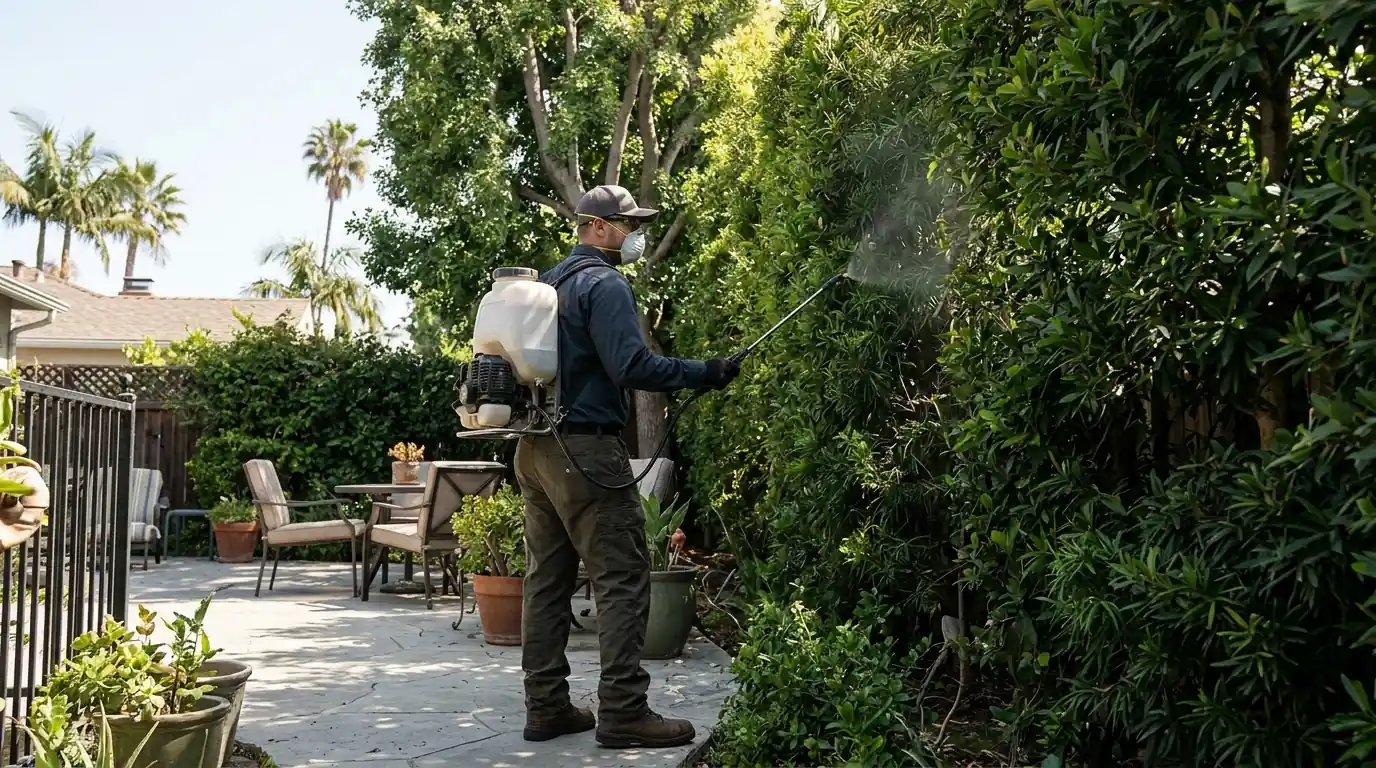
Mosquito control in Los Angeles is aimed at the invasive Aedes species that now bite in broad daylight: a barrier treatment on the shaded foliage where adults rest, plus finding and treating the tiny water sources they breed in, repeated through the June to November season. Call (323) 329-3792 to start a yard program.
The new mosquito problem
Why LA backyards changed
For most of Los Angeles history, mosquitoes were an evening nuisance: native Culex species that bite at dusk and breed in larger standing water. That changed with the arrival of three invasive Aedes species, now established across the county. They are small, black and white, and aggressive, they bite in daylight, and they breed in containers so small that most homeowners never think to check them.
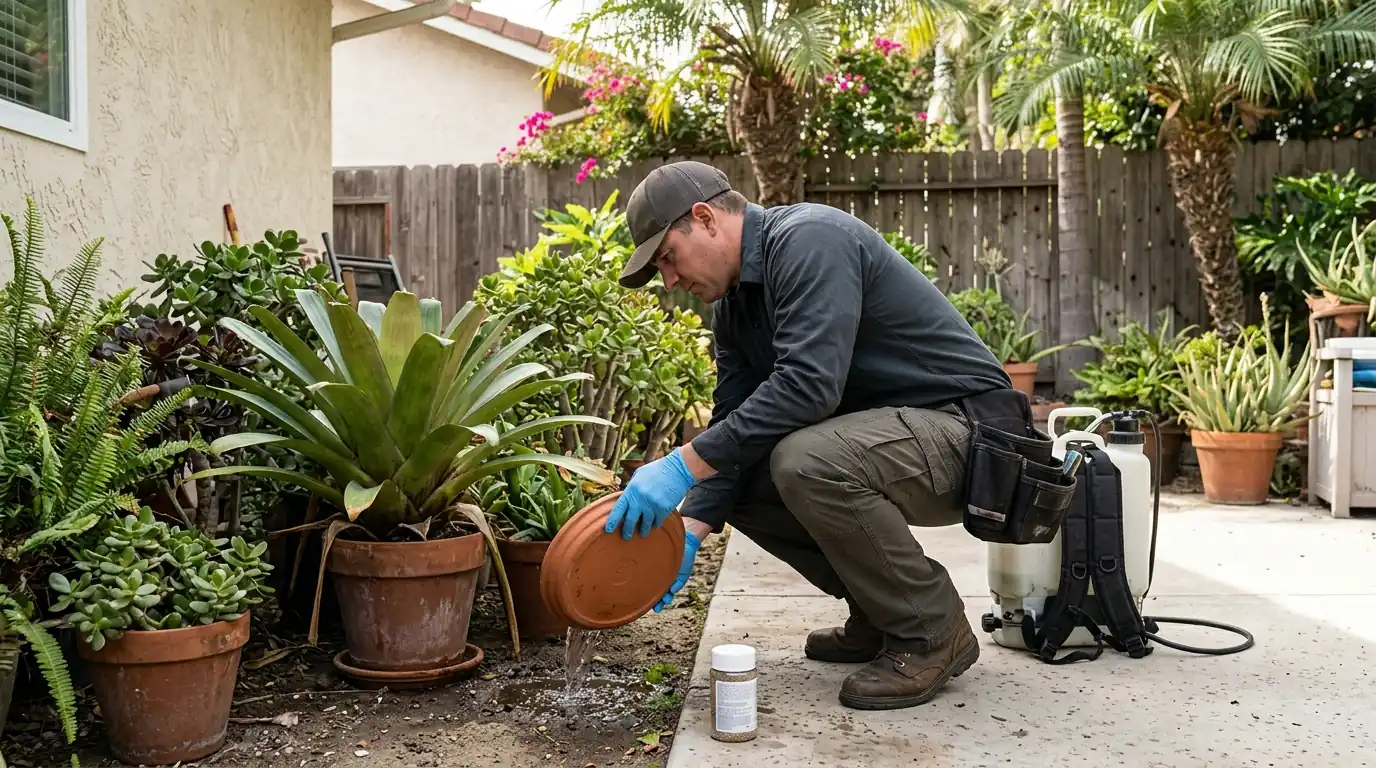
Their eggs are the real problem. Females lay them just above the waterline in a plant saucer, a bromeliad cup or a forgotten toy, and the eggs can sit dry for up to two years until irrigation or rain refills the container, then hatch into a new generation within days. That is why one well-watered yard can produce mosquitoes all season even with no pool or pond on the property.
What the program does
Two jobs every visit
Barrier treatment
Shaded foliage, hedges, under decks and along fences, where adults rest by day, treated with products like Talstar and Suspend.
Source reduction
Every container that holds water found, dumped or treated with growth regulators, including the ones hidden in plants and drains.
Larval control
Water that cannot be dumped, like drains and decorative features, treated so larvae never become biting adults.
Homeowner checklist
A short, specific list of the containers in your yard to tip weekly between visits.
The program
How mosquito service runs
Yard inspection
Breeding sources and resting areas mapped across the property.
Source reduction
Containers dumped, drains and features treated, gutters and saucers flagged.
Barrier application
Resting foliage and shaded structures treated where adults wait.
Repeat on schedule
Visits about monthly through the season, since barriers weather and new hatches arrive.
Adjust
Hot spots tracked visit to visit so the treatment follows the actual pressure.
Local pressure
The number one mosquito city
Los Angeles has been ranked the number one mosquito city in the US multiple years running in Orkin's annual ranking, and the reasons are structural: a long warm season, irrigated landscaping in millions of yards, and invasive Aedes that thrive in exactly the containers suburban gardens are full of. Culex mosquitoes still carry West Nile virus through the summer, and county vector control districts fielding small staffs for millions of residents necessarily focus on public spaces and surveillance. The backyard is the homeowner's responsibility, and a recurring yard program is the practical way to take it back.
What it costs
How mosquito programs are priced
Yard programs are priced by lot size, vegetation density and the number of breeding sources, with visits about monthly through the season. For scale, recurring service visits in the LA market generally run in the $150-$250 range, and mosquito programs are quoted after the yard inspection so you know the per-visit and seasonal cost in writing.
Common questions
Asked before booking this service
Because Los Angeles now has invasive Aedes mosquitoes, three species of them, and unlike the native dawn-and-dusk biters, they bite aggressively in daylight, often around ankles and lower legs. If you are being bitten at lunch in the backyard, that is almost certainly who it is.
In tiny amounts of water you would never notice: plant saucers, bromeliads, toys, buckets, clogged gutters, drain grates, tarp folds and even bottle caps. Invasive Aedes lay eggs in containers holding as little as a teaspoon of water, and those eggs survive dry for up to two years until the next watering.
A barrier treatment on the foliage and shaded resting spots where adults sit during the day kills them as they land and cuts biting sharply for weeks. It works best paired with source reduction, because without dumping and treating the breeding containers, new adults keep hatching into the treated yard.
District crews focus on public spaces, standing water at public sites and disease surveillance, and they serve millions of residents with small staffs. Private backyards are left to the homeowner, which is where a recurring yard program fits.
The main season runs roughly June through November, with the worst biting in late summer. Mild winters and irrigation mean activity can start earlier and run later, so programs are scheduled across the whole warm stretch.
Related treatments
Often booked alongside this one
The line is on right now
Backyard unusable by afternoon?
Call and the yard inspection will find where they are breeding, often in places you would never think to look.
Answered 24/7, including weekends and holidays.
Call us or find us
- Phone
- (323) 329-3792
- Hours
- Open and answering 24/7, every day
- Service office
- 3123 Cahuenga Blvd W #390, Los Angeles, CA 90068
- Head office
- 7623 Atlanta Ave, Ste 284, Huntington Beach, CA 92646
- Coverage
- Los Angeles, Orange and neighboring counties