Swarms, wall colonies and comb
Bee removal that takes the comb, not just the bees
A colony in a wall is honey, wax and bees, and all three have to go. Swarms get collected while they are easy; established colonies get opened, cleaned out and sealed so the next swarm finds nothing.
Updated October 2026
This treatment, at a glance
- Job type
- Swarm collection or structural removal
- Relocation
- Arranged where suitable
- Key step
- Comb and scent removed
- Line
- Answered 24/7
Bee removal in Los Angeles depends on what you have: a resting swarm on a branch can usually be collected and relocated, while an established colony in a wall or eave needs the comb opened, removed and the cavity cleaned and sealed so no new swarm moves in. Many feral colonies here carry Africanized genetics, so keep your distance. Call (323) 329-3792 any hour.
First response
Swarm on a tree or bees in a wall
Keep your distance
Many SoCal feral colonies defend aggressively. Keep people and pets well back, especially anyone allergic.
Do not spray or seal
Spraying agitates the colony and kills bees that could be relocated; sealing a wall entry pushes them indoors.
Call while it is a swarm
A resting swarm is easiest to collect. Once it moves into a wall, the job becomes a structural removal.
How removal works
Swarm, colony, then comb
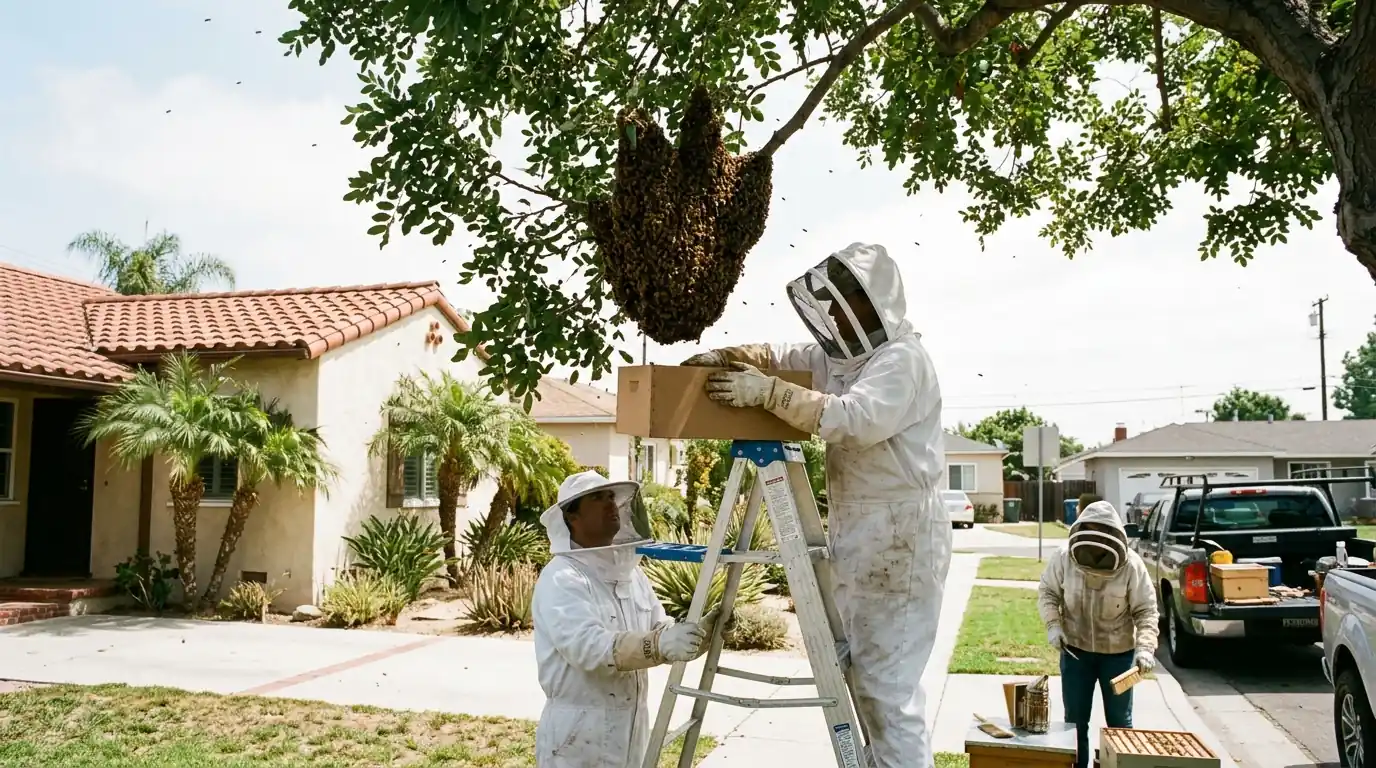
Honeybees are not wasps, and the job is different. Swarms, the clusters that hang on branches, fences and eaves in spring, are colonies in transit; they are usually docile and can often be collected and relocated through a local beekeeper before they choose a cavity. Once a colony moves into a wall void, soffit, chimney or water meter box, it begins building comb and storing honey, and the removal becomes structural work.
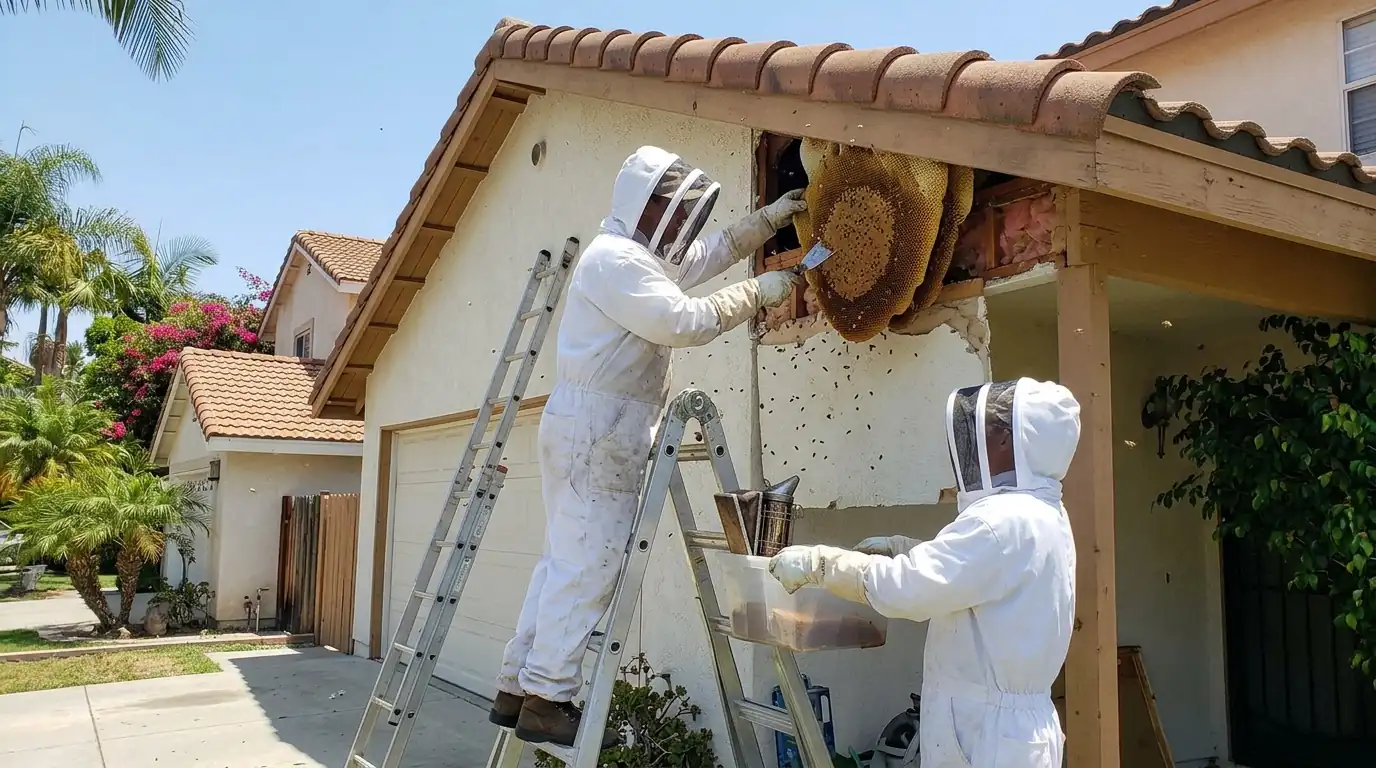
Established colonies are opened at the comb, with the cut planned for the easiest repair. The comb, honey and bees are removed, by live removal where the colony is suitable and the situation is safe, and the cavity is scraped of residual wax and treated to erase the scent that draws new swarms back to proven sites. The entry is then sealed. Leaving comb behind is the most common reason bee problems recur, because melting honey stains walls, ferments, and invites ants, rodents and the next swarm.
The visit
How bee removal runs
Assess
Swarm or established colony, location, temperament and how far the comb extends.
Secure the area
People and pets cleared, protective gear on, timing chosen for colony calm.
Collect or remove
Swarms collected; established colonies opened and comb removed, relocated where possible.
Clean the cavity
Residual wax and honey scraped out, scent neutralized so swarms stop returning.
Seal
The entry closed so the site cannot be reused.
Local pressure
Southern California's feral bee picture
Southern California has one of the densest feral honeybee populations in the country, and a large share carries Africanized genetics that showed up in the region in the 1990s. Swarming peaks in spring, when stucco gaps, wall voids, block wall cavities and irrigation boxes give scouts plenty of options in every neighborhood. Mild winters mean established colonies in structures never die back, and an unremoved colony can grow in a wall for years. That combination is why bee calls here are treated with real caution, and why removing the comb, not just the bees, is the standard.
What it costs
How bee removal is priced
Swarm collection is the simplest case. Established colonies are priced by access and comb size: a colony in a water meter box is a different job from one spanning two wall bays behind stucco. The quote is given before work starts, with the opening and cleanup scope spelled out, so you know whether any wall patching will be needed afterward. For scale, one-time pest jobs in the LA market start from about $300 and structural colonies run above that.
Common questions
Asked before booking this service
A resting swarm is usually calm. The bees are full of honey and have no home to defend while scouts look for a new site. Keep people and pets back and do not spray or disturb it, and call promptly, because the swarm may move into a wall or eave within hours to days.
Where the colony is accessible and the situation allows, live removal and relocation through a local beekeeper is preferred and arranged. Swarms and many structural colonies can be handled that way; colonies in sealed or unsafe spots, or showing defensive behavior, sometimes cannot.
Because the comb stays behind. An established colony leaves wax and honey that melt, ferment, stain drywall and attract ants, roaches, rodents and the next swarm. Removing the comb is a necessary part of the job, not an extra.
Many feral honeybee colonies in Southern California carry Africanized genetics and can defend their nest more intensely and in larger numbers. That is a strong reason not to approach a hive yourself and to leave removal to a crew in protective gear.
After the comb is removed, the cavity is cleaned of residual wax and scent, which is what draws new swarms, and the entry is sealed. Repeat swarms usually trace back to comb left in place or a gap that was never closed.
Related treatments
Often booked alongside this one
The line is on right now
Swarm landed this morning?
Call while it is still a swarm. That is the easiest and cheapest moment to deal with it, and the best chance for relocation.
Answered 24/7, including weekends and holidays.
Call us or find us
- Phone
- (323) 329-3792
- Hours
- Open and answering 24/7, every day
- Service office
- 3123 Cahuenga Blvd W #390, Los Angeles, CA 90068
- Head office
- 7623 Atlanta Ave, Ste 284, Huntington Beach, CA 92646
- Coverage
- Los Angeles, Orange and neighboring counties