After the rodents are out
Attic cleanup and sanitation after rodents
Getting the rats out is half the job; what they left behind is the other half. Contained removal, real sanitation and restored insulation turn the attic back into part of the house.
Updated October 2026
This treatment, at a glance
- Job type
- Decontamination and restore
- Method
- HEPA containment, no dry sweep
- Finish
- Insulation to proper depth
- Line
- Answered 24/7
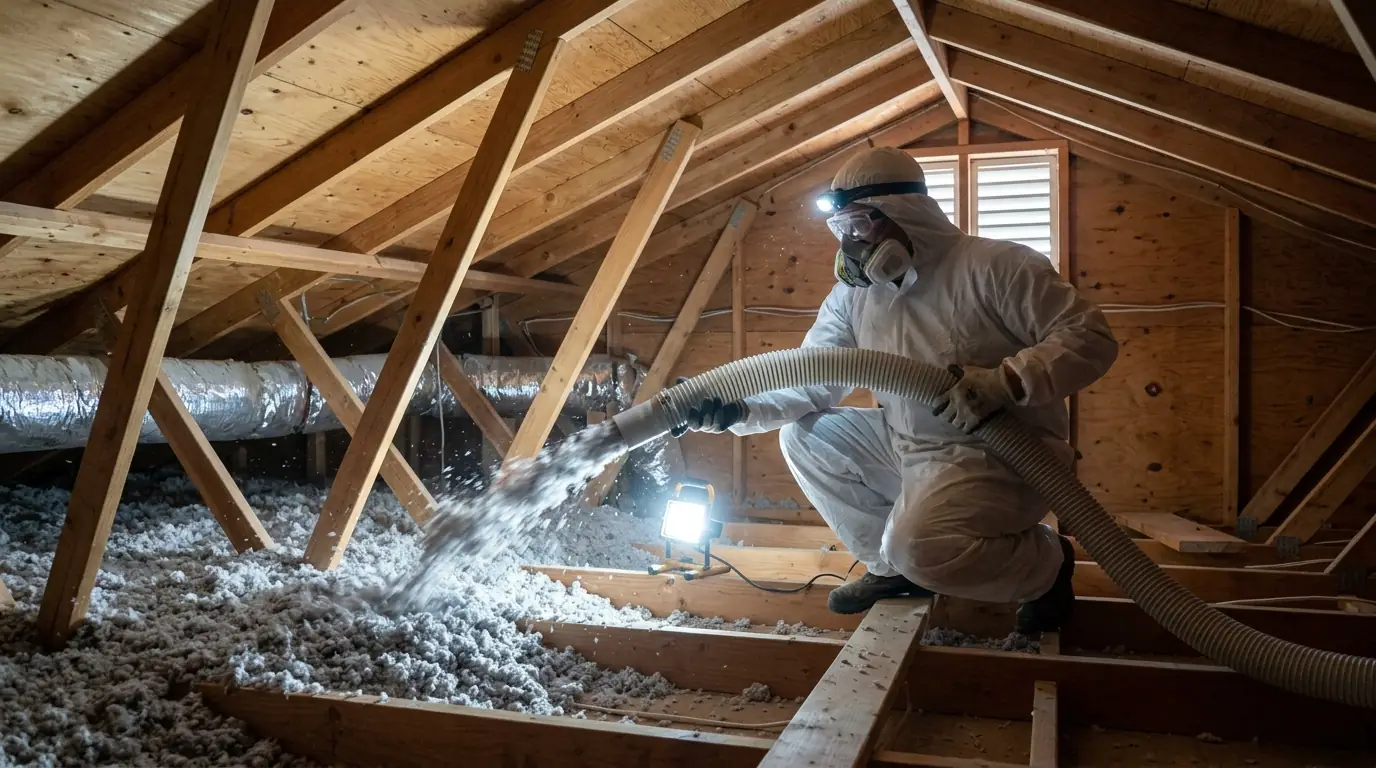
Attic cleanup and sanitation in Los Angeles is the restoration step after rodents: removal of droppings and soiled insulation under HEPA containment, sanitizing and deodorizing of the space, and insulation blown back to proper depth. It matters because rodent waste is a health load and the scent trail invites the next animals in. Call (323) 329-3792 for an inspection and written scope.
What the service covers
From contaminated to closed-out
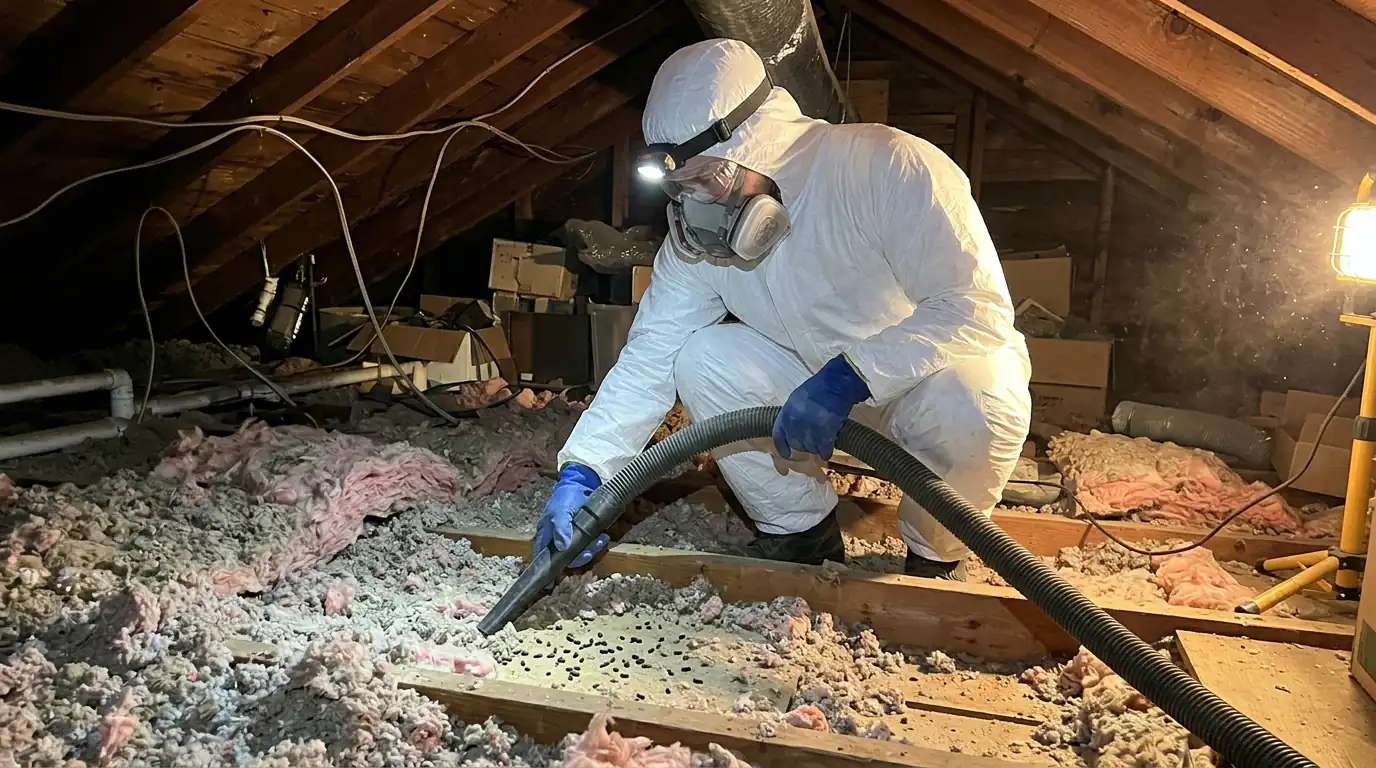
An attic that hosted roof rats for a season carries more than memories. Droppings accumulate along every runway, urine soaks into insulation and decking, nest material packs into corners and can foul vents, and gnawed wiring or ducts sometimes ride along. Left alone, that load sheds allergens and odor into the living space through can lights and duct leaks, flattened insulation quietly raises cooling bills, and the pheromone signature advertises the space to every disperser on the block.
Cleanup reverses it in order. Contaminated material and soiled insulation come out under HEPA-filtered vacuum and containment, never dry-swept, so nothing aerosolizes into the house. Nest sites are cleared, the space is treated with sanitizing and deodorizing agents that neutralize biologicals and scent rather than masking them, and damage worth your contractor's attention, chewed duct insulation, wiring sign, gets photographed and reported straight. Then insulation returns at proper depth, and the attic closes out as a documented, sealed, restored space rather than a crime scene with a lid on it.
Why it earns its place
Three problems, one job
Health
Droppings, urine and dander are allergen and pathogen load sitting upstream of your air system. Removal under containment takes it out of circulation.
Energy
Tunneled, compressed, urine-soaked insulation has lost its R-value. Replacement at proper depth usually leaves the attic better than before the infestation.
Re-infestation
Rodent scent trails mark proven harborage. Neutralizing them, with the entries sealed, removes the welcome sign the next animals follow.
The visit
How cleanup runs
Inspect and map
Contamination mapped honestly: what spots out, what comes out, what stays.
Contain and remove
HEPA-filtered removal of droppings, debris and soiled insulation, sealed and bagged out.
Sanitize and deodorize
Decking and framing treated to neutralize biologicals and the scent beacon.
Report damage
Duct, wiring and vent findings photographed for your contractor, stated plainly.
Restore
Insulation blown back to proper depth and the job documented end to end.
Local pressure
Why LA attics need this more often
Los Angeles attics host more rodent-years than most of the country's: roof rat pressure is constant, winters never clear populations, and the region's dense canopy keeps attics in rotation as nesting space decade after decade. County public health's attention to rat-linked disease, including murine typhus carried by rat fleas, is a reminder that what rodents leave behind matters as much as the rodents. This service follows rat control and exclusion in the natural order: clear the animals, close the structure, then restore the space.
What it costs
How cleanup is priced
Cleanup is scoped from the inspection because contamination area and insulation volume drive it: a spot-clean of one runway corner and a full strip-and-replace are different jobs, and the written scope separates them honestly. As an anchor, the sealing work it pairs with runs $600-$1,200 for a typical LA home, and the cleanup scope comes back itemized so you can see exactly what the attic needs and what it does not.
Common questions
Asked before booking this service
Three reasons: droppings and urine carry pathogens and allergens into your air handling, soiled insulation has lost loft where rodents tunneled and nested, and the scent trail rodents leave is a beacon that tells the next dispersers a proven harborage is open. Cleanup deals with the health issue, the energy issue and the re-infestation issue in one job.
It should be treated with respect. Droppings and urine aerosolize when disturbed, which is exactly why dry-sweeping or shop-vacuuming an attic is the wrong move, and why professional work uses HEPA filtration, protective equipment and wet methods that keep material out of the air.
No, and we will not pretend otherwise to grow the job. Lightly affected areas get spot-removed, sanitized and left; heavily soiled, tunneled or nested sections come out. The inspection maps which is which and the scope says so in writing before work starts.
HEPA vacuuming of droppings and debris, removal of nest material, then treatment of the decking and framing with sanitizing and deodorizing agents that neutralize the biological load and the pheromone scent trail rather than perfuming over it.
Yes. Replacement insulation gets blown back to the depth the space needs, which for most LA attics is an upgrade on what was there before the rodents, and the exclusion work that made cleanup worth doing stays documented alongside it.
Related treatments
Often booked alongside this one
The line is on right now
Attic still smells like the problem?
That smell is data. Call and the inspection will tell you exactly what needs to come out and what can stay.
Answered 24/7, including weekends and holidays.
Call us or find us
- Phone
- (323) 329-3792
- Hours
- Open and answering 24/7, every day
- Service office
- 3123 Cahuenga Blvd W #390, Los Angeles, CA 90068
- Head office
- 7623 Atlanta Ave, Ste 284, Huntington Beach, CA 92646
- Coverage
- Los Angeles, Orange and neighboring counties