Walls, attics and crawl spaces
Dead animal removal before the smell wins
The odor peaks for weeks if you wait, and it never tells you where it is. Locating by gradient and fly sign, removing cleanly and neutralizing at the source turns a miserable month into one visit.
Updated October 2026
This treatment, at a glance
- Job type
- Locate, remove, deodorize
- Response
- Same-day where access allows
- Usual culprit
- Roof rat in a void
- Line
- Answered 24/7
Dead animal removal in Los Angeles is a same-day job wherever access allows: locate the carcass by odor gradient and fly sign, remove it, sanitize and deodorize the spot, and identify how the animal got in. The smell does not improve on its own schedule for weeks, so call (323) 329-3792 now; the line is answered 24/7.
First response
While you wait for the visit
Do not cut the wall yourself
Exploratory holes multiply the patching without finding the animal. The odor gradient narrows the location better than guesswork.
Ventilate, do not perfume
Open windows and move air out. Covering agents mix with the odor rather than beating it; neutralizing happens at the source.
Note where it is strongest
Which room, which wall, stronger high or low, worse with heat or appliances on. That gradient does half the locating.
How removal works
Locate, remove, neutralize, seal
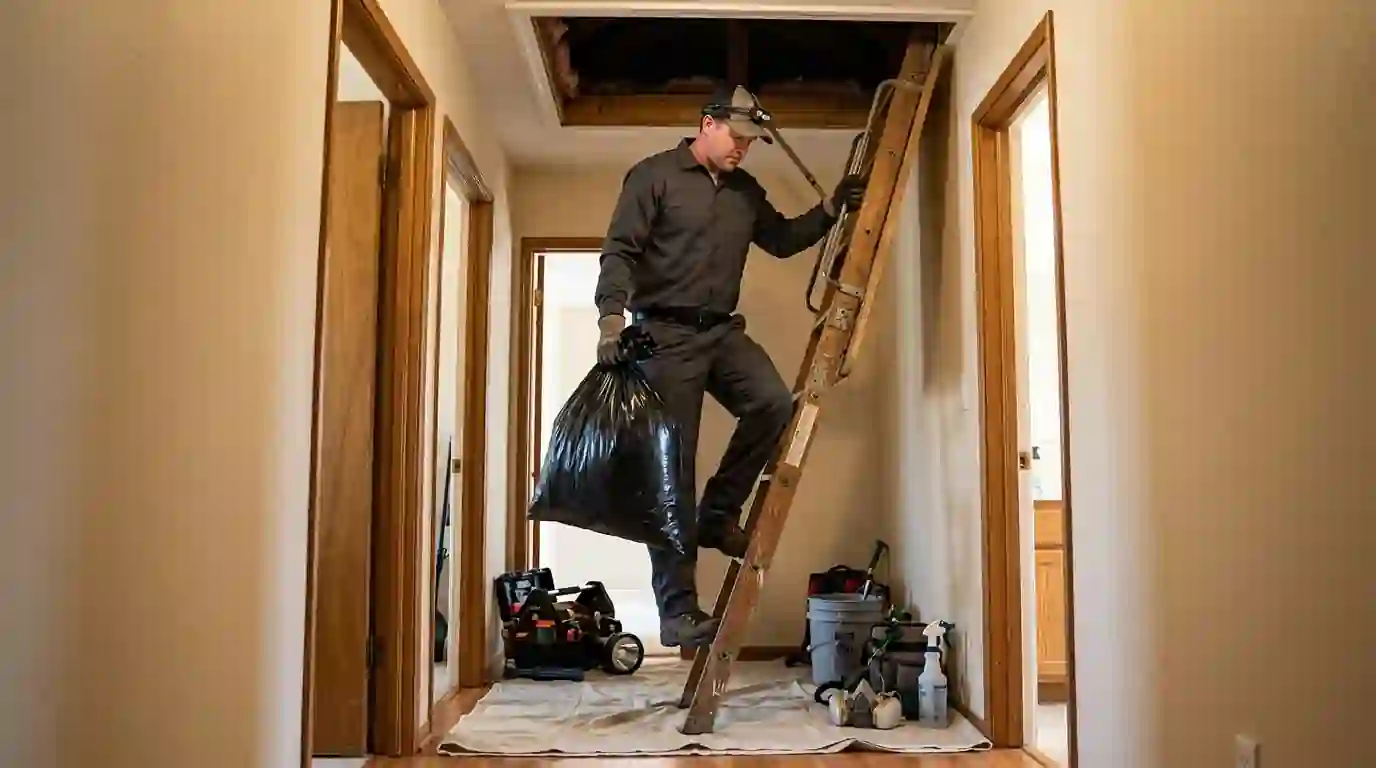
A dead animal in a structure announces itself in stages: a sweetish wrongness for a day, then an unmistakable odor that intensifies for a week or more, often with blowflies appearing at windows and light fixtures nearest the carcass. In Los Angeles the animal is usually a roof rat that died in a wall void or attic, sometimes a mouse under an appliance, occasionally an opossum or raccoon under a raised foundation.
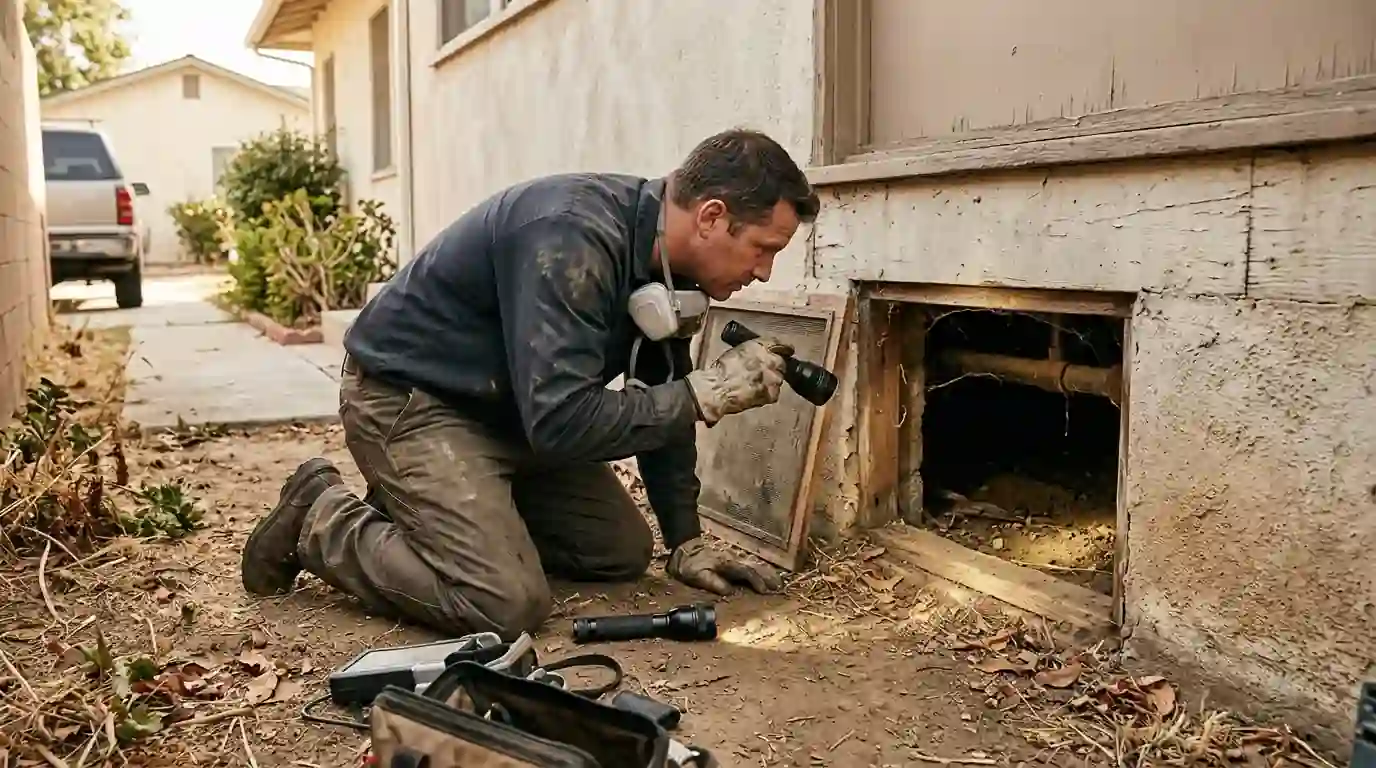
The visit works the evidence: odor gradient room to room, fly concentrations, attic and crawl inspection along the runways rodents actually use. Most animals are recovered without opening anything; when a wall void is the answer, the access cut is small, square and placed for easy patching, and you approve it first. Removal is only half the fix: the spot gets cleaned of fluids and residue, treated with enzyme-based neutralizers that break the odor compounds down rather than masking them, and checked for the mites and fleas a rodent host leaves hunting. Then the question that prevents the sequel gets answered: where it got in, with sealing scoped so the structure stops collecting animals.
The visit
From smell to solved
Triage on the phone
Where it is strongest and how long it has built tells us likely species and search area before arrival.
Locate
Odor gradient, fly sign and runway knowledge narrow it to the void, bay or corner.
Remove
Carcass recovered and bagged out; access cuts only with your approval, made patch-ready.
Neutralize
Fluids cleaned, enzyme deodorizing at the source, parasite check where the host was a rodent.
Close the route
Entry identified and sealing scoped so this is the last one.
Local pressure
Why this call is so common in LA
The dead-animal call is a direct consequence of Los Angeles's standing rodent pressure: a basin full of roof rats living in attics, walls and crawl spaces means a steady fraction dying in them, and the region's warm temperatures accelerate decomposition and the odor curve. Consumer rodent poisons make it worse, an animal that feeds on bait and retreats into a void to die is the classic origin of this exact call, which is one more practical reason the trapping-first approach in rat control exists. Raised foundations across older LA neighborhoods add the under-house version, where opossums and cats find their way in through broken vent screens.
What it costs
How this job is priced
Removal is priced by access: a reachable attic or crawl recovery is the base case, a wall-void recovery with an access cut sits above it, and the quote is stated plainly on the phone or at arrival before work starts. Where the visit grows into prevention, sealing the structure runs in the standard $600-$1,200 LA exclusion range, scoped separately so you only buy what the situation needs.
Common questions
Asked before booking this service
The odor gradient, fly activity and the structure's layout narrow it fast: smell strongest at one wall, flies clustering at a ceiling fixture, warmth from an appliance that attracted the animal. Most carcasses are located within the first visit; wall-void recoveries sometimes need a small, cleanly cut access opening, which we tell you about before cutting.
A mouse fades in about a week; a roof rat can run two to four weeks; anything larger, longer, with flies and stains along the way. Waiting is a real option only when the carcass is small and truly unreachable, and we will tell you honestly when that is the case instead of selling drywall work.
The odor is more miserable than dangerous, but the carcass is a biological load: decomposition fluids stain and soak materials, and it draws flies, beetles and, in the case of rodents, leaves mites and fleas hunting a new host. Removal plus sanitizing deals with the whole package, not just the air.
Access cuts are made small, square and clean so patching is simple. The opening is sealed back; finish drywall texture and paint stay with your handyman or painter, and the report photographs everything so that handoff is easy.
Yes, and that is the honest second half of the visit: an animal that died in your structure got into your structure. The entry route gets identified, and sealing is scoped through rodent exclusion so the next one stays outside.
Related treatments
Often booked alongside this one
The line is on right now
The smell is getting worse by the hour?
Call now and describe where it is strongest. Same-day recovery is the normal outcome, not the exception.
Answered 24/7, including weekends and holidays.
Call us or find us
- Phone
- (323) 329-3792
- Hours
- Open and answering 24/7, every day
- Service office
- 3123 Cahuenga Blvd W #390, Los Angeles, CA 90068
- Head office
- 7623 Atlanta Ave, Ste 284, Huntington Beach, CA 92646
- Coverage
- Los Angeles, Orange and neighboring counties