Drywood, subterranean and escrow WDO
Termite inspections for the city with both kinds
LA homes face drywood and subterranean termites at once, and both work silently for years. An annual inspection reads the early evidence while the fix is still small, and the escrow version keeps home sales honest.
Updated October 2026
This treatment, at a glance
- Job type
- Full-structure inspection
- Covers
- Both termite families
- Escrow
- WDO reports for sales
- Line
- Answered 24/7
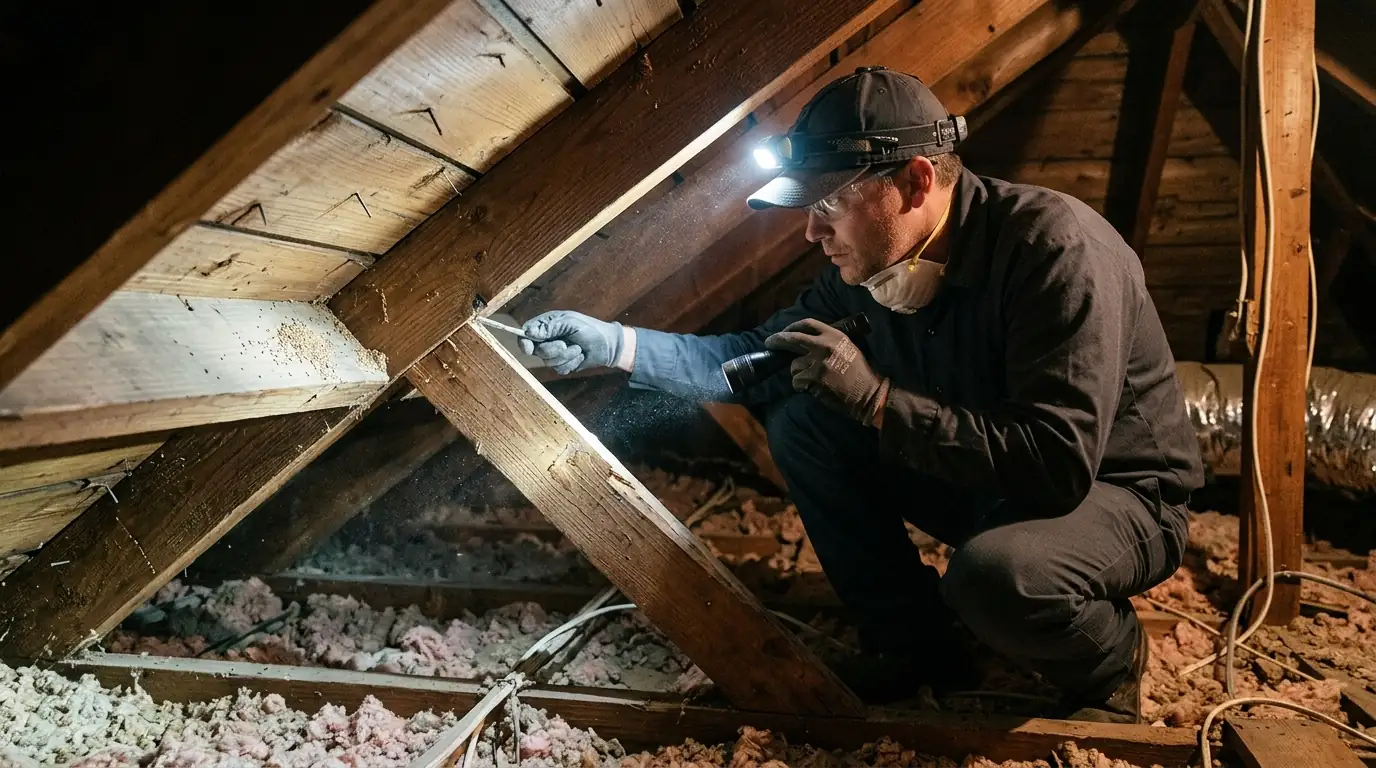
A termite inspection in Los Angeles checks every accessible part of the structure for both local threats at once: subterranean termites tubing up from the soil and drywood colonies living inside the wood itself. In the LA market, basic inspections run free to $100 and formal WDO escrow reports $100-$150. Annual inspection is the standard here. Call (323) 329-3792 to schedule.
Why annual, here
The one-two pressure LA homes sit under
Los Angeles is one of the few places in the country where a house faces serious pressure from both termite families at the same time. Subterranean termites work up from soil colonies through slabs and foundations, building the mud tubes that are their signature. Drywood termites need no soil at all: winged swarmers land on eaves, attics and window frames, bore in, and run whole colonies inside sound-looking wood, and Southern California carries some of the heaviest drywood prevalence in the continental US.
Both work silently by design. The visible signs, pellets on a windowsill, a mud tube in the garage, discarded wings after a warm-day swarm, usually appear years into an infestation. Annual inspection exists to shorten those years to months: an inspector reads the early evidence a homeowner walks past, and early evidence is the difference between a contained treatment and structural repair.
What the inspector reads
Evidence by species
Drywood pellets
Hard, six-sided pellets in neat piles below kick-out holes, often on windowsills and under eaves. The classic LA find.
Mud tubes
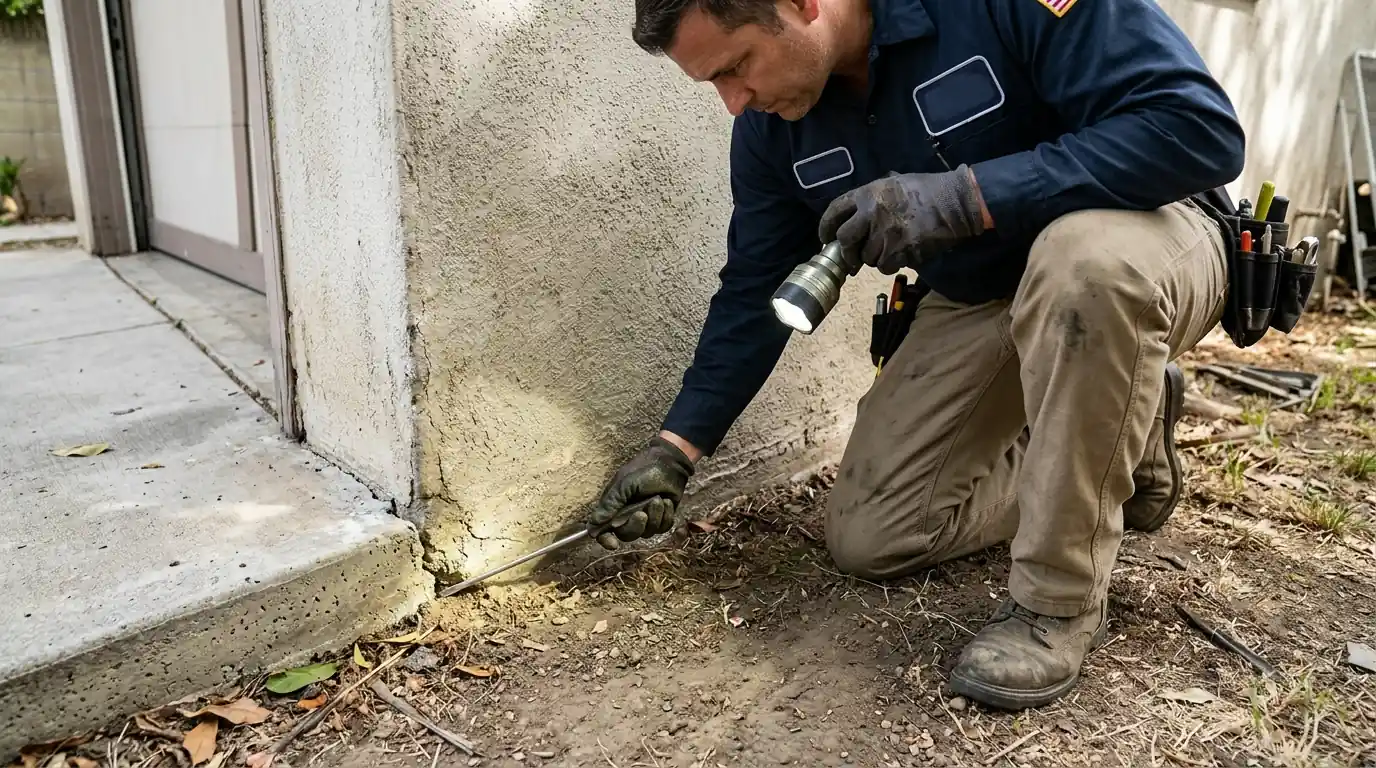
Pencil-width soil tunnels on foundations, piers and garage edges: subterranean termites commuting with their humidity.
Swarm evidence
Discarded wings at windows and lights after warm days; drywood swarms here run late summer into fall, subterranean after rains.
Wood that answers wrong
Hollow tones, blistered paint, soft baseboards and sagging sill lines that probing confirms.
The visit
How an inspection runs
Walk the structure
Interior, attic, garage, slab or crawl edges, eaves and exterior wood, all accessible areas.
Walk the grounds
Fences, wood piles, planter-to-wall contacts and irrigation conditions that feed colonies.
Document
Findings photographed and located, so you see what the inspector saw.
Report straight
Species, extent and honest options in writing, from no action needed to treatment scoped.
Schedule the rhythm
Clean reports set the next annual date; findings set the treatment conversation, your call.
Buying or selling
The escrow WDO report
In a California home sale, the termite inspection becomes a formal instrument: the wood-destroying organism report that escrow and lenders commonly require before close. It documents findings in the standardized sections agents and underwriters expect and separates active infestation from conditions likely to lead to one, so negotiations work from evidence instead of fear. Sellers often order it early to clear surprises before listing; buyers lean on it as the one look inside the walls they get. Either way the report is delivered promptly, because escrow calendars do not wait.
What it costs
Current LA market ranges
Figures are current Los Angeles market ranges from published pricing surveys, not a quote. Property size, construction, how established the problem is and access all move the number; we confirm pricing after an inspection.
Common questions
Asked before booking this service
All accessible areas of the structure: interior walls and window frames, attic framing, crawl space or slab edges, garage, eaves and exterior wood, plus the yard's fences and wood-to-soil contacts. The inspector reads for both termite families at once, mud tubes and soil contact for subterranean, pellets and kick-out holes for drywood, and reports findings with photos.
Annually is the standard here, and it earns itself: Los Angeles carries both drywood and subterranean pressure year-round, and the cost difference between catching a colony early and finding it at repair stage is measured in thousands.
A wood-destroying organism report is the formal inspection document California escrow commonly requires when a home sells: findings, evidence locations and recommended corrections in a standardized format lenders and agents accept. If you are buying or selling, that is the version of this service you want, and it is priced as its own line.
You get the evidence shown to you directly, photos and locations, plus an honest read on which species and how established, and a written recommendation: spot treatment, a soil program, or where drywood infestation is widespread, fumigation. The inspection and the sales pitch are kept separate: findings first, options second, and the report is yours either way.
Yes, and most LA homes are exactly that case. Subterranean colonies enter through expansion joints, plumbing penetrations and hairline slab cracks, then tube up inside walls where nothing shows until a swarm or a soft baseboard. That hidden route is much of why scheduled inspection matters on slab construction.
Related treatments
Often booked alongside this one
The line is on right now
Found something that might be pellets?
Photograph it and call. You will get a first read on the phone and an inspection on the calendar before doubt turns into damage.
Answered 24/7, including weekends and holidays.
Call us or find us
- Phone
- (323) 329-3792
- Hours
- Open and answering 24/7, every day
- Service office
- 3123 Cahuenga Blvd W #390, Los Angeles, CA 90068
- Head office
- 7623 Atlanta Ave, Ste 284, Huntington Beach, CA 92646
- Coverage
- Los Angeles, Orange and neighboring counties