Canyon-edge yards and pet homes
Tick control for yards on the canyon edge
Ticks gather where the lawn meets the brush, and that is where the treatment goes. A seasonal program on the transition zones, plus a few landscape changes, keeps the yard usable for kids and dogs.
Updated October 2026
This treatment, at a glance
- Job type
- Yard and indoor program
- Focus
- Lawn-to-brush transition zone
- Indoor species
- Brown dog tick
- Line
- Answered 24/7
Tick control in Los Angeles focuses on the yards that meet canyon brush and chaparral, treating the transition zones, leaf litter and shrub lines where ticks wait for a host, plus indoor treatment where brown dog ticks have established near pets. It runs best as a seasonal program with landscape changes alongside. Call (323) 329-3792 to set it up.
Where ticks live
The brush line, not the lawn
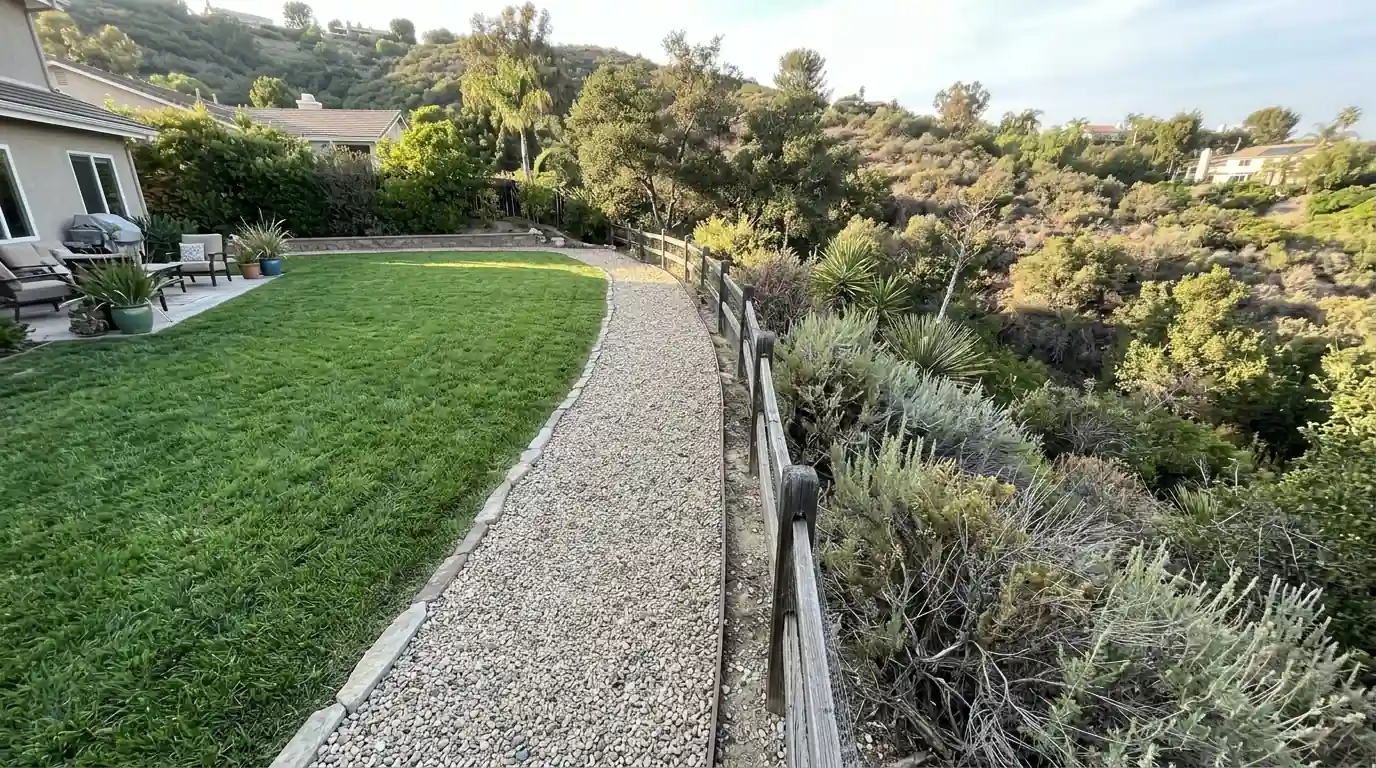
Ticks do not jump or fly; they climb vegetation and wait, front legs outstretched, for a host to brush past. That behavior decides where they live in an LA yard: in the transition zone where mowed lawn meets ground cover, brush, ivy or leaf litter, along trails and fences that lead toward canyon land, and in shaded, humid corners under shrubs. Open, sunny lawn dries them out and holds very few.
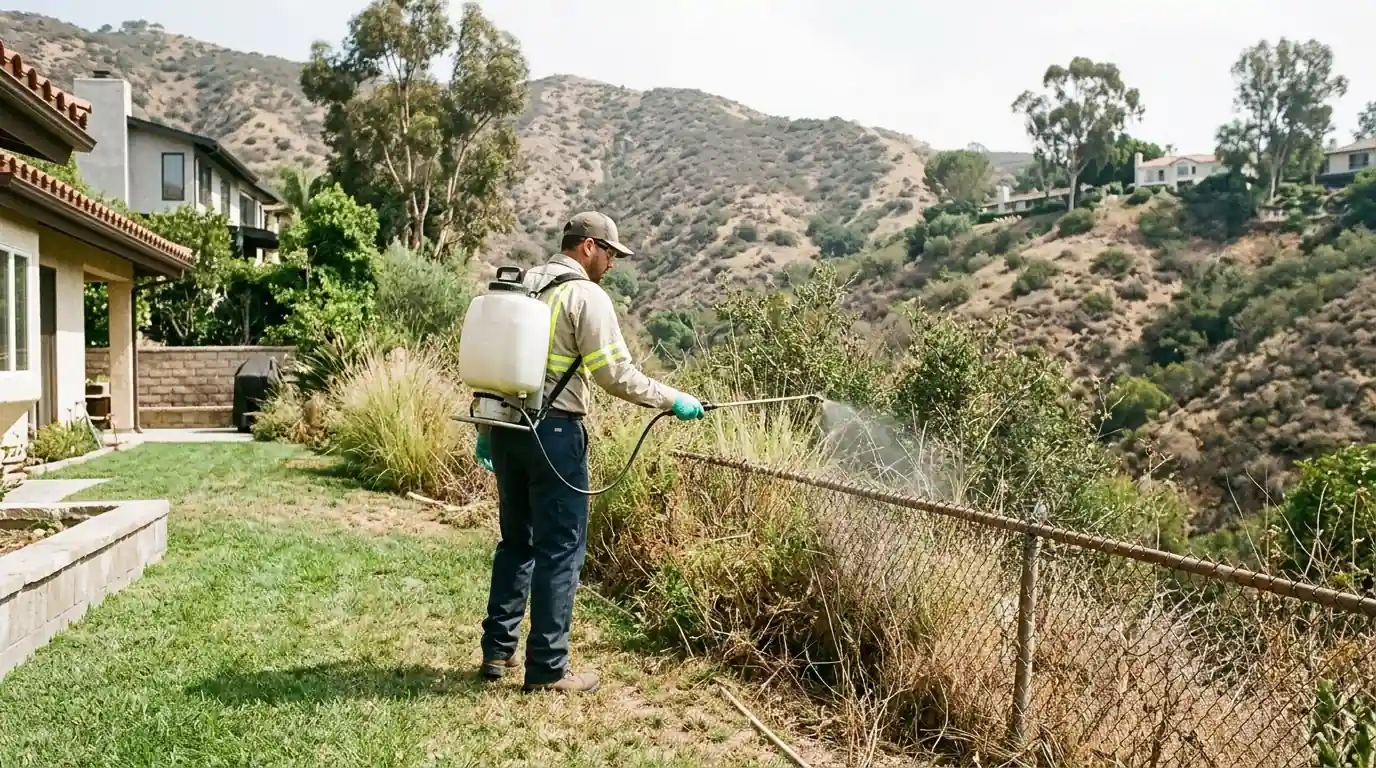
That makes tick control a targeted job rather than a blanket spray. Treatment concentrates on the transition zones, shrub skirts, ground cover and the paths animals use to enter the property, with materials matched to the setting near gardens, pools and play areas. Indoors, where a dog has carried in brown dog ticks, treatment covers baseboards, furniture edges, kennels and dog bedding, because that species can breed entirely inside. Pet protection from your vet runs alongside, since dogs are the most common carrier into the house.
Make the yard less inviting
Changes that cut tick pressure
Open the transition zone
Trim brush back from lawn edges and paths and keep leaf litter cleared, which removes the shaded, humid band ticks rely on.
Add a dry border
A strip of gravel or wood chips between lawn and brush acts as a barrier ticks are reluctant to cross.
Discourage wildlife hosts
Fencing, secured trash and fewer rodent harborage sites mean fewer animals delivering ticks to the yard.
Move play areas
Swing sets, patios and dog runs placed in open, sunny ground, away from the brush line.
The program
How tick control runs
Survey the yard
Brush lines, wildlife paths and pet resting spots mapped against the canyon edge.
Treat the zones
Transition zones, shrub skirts and ground cover treated where ticks quest.
Treat indoors if needed
Baseboards, furniture and dog areas covered where brown dog ticks have settled.
Advise on landscape
Specific, practical changes for your yard to shrink tick habitat.
Repeat by season
Visits timed to the local activity peaks so the yard stays covered.
Local pressure
The canyon-edge yards
Tick pressure in Los Angeles is a geography story. Millions of residents live along the wildland edge: the Santa Monica Mountains, the Hollywood Hills, the San Gabriel and Verdugo foothills, the Palos Verdes canyons. Deer, coyotes and rodents move between brush and backyards nightly, carrying ticks onto lawns and patios, and hikers and dogs bring them home from trails. Yards on that edge carry real seasonal pressure, while dense flatland neighborhoods mostly see brown dog ticks carried in on pets. The survey tells you honestly which yard you have before any program is proposed.
What it costs
Current LA market ranges
Figures are current Los Angeles market ranges from published pricing surveys, not a quote. Property size, construction, how established the problem is and access all move the number; we confirm pricing after an inspection.
Common questions
Asked before booking this service
In the right yards, yes. Western black-legged ticks and Pacific coast ticks live in the brushy canyon edges, chaparral and leaf litter that border much of LA, from the Santa Monica Mountains to the San Gabriel foothills, and brown dog ticks can establish indoors in homes with dogs. Flat urban lots with no brush rarely see them.
One species can: the brown dog tick, which completes its whole life cycle indoors, climbing walls and hiding in baseboards and furniture near where dogs sleep. Outdoor species bite and drop off, but brown dog tick infestations need indoor treatment as well as the yard.
Where ticks actually wait for a host: the transition zone where lawn meets brush, ground cover and leaf litter, under shrubs, along fences and paths into canyon land, and around wood piles. Open sunny lawn is poor tick habitat and gets little product.
Remove it with fine-tipped tweezers by gripping close to the skin and pulling straight out with steady pressure, then clean the bite. Save the tick in a sealed bag in case symptoms develop, and talk with a doctor about any rash, fever or illness in the following weeks.
For a yard bordering brush, ticks keep arriving on deer, coyotes and rodents, so treatment works as a seasonal program timed to the activity peaks, paired with landscape changes that make the yard less hospitable. Brown dog tick infestations indoors usually need a follow-up visit.
Related treatments
Often booked alongside this one
The line is on right now
Found one on the dog after a walk?
Call and tell us where you live relative to the brush line. You will get an honest read on whether the yard needs a program or the dog needs a vet visit.
Answered 24/7, including weekends and holidays.
Call us or find us
- Phone
- (323) 329-3792
- Hours
- Open and answering 24/7, every day
- Service office
- 3123 Cahuenga Blvd W #390, Los Angeles, CA 90068
- Head office
- 7623 Atlanta Ave, Ste 284, Huntington Beach, CA 92646
- Coverage
- Los Angeles, Orange and neighboring counties