Frass, galleries and moisture
Carpenter ant control for Los Angeles homes
Carpenter ants never pick a house at random: they pick wet wood. Finding the nest also finds the leak, and treating both is what keeps them from coming back.
Updated October 2026
This treatment, at a glance
- Job type
- Nest location and treatment
- Tell-tale
- Coarse frass below galleries
- Root cause
- Moisture, always
- Line
- Answered 24/7
Carpenter ant control in Los Angeles is a find-the-nest job: these ants excavate moisture-damaged wood, so treatment means locating the galleries, treating the colony directly, and fixing the wet conditions that invited it. Trails alone get you a one-year repeat problem. Call (323) 329-3792 to book an inspection.
What this service covers
The nest, the moisture, and the bridge
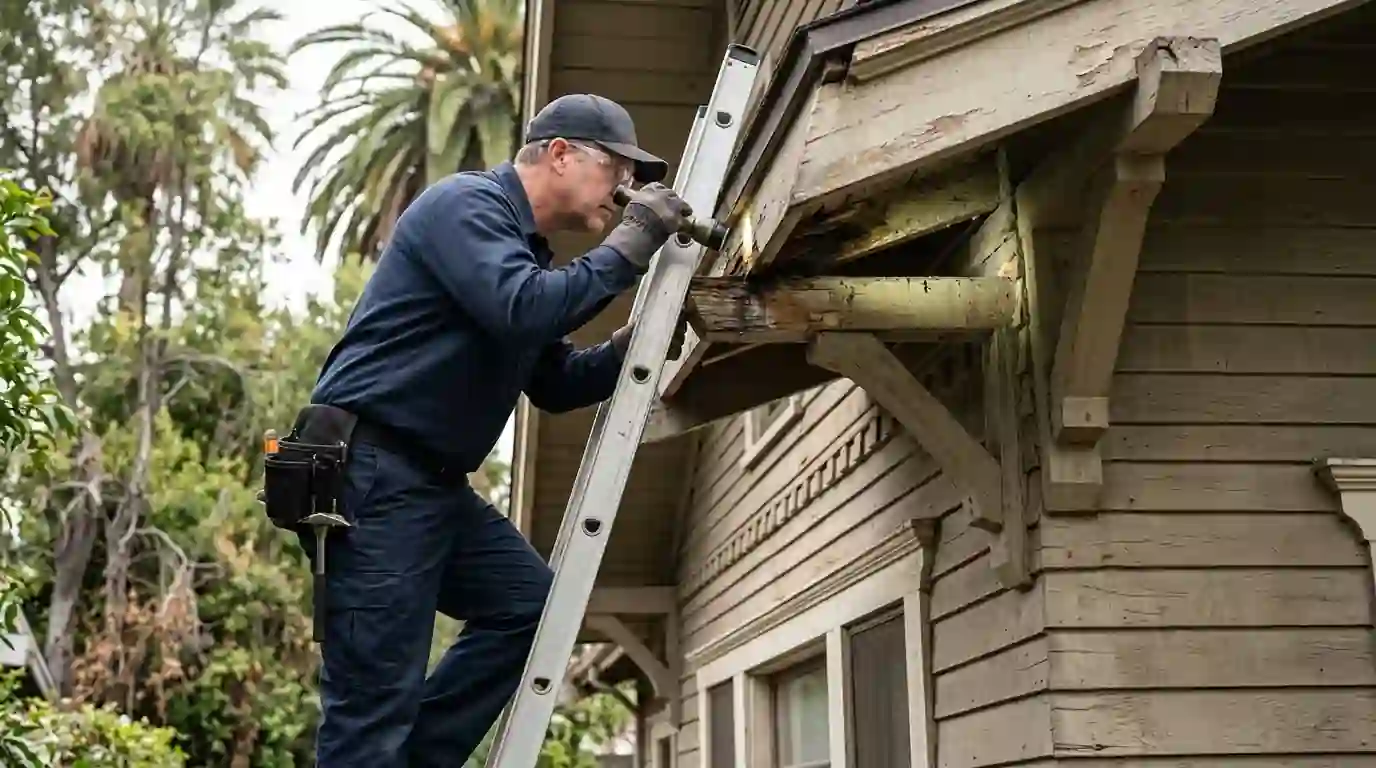
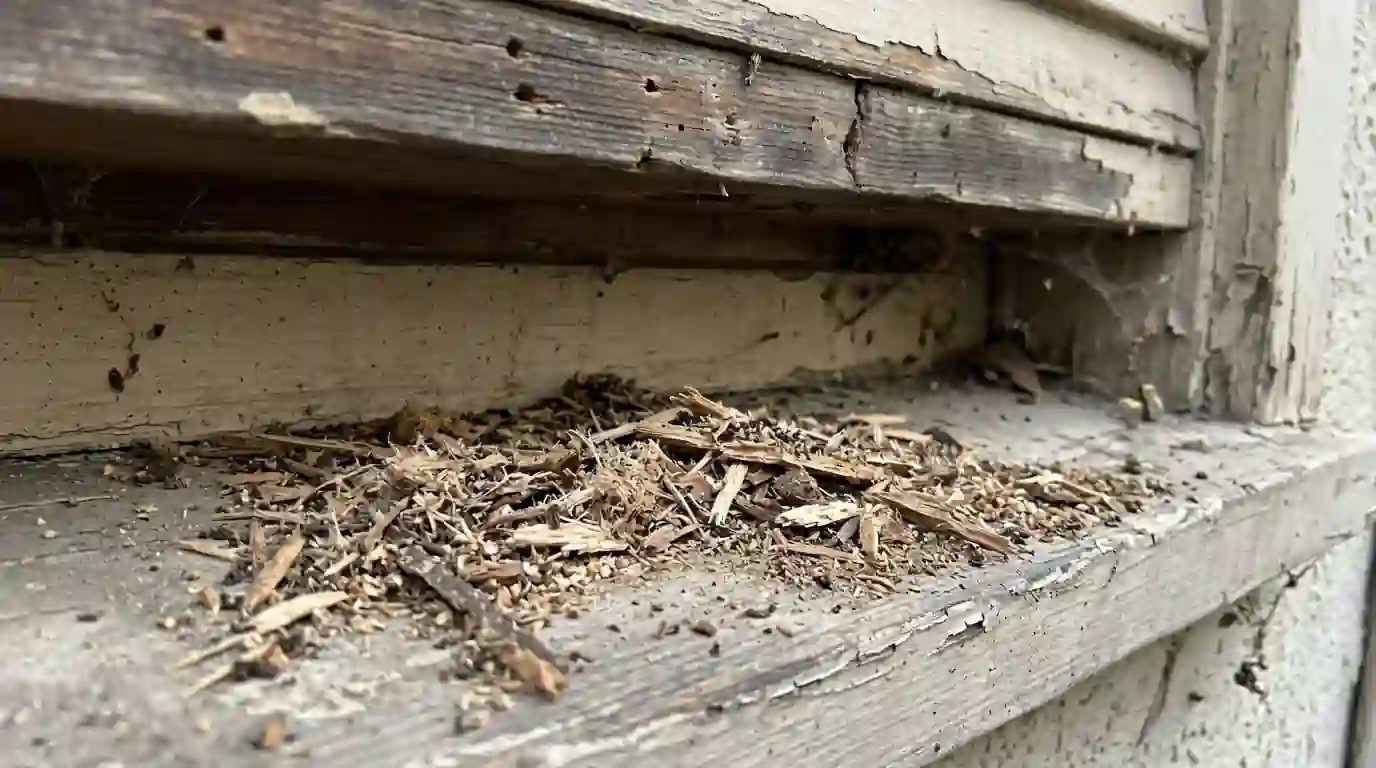
Carpenter ants are the quiet structural pest of older Los Angeles housing stock. They do not eat wood; they hollow it into smooth galleries for nesting, and they only choose wood that moisture has already softened: the rafter tail under a clogged gutter, the sill below a sweating window, the framing beside a slow shower leak. Finding frass, the coarse sawdust they eject, is finding an arrow that points at both the nest and the leak.
Treatment starts by following foragers, who run mostly at night, back to those galleries and to the parent colony, which in LA is frequently outdoors in a stump, fence post or dead tree limb. Galleries get treated directly with dusts and non-repellents that spread through the colony; satellite and parent nests get treated so the structure stops being re-seeded. Then the conditions get named in writing: the moisture source to fix and the branch bridges touching the roofline to cut, because mature-canopy neighborhoods hand ants a highway straight over your perimeter.
Signs you have them
What carpenter ants leave behind
Frass piles
Coarse, sawdust-like debris with insect parts in it, appearing below clean exit holes and rebuilding after you vacuum it.
Big ants at night
Large black or red-black ants trailing along fences, hoses and rooflines after dark, when colonies forage hardest.
Faint rustling in walls
A dry, papery rustle in a wall or ceiling void on quiet nights is excavation you can actually hear.
Winged swarmers indoors
Big winged ants emerging inside in late winter or spring mean an established nest in the structure, not a stray from outside.
The visit
How carpenter ant work runs
Inspect
Frass, moisture readings, roofline and landscape contact points, and night-trail routes where needed.
Locate
Galleries and parent colony identified before anything is applied.
Treat the nests
Direct gallery treatment plus non-repellent work on the trails between parent and satellites.
Cut the causes
Moisture sources and branch bridges documented plainly so the conditions do not rebuild the colony.
Verify
Follow-up to confirm the galleries have gone quiet, with re-treatment covered if they have not.
Local pressure
Why LA's mature neighborhoods feed them
Carpenter ants in Los Angeles concentrate exactly where the housing is most loved: older neighborhoods with mature ficus, oak and camphor canopies, raised foundations, and decades-old plumbing. Irrigation keeps soil and fence lines damp through a rainless summer, canopy limbs touch rooflines, and any structure with a history of small leaks offers pre-softened wood. Because their damage mimics early termite signs to a worried homeowner, this inspection doubles as a wood-destroying check: if what you actually have is drywood termites, you will be told that, with the evidence, not sold the wrong treatment.
What it costs
How this job is priced
Carpenter ant jobs are priced from the inspection because nest count and access drive the work: a single satellite nest in an eave is a different job from a parent colony in a backyard stump seeding three wall voids. For scale, treatments sit in the general one-time range starting around $300 and rise with multiple nest sites; the inspection comes back with a firm figure and, where wood repair will be needed, a straight description of the damage for your contractor.
Common questions
Asked before booking this service
Carpenter ants are large, often black or red-and-black, with the pinched waist and elbowed antennae termites lack, and they push out coarse sawdust-like frass from clean galleries. Termite evidence looks different: mud tubes for subterranean species, hard six-sided pellets for drywood. If you are not sure, that identification is exactly what the inspection settles.
No. They excavate it to nest in but do not eat it, which is why you find frass piles below their galleries. The damage is real but slower than termite damage, and it always points at a moisture problem that let the wood soften first.
Wherever wood has been wet: around slow plumbing leaks, under failed window flashing, in eaves with clogged gutters, and in dead limbs of mature trees touching the roof. The parent colony is often in the yard with satellite nests in the structure.
Treating visible trails without finding the nest is the common way this problem drags on for a year. The job is locating the galleries, treating them directly, and cutting the moisture and the tree-to-roof bridges that fed them.
Light gallery damage usually stays structural and gets left dry and treated. Heavily excavated members get flagged honestly in the report so your contractor can scope repairs; we tell you which case you have rather than guessing darkly.
Related treatments
Often booked alongside this one
The line is on right now
Finding sawdust that keeps coming back?
That pile is a map. Call and we will schedule the inspection that follows it to the nest and the moisture behind it.
Answered 24/7, including weekends and holidays.
Call us or find us
- Phone
- (323) 329-3792
- Hours
- Open and answering 24/7, every day
- Service office
- 3123 Cahuenga Blvd W #390, Los Angeles, CA 90068
- Head office
- 7623 Atlanta Ave, Ste 284, Huntington Beach, CA 92646
- Coverage
- Los Angeles, Orange and neighboring counties