Attics, chimneys and decks
Raccoon removal by exclusion and repair
A raccoon in the attic is strong enough to tear its way back in. Letting it leave through a one-way door, checking for kits and sealing the entry in metal is what keeps it out for good.
Updated October 2026
This treatment, at a glance
- Job type
- Exclusion and repair
- Spring check
- Kits located first
- Cleanup
- Latrines with protective gear
- Line
- Answered 24/7
Raccoon removal in Los Angeles is done by exclusion: confirming whether kits are present, fitting a one-way door so the raccoon leaves on its own, then repairing and sealing the entry so it cannot return. Latrines and damaged insulation get cleaned with protective equipment. Hearing heavy thumping overhead tonight? Call (323) 329-3792, answered 24/7.
First response
If a raccoon is in the attic tonight
Do not corner it
A raccoon defending its den, especially a mother with kits, will fight. Keep pets and people out of the attic and away from the entry.
Do not seal the hole
Closing the entry with a raccoon or kits inside leads to a torn-up roof as the mother breaks back in, or to dead kits in the ceiling.
Secure the food outside
Bring in pet food, lock trash lids and cover koi ponds so the yard stops feeding them while the visit is scheduled.
How removal works
Exclusion, not eviction by force
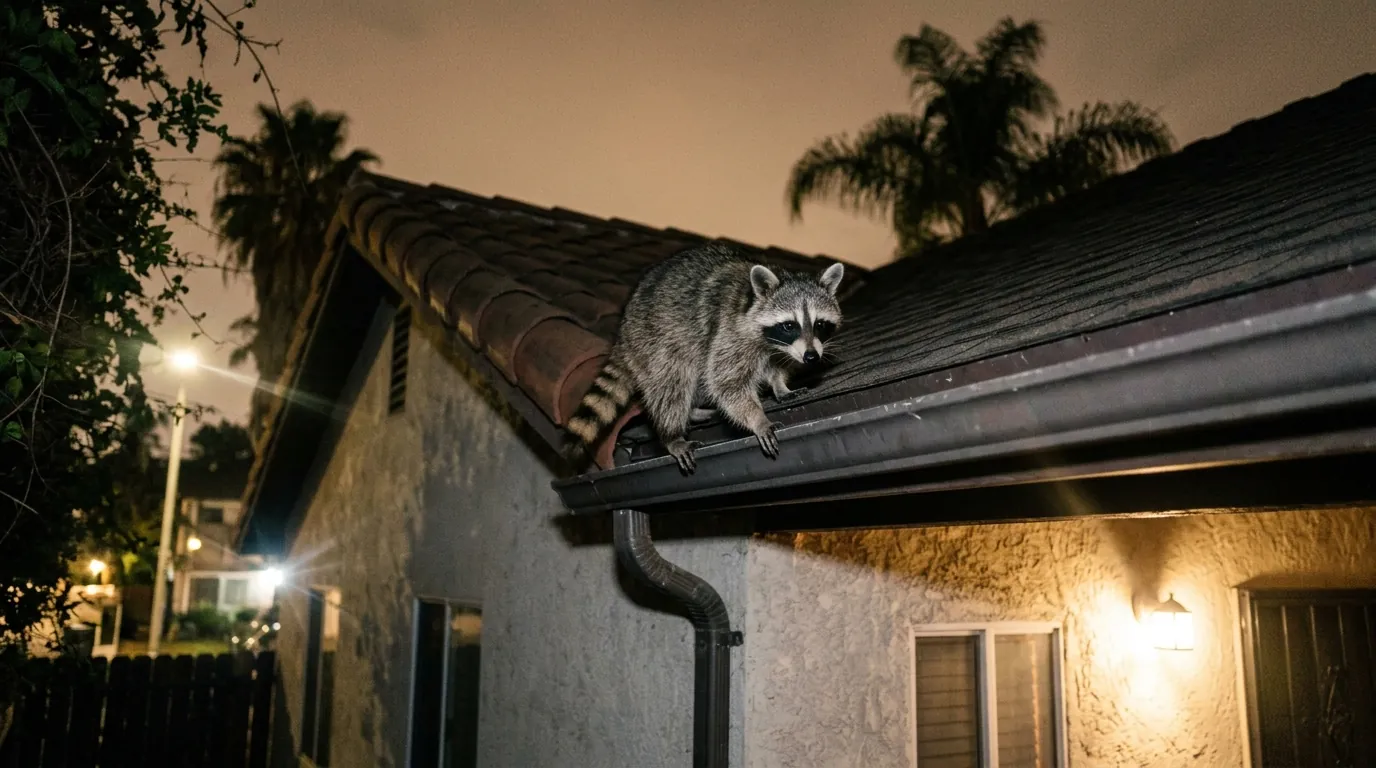
Raccoons are strong, smart and persistent. In Los Angeles they den in attics, chimneys, under decks and in crawl spaces, and they get in by force: tearing roof vents, lifting shingles and flashing at roof returns, or pulling open soffits and chimney tops. Once inside they compress insulation, rip ductwork and leave latrines that are a real health concern.
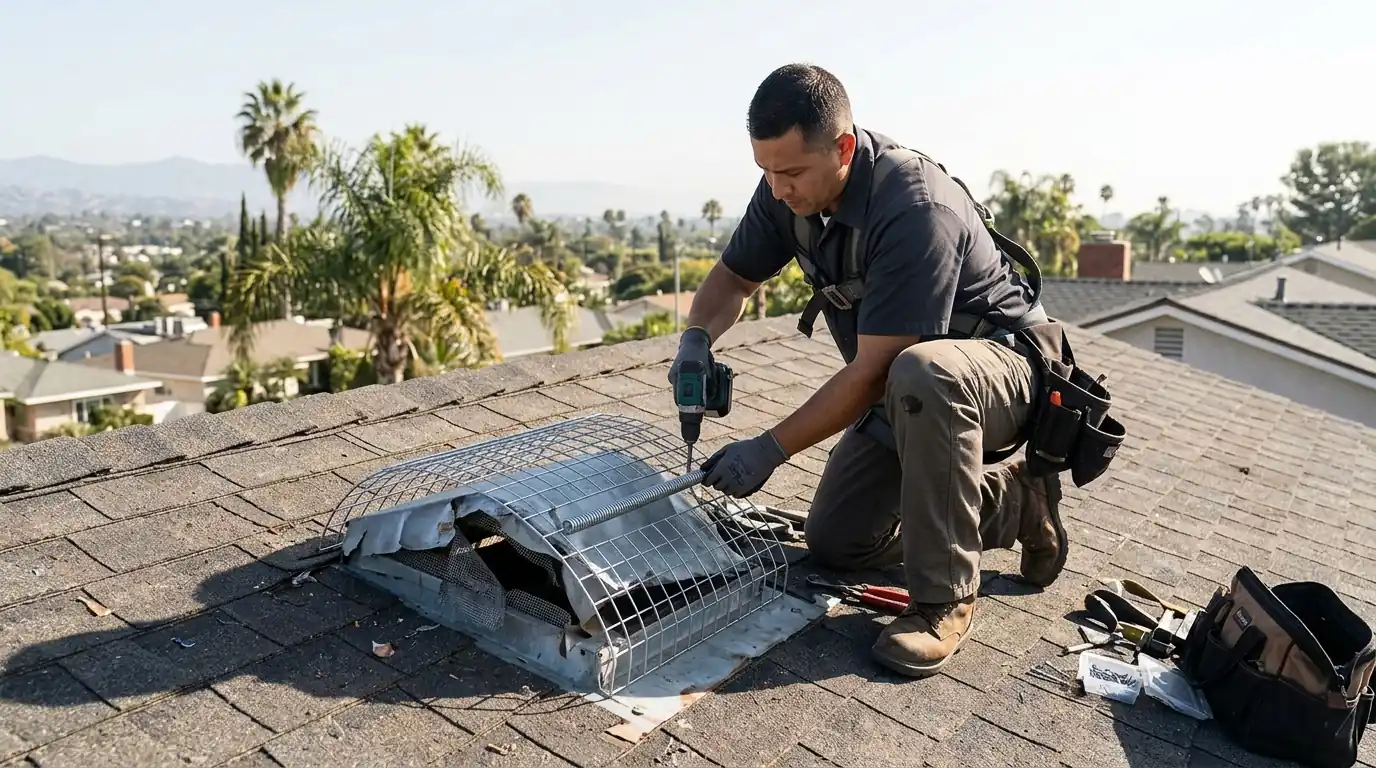
Removal starts with an inspection of the roof and attic to find the entry and check for kits. With no young present, a one-way exclusion door goes over the main entry so the raccoon can leave at night and cannot get back in; other openings are sealed in heavy-gauge mesh and metal. When kits are present, the job is timed and handled so the family leaves together. After the attic is confirmed empty, the entry is repaired and reinforced, chimney caps fitted where needed, and latrines and soiled insulation cleaned under protective equipment, with attic cleanup scoped if the damage is extensive.
California rules generally do not allow trapped wildlife to be moved and released elsewhere, which is why exclusion, letting the animal leave on its own and closing the way back in, is the standard approach around homes.
The visit
From thumping to sealed
Inspect
Roof, attic, chimney and yard checked for the entry, damage, latrines and kits.
Exclude
One-way door on the main entry; secondary openings sealed.
Confirm empty
Monitoring until the raccoon and any kits are out.
Repair and seal
Entry reinforced with metal and heavy mesh, chimney caps fitted.
Clean up
Latrines and soiled insulation removed with protective equipment.
Local pressure
Urban raccoons in the basin
Raccoons thrive across Los Angeles and Orange County, from hillside canyons to the flats, because cities feed them: open trash, pet food on patios, backyard fruit, koi ponds and grub-filled lawns. Mature trees and utility lines give them easy access to rooflines, and older roofs with worn vents and flashing give them a way in. Denning season in late winter and spring is when attic calls spike, and it is also when getting the kits question right matters most.
What it costs
How raccoon removal is priced
Raccoon jobs are priced by the number of entries, the roof and access involved, whether kits are present and how much repair and cleanup is needed, and quoted after the inspection. For scale, sealing work on a typical LA home runs in the $600-$1,200 exclusion range, with raccoon-strength repairs and attic cleanup quoted as separate lines so you see exactly what each part costs.
Common questions
Asked before booking this service
Weight and timing. Raccoons sound heavy, thumping and walking rather than scurrying, and they are most active just after dark and before dawn. You may also find torn roof vents, lifted shingles or flashing, or a damaged soffit where they forced their way in.
Yes. In Southern California, females look for denning sites in late winter and spring and raise kits in attics and chimneys through early summer. Removing the mother without the kits leaves young that die in the attic or a frantic mother tearing back in, so every spring job starts by checking for a litter.
They can be. Raccoons use the same spots as latrines, and their droppings can carry roundworm eggs that are harmful to people if disturbed and inhaled or ingested. Latrines in attics, on roofs or decks should be cleaned with protective equipment, not swept up by hand.
They are digging for grubs and other insects in the turf, usually at night. Treating the lawn for grubs takes away the food, and securing trash, pet food and koi ponds removes the other reasons they visit.
California rules generally do not allow trapped wildlife to be moved and released elsewhere, which is why exclusion, letting the animal leave on its own and closing the way back in, is the standard approach around homes. One-way doors let the raccoon leave on its own, then the entry is sealed so it cannot return.
Related treatments
Often booked alongside this one
The line is on right now
Something heavy moving overhead?
Call now and describe the sounds and timing. You will get a straight read on whether it is a raccoon and when a technician can be there.
Answered 24/7, including weekends and holidays.
Call us or find us
- Phone
- (323) 329-3792
- Hours
- Open and answering 24/7, every day
- Service office
- 3123 Cahuenga Blvd W #390, Los Angeles, CA 90068
- Head office
- 7623 Atlanta Ave, Ste 284, Huntington Beach, CA 92646
- Coverage
- Los Angeles, Orange and neighboring counties