Mud tubes, barriers and baits
Subterranean termite treatment at the soil line
The colony is not in your walls; it is under the yard, commuting in. A continuous treated zone or a serviced bait line meets it where it lives, which is the only place the fix holds.
Updated October 2026
This treatment, at a glance
- Job type
- Liquid barrier or bait system
- Key sign
- Mud tubes on foundations
- Market range
- $800-$3,000
- Line
- Answered 24/7
Subterranean termite treatment in Los Angeles works at the soil line, because that is where these colonies live: a non-repellent liquid barrier along the foundation, a bait system like Sentricon, or both, in the LA market range of $800-$3,000. Mud tubes on the foundation are the calling card. Call (323) 329-3792 and the inspection sets the honest scope.
Know the enemy
The colony under the lawn
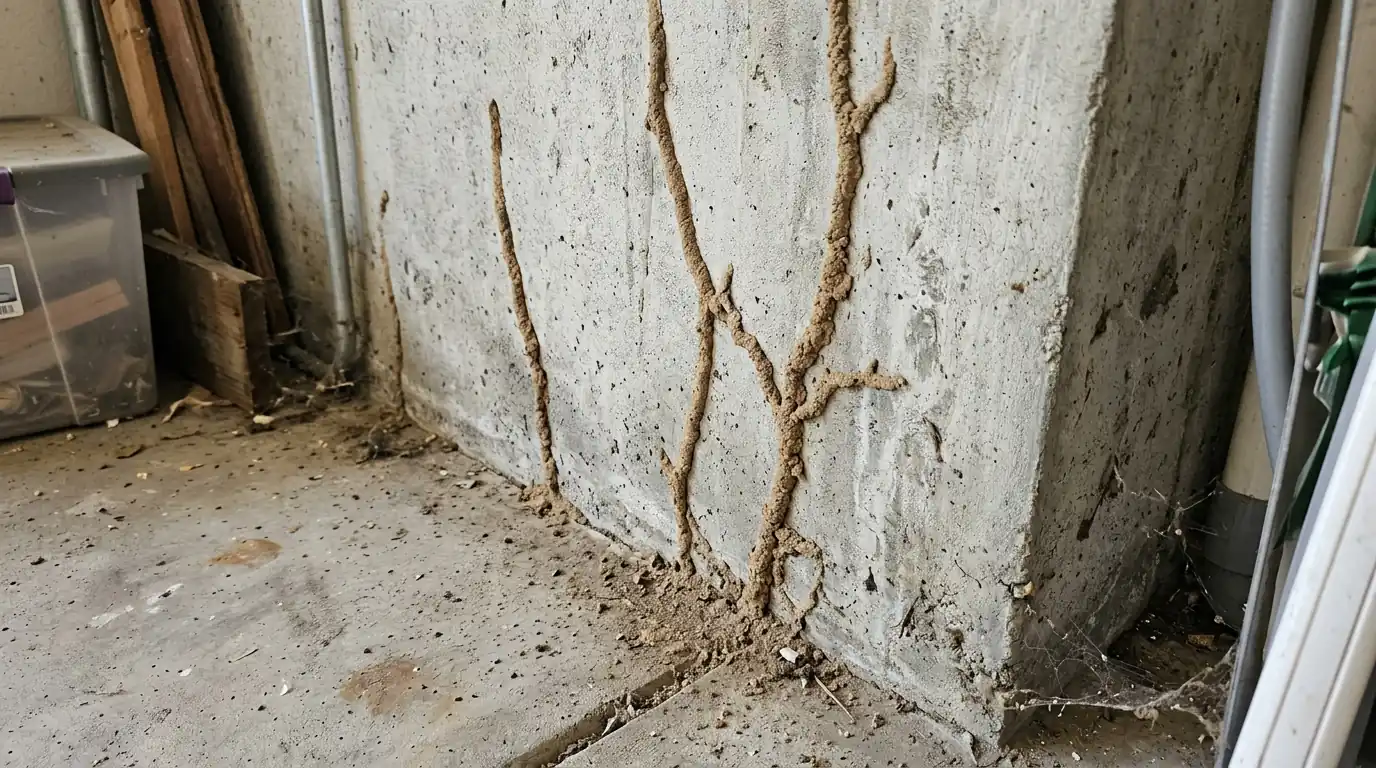
Subterranean termites run the opposite playbook to drywood. The colony lives in the soil, potentially numbering in the hundreds of thousands, and commutes into your structure daily through mud tubes it builds to carry its humidity with it. They find entries a slab was never designed to deny: expansion joints, plumbing penetrations, the bath trap, hairline settlement cracks, any wood touching soil. Damage concentrates low and hidden, sill plates, slab-level framing, the backside of baseboards, and the first visible sign is often a spring swarm or a tube discovered during unrelated work.
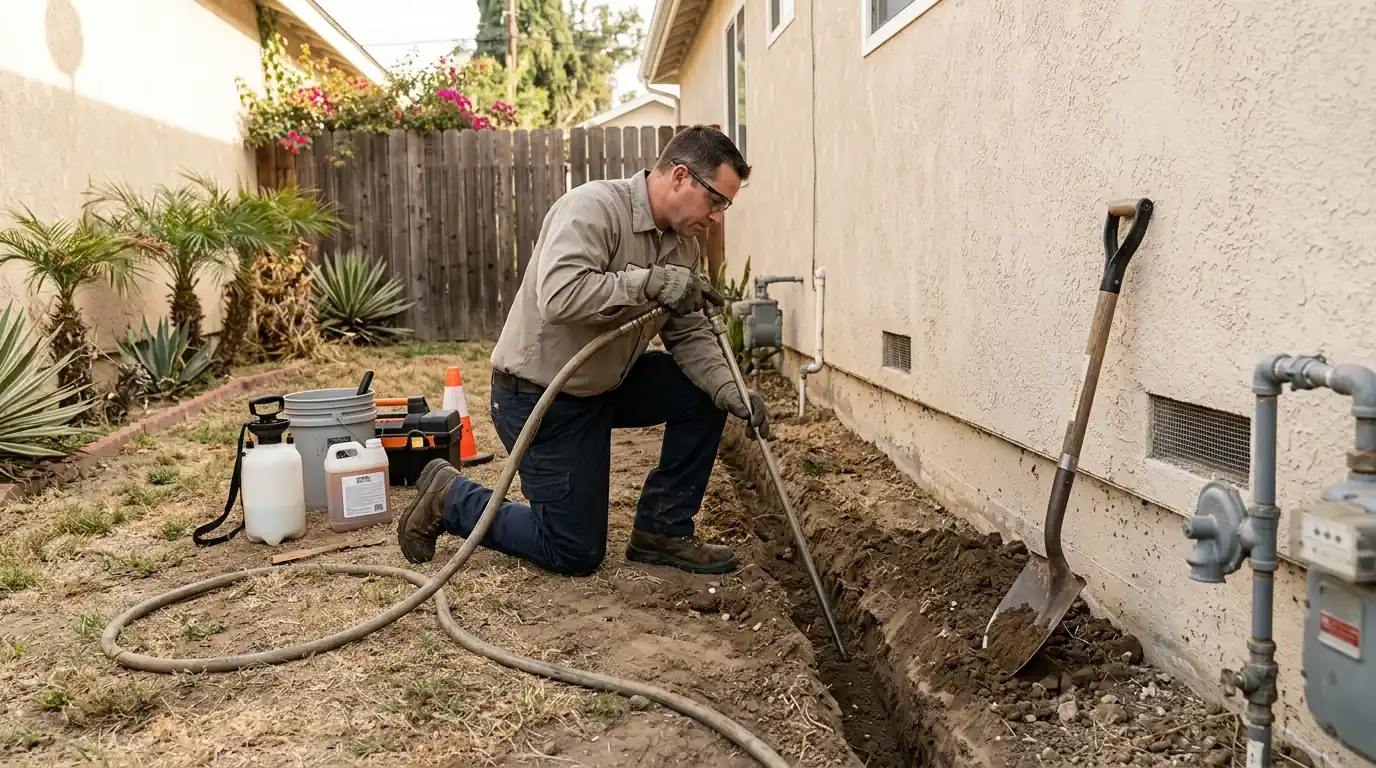
Treatment meets them in the soil. A liquid program trenches and, where concrete borders the foundation, drills to place a continuous non-repellent zone, Termidor and Premise are the standards, that foraging termites cross without detecting and spread through the colony by contact. A bait program plants Sentricon stations on the colony's foraging routes and lets workers carry a growth inhibitor home until the colony fails. The inspection decides the mix: active heavy infestation leans liquid for speed, sensitive sites and long-horizon protection lean bait, and plenty of LA properties run a barrier plus stations as belt and suspenders.
Signs of subterranean activity
Low, damp and easy to miss
Mud tubes
Soil-colored tunnels on foundations, piers, garage edges and in the bath trap: the colony's covered highways.
Swarms after rain
Winged termites indoors or shed wings at windows following wet weather, typically late winter and spring here.
Soft wood low down
Baseboards, door casings and sill-level framing that probe soft while looking painted and fine.
Hollow slab-edge framing
Garage and patio-adjacent walls where tapping answers wrong along the bottom plate.
The visit
How soil treatment runs
Inspect
Foundation line, garage, bath traps, crawl or slab edges and yard conductors read for tubes and entries.
Scope in writing
Liquid, bait or both, with the linear footage, drilling stretches and price stated plainly.
Place the treatment
Trenching and injection for a continuous treated zone, or stations set on foraging routes, or both.
Patch and map
Drill holes patched, the treated line documented so future landscaping does not breach it.
Monitor
Bait stations serviced on schedule; barrier jobs get follow-up on any site with prior activity.
Local pressure
The other half of LA's termite problem
Subterranean pressure in Los Angeles hides behind the drywood headlines but never leaves: irrigated landscaping keeps soil moist against foundations through rainless summers, slab-on-grade construction across the basin offers every house the same joint-and-penetration entries, and winter rains trigger the swarms that announce colonies to their owners. LA sits squarely in a heavy termite-pressure zone by any national map, carrying both families at once, which is why treatment per linear foot runs $3-$16 in this market and why the inspection checks for drywood evidence on the same walk rather than treating half the risk.
What it costs
Current LA market ranges
Figures are current Los Angeles market ranges from published pricing surveys, not a quote. Property size, construction, how established the problem is and access all move the number; we confirm pricing after an inspection.
Common questions
Asked before booking this service
A liquid treatment places a continuous treated zone, non-repellent products like Termidor or Premise, in the soil along the foundation; termites tunnel through it unknowingly and carry it into the colony. A bait system like Sentricon stations monitors and feeds the colony a growth inhibitor it takes home. Liquids act faster on an active infestation; baits shine for long-term colony elimination and where drilling is impractical. Many LA jobs honestly call for one, some for both.
Usually a gap: a stretch of foundation left untreated, a bath trap or plumbing penetration missed, or a repellent product that steered the colony around the barrier instead of through it. Re-treatment starts by finding the breach, not re-selling the same job.
Where the foundation is bordered by concrete, yes: small holes along the expansion joint let the treatment reach the soil beneath, and they get patched afterward. Where soil is open, trenching alone does it. The scope tells you exactly which stretches need which before work starts.
Mud tubes are the signature: pencil-width soil tunnels climbing foundations, piers and garage edges, built because these termites die without ground moisture. Swarms after rains, soft baseboards near slab level and tubes in the bath trap area all point the same direction, and the inspection separates them from drywood evidence definitively.
Modern non-repellent barriers are labeled for multi-year protection, and bait systems protect as long as stations stay serviced. What shortens either is disturbance: new landscaping, trenching or additions cutting the treated zone. The report maps the treated line so future work does not quietly open a door.
Related treatments
Often booked alongside this one
The line is on right now
Found a tube you broke open and it got rebuilt?
A rebuilt tube is an active colony voting. Call and the inspection will put a written scope and price on ending it.
Answered 24/7, including weekends and holidays.
Call us or find us
- Phone
- (323) 329-3792
- Hours
- Open and answering 24/7, every day
- Service office
- 3123 Cahuenga Blvd W #390, Los Angeles, CA 90068
- Head office
- 7623 Atlanta Ave, Ste 284, Huntington Beach, CA 92646
- Coverage
- Los Angeles, Orange and neighboring counties