Homes, yards and wildlife sources
Flea control that breaks the whole life cycle
The fleas on your ankles are the last five percent of the problem. Treating carpets, bedding and yard together with a growth regulator ends the cycle instead of resetting it for another week.
Updated October 2026
This treatment, at a glance
- Job type
- Indoor and yard treatment
- Key step
- Growth regulator on every stage
- Bites taper
- Over about two weeks
- Line
- Answered 24/7
Flea control in Los Angeles has to hit the whole life cycle at once: pet treatment from your vet, home treatment with an adulticide plus an insect growth regulator in carpets and bedding, and yard treatment in the shaded spots pets rest. Bites taper over about two weeks as the last pupae hatch. Call (323) 329-3792 any hour; same-day service is common.
First response
Before the technician arrives
Vacuum everything, then empty it
Floors, under furniture, baseboards and upholstery. Vacuuming lifts eggs, triggers pupae to hatch into treatment, and the bag goes straight out to the bin.
Book the pet treatment
A vet-recommended product on every animal in the house the same week. Treating the house without the pet reloads it nightly.
Wash the bedding hot
Pet beds, throw blankets and anything pets sleep on, washed and dried on high heat before the visit.
How treatment works
The ninety-five percent you cannot see
Flea problems feel like an adult insect problem because adults are what bite, but the real population lives on the floor. A female lays dozens of eggs a day that roll off the host into carpet, cushions and the shaded soil where pets lie; larvae feed in the fibers, then spin cocoons that shrug off almost every treatment and wait for vibration, warmth or carbon dioxide to hatch. That is why spraying adults alone always fails a week later.
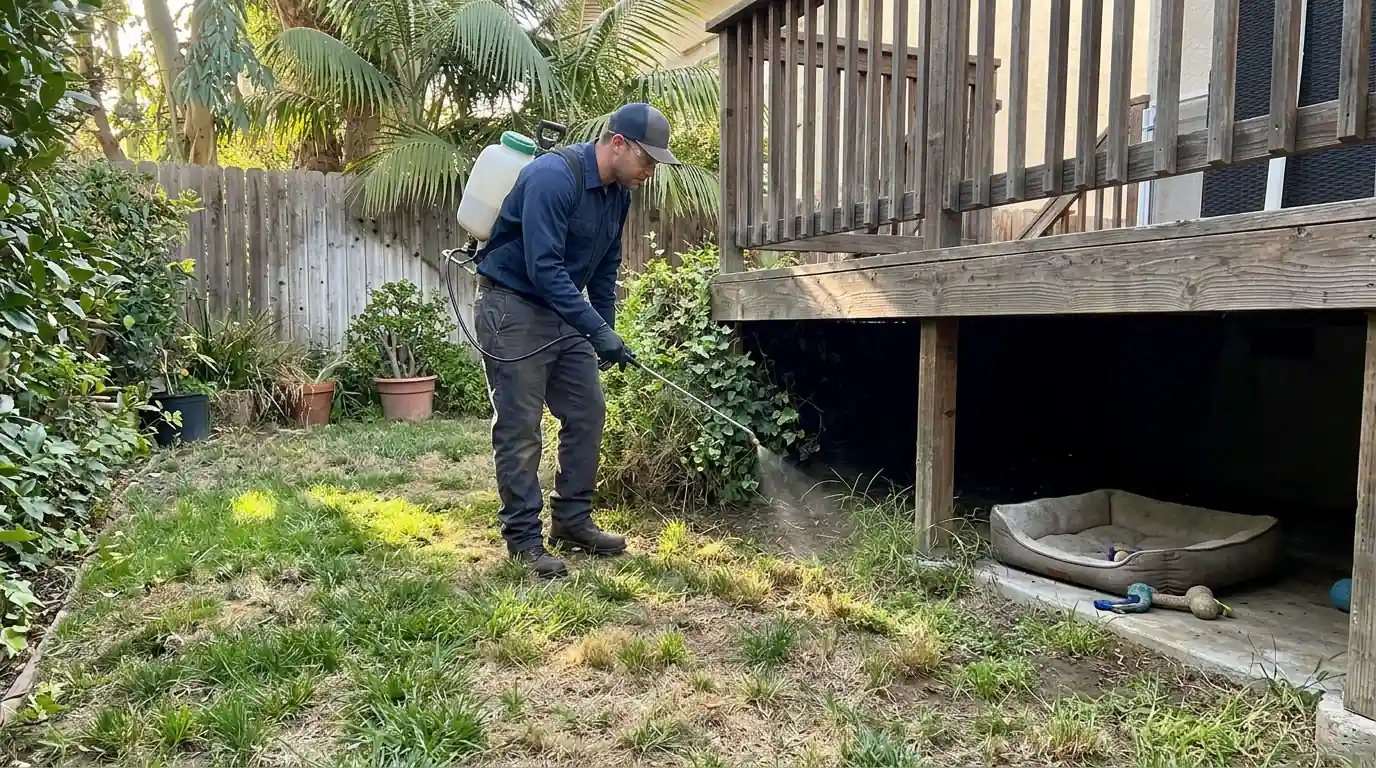
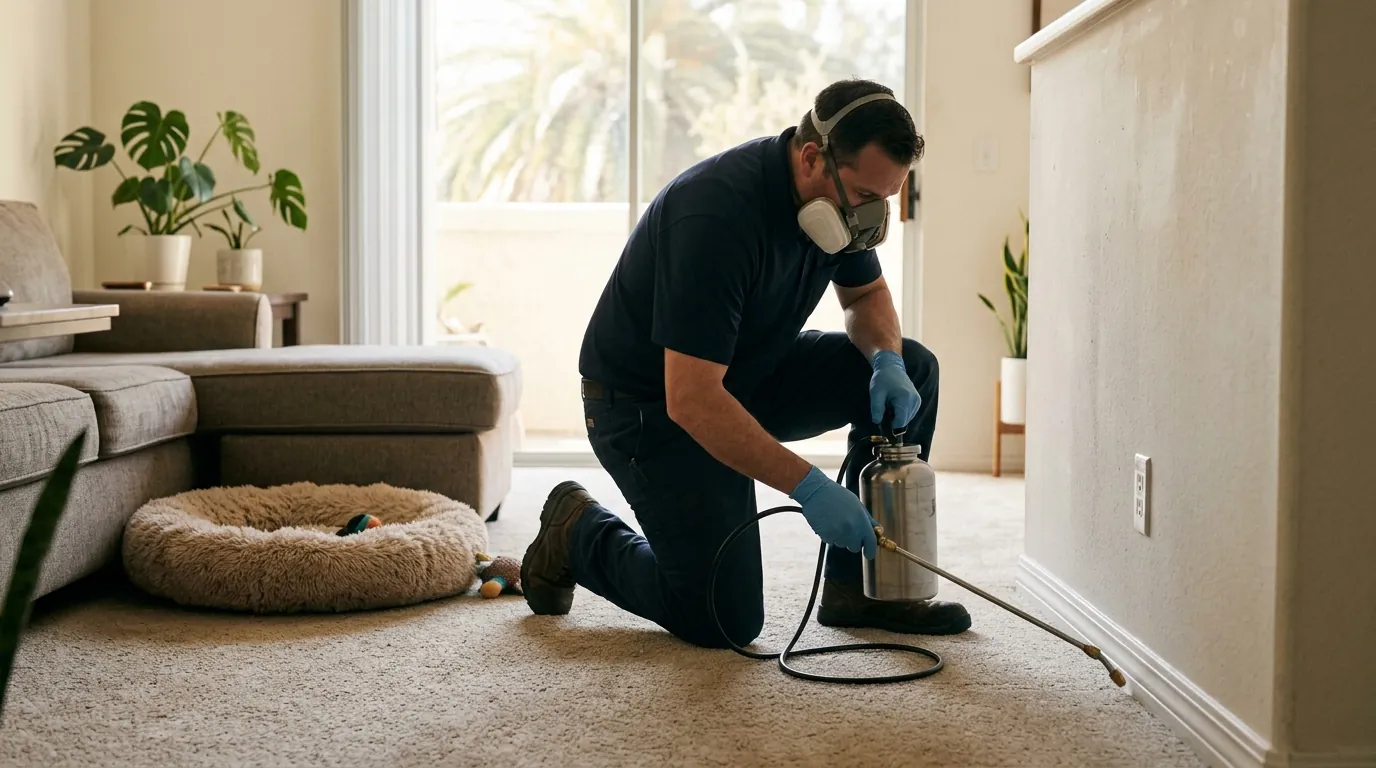
Professional treatment works every stage together. An adulticide knocks down the biters on contact, and an insect growth regulator in the same pass stops eggs and larvae from ever maturing, for months. Carpets, rugs, upholstery and the floor zones pets favor get treated throughout, and the yard gets the same pair in the shaded runs, under decks and along fence lines where pets and wildlife rest. When the source is wildlife rather than a pet, an opossum under the deck, rats in the attic, the job also finds that bedding site, because fleas follow their hosts and the host is the real source. See opossum removal and rat control for that half.
The visit
Inside, outside, and the follow-up
Find the source
Pet, wildlife or a previous occupant's animal: the source decides the scope.
Treat indoors
Adulticide plus growth regulator through carpets, rugs, upholstery and pet zones.
Treat outdoors
Shaded resting spots, under decks, crawl entries and fence runs treated with the same pair.
Close wildlife access
Where opossums, cats or rats bed under the house, the entry is flagged for closing.
Follow up
A return visit inside the pupal hatch window to catch the last wave.
Local pressure
Why LA fleas never take the winter off
In colder regions, winter breaks the flea cycle every year. Los Angeles never gets that reset: mild nights keep larvae developing outdoors year-round, irrigated lawns and shaded planting beds hold the humidity they need, and a dense urban wildlife population of opossums, feral cats and roof rats seeds yards with eggs whether or not a household has a pet. That wildlife link is also why county public health tracks flea-borne typhus in eastern LA and Orange County, and why a flea call with no pet in the house always gets the question of what is living under the deck.
What it costs
Current LA market ranges
Figures are current Los Angeles market ranges from published pricing surveys, not a quote. Property size, construction, how established the problem is and access all move the number; we confirm pricing after an inspection.
Common questions
Asked before booking this service
Because the adult fleas on the pet are roughly five percent of the population. The other ninety-five sit in carpets, bedding, under furniture and in shaded yard spots as eggs, larvae and pupae. Pet treatment stops the next generation of eggs; home treatment takes the stages already on the floor. You need both at once.
Wildlife. Opossums, feral cats and rats bedding under decks, in crawl spaces or in the attic shed flea eggs that hatch into the house, and when the animal moves on, the fleas come looking for the next host, which is you. Finding and closing that bedding site is part of the job.
Expect bites to taper over about two weeks. Pupae in cocoons resist every treatment until they hatch, so a short wave of new adults after treatment is normal and they die on contact with treated surfaces. A follow-up visit is scheduled inside that window.
Vacuum every floor thoroughly right before the visit, including under furniture and along baseboards, and wash pet bedding hot. The vibration and the cleared surfaces both help: vacuuming triggers pupae to hatch into treatment and lifts eggs out of the carpet.
Not entirely. Murine typhus, a flea-borne illness, is now concentrated in eastern Los Angeles and Orange counties, carried by fleas on rats, opossums and feral cats. Most flea problems are pet-driven and simply miserable, but a wildlife-linked infestation is worth treating promptly for more than comfort.
Related treatments
Often booked alongside this one
The line is on right now
Bitten again last night?
Call and tell us whether there is a pet in the house. That one answer shapes the whole plan, and treatment can usually start today.
Answered 24/7, including weekends and holidays.
Call us or find us
- Phone
- (323) 329-3792
- Hours
- Open and answering 24/7, every day
- Service office
- 3123 Cahuenga Blvd W #390, Los Angeles, CA 90068
- Head office
- 7623 Atlanta Ave, Ste 284, Huntington Beach, CA 92646
- Coverage
- Los Angeles, Orange and neighboring counties