Roof rats, attics and rooflines
Rat control that ends with a sealed attic
Rats in a Los Angeles attic are a neighborhood population using an open door. Trapping clears the residents and sealing closes the door; poison alone just rents the attic back to the next ones.
Updated October 2026
This treatment, at a glance
- Job type
- Trapping and exclusion
- Main species
- Roof rat
- Quiet attic
- Typically 1-3 weeks
- Line
- Answered 24/7
Rat control in Los Angeles means trapping and sealing, in that order of what matters: roof rats enter along rooflines and utility lines, and under California's rodenticide restrictions the lasting fix is snap-trapping the residents and closing every entry point behind them. Attics typically go quiet in one to three weeks. Scratching overhead tonight is worth a call now: (323) 329-3792, answered 24/7.
First response
If you are hearing them overhead tonight
Do not seal anything yet
Closing a hole while rats are inside traps them in your walls, and they will chew a new exit through whatever is softest, sometimes wiring.
Skip the hardware-store poison
A rat that dies in a void becomes an unreachable odor problem, and consumer baits feed exactly the slow failure AB 1788 was written against.
Pull the food in
Pick fallen fruit, close the pet food, lid the trash. Roof rats choose territories by calories, and your yard is on the menu before your attic is.
How removal works
Trap, seal, verify
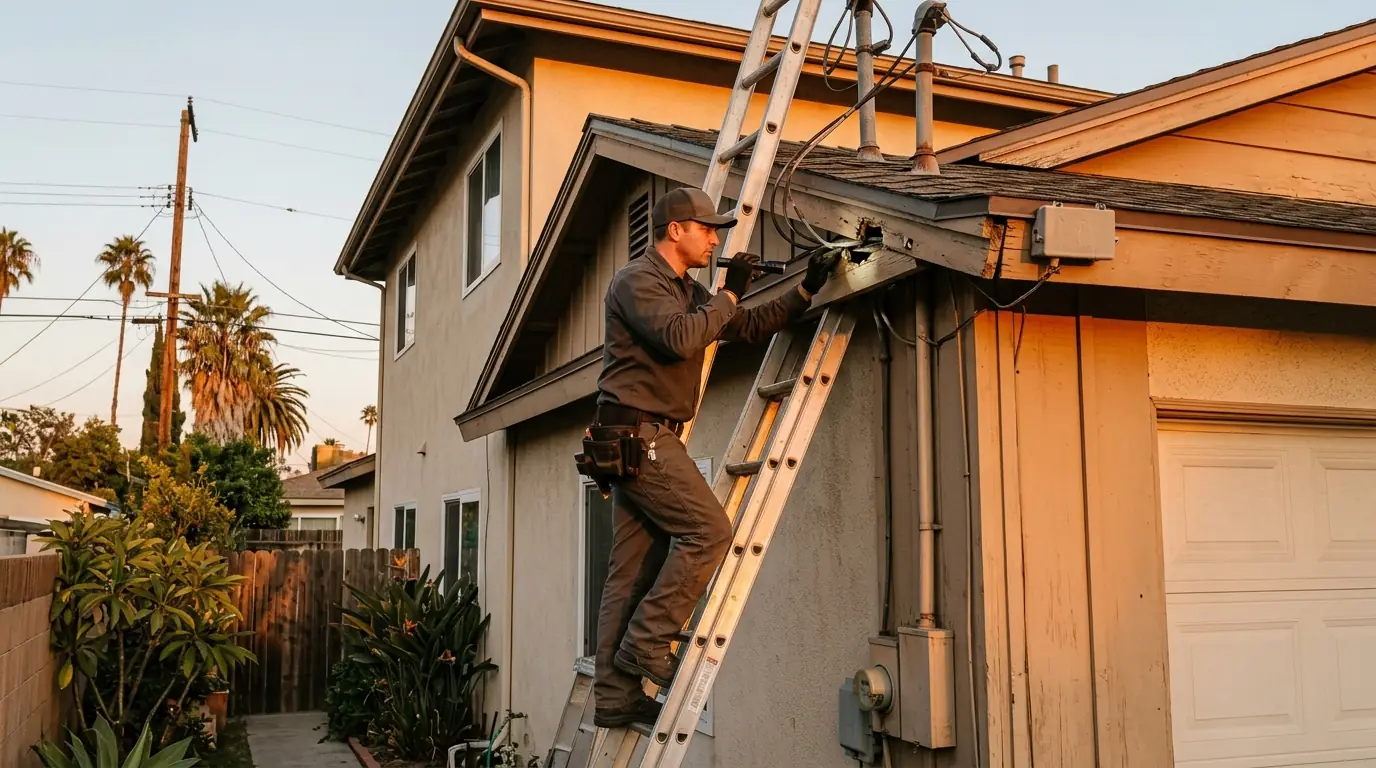
Roof rats run Los Angeles from above. They commute along power lines, fence tops and touching tree limbs, drop onto rooflines, and enter through openings the size of a quarter: unscreened attic vents, gaps at roof returns, the hole where a cable enters. The inspection reads that highway system first, because every entry found is a trap line placed and a seal scheduled.
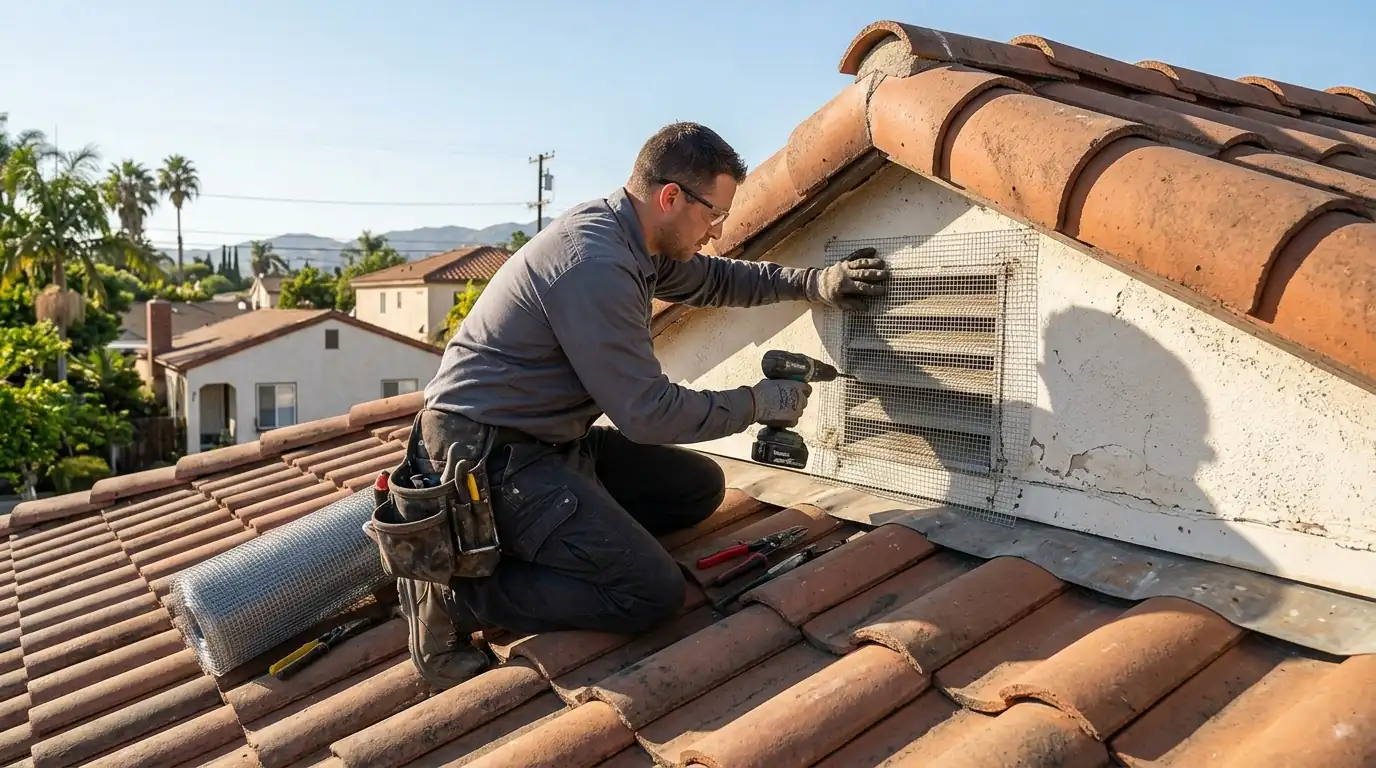
Knockdown is done with snap traps set on the runways the rats already use, checked and reset across follow-up visits until catches stop. Exclusion runs alongside: vents screened in hardware cloth, roofline gaps sealed in metal, door sweeps where garages leak. The sequencing matters, which is why the final seal waits until trapping says the attic is empty. Where the colony's pressure comes from the yard itself, fruit trees, ivy banks, woodpiles, those conditions get named plainly, and full sealing work is scoped as rodent exclusion.
The visit
From scratching sounds to a sealed attic
Inspect
Attic, roofline, utility entries and yard routes mapped; droppings and rub marks read for traffic.
Trap the residents
Snap traps on active runways, checked across scheduled follow-ups until catches stop.
Seal behind them
Entry points closed in metal and hardware cloth as the population comes down.
Final close
The last openings sealed once monitoring confirms the attic is empty.
Verify
Monitored traps stay in place through a quiet period, so done means proven, not assumed.
Local pressure
The roof rat capital
Los Angeles is built for roof rats: a canopy of mature trees and palms, block after block of backyard oranges, lemons and avocados, ivy-covered slopes, and an aerial grid of utility lines connecting every roof on the street. There is no winter die-off, and county public health tracks the consequences, including murine typhus cases linked to rat fleas in exactly this kind of dense, warm habitat. That is also why a one-house fix holds here only if the house is sealed: the neighborhood population is permanent, and exclusion, not bait subscriptions, is what keeps it outside your walls.
What it costs
Current LA market ranges
Figures are current Los Angeles market ranges from published pricing surveys, not a quote. Property size, construction, how established the problem is and access all move the number; we confirm pricing after an inspection.
Common questions
Asked before booking this service
Almost always roof rats: slim, agile climbers that travel power lines, fences and tree limbs and nest overhead in attics, palms and ivy. Norway rats, the burrowers, turn up less often here, mainly around ground-level food sources and older commercial corridors.
Roof rats are nocturnal and commute: they leave the attic after dusk to feed, often in your neighbors' fruit trees, and return before light. The scratching and rolling sounds overhead at night are the real census; daytime quiet means nothing.
Because California's AB 1788 restricts the strongest rodenticides, and because a poisoned rat dying in a wall void becomes a weeks-long odor problem you cannot reach. Trapping kills where you can retrieve, and exclusion ends the problem instead of managing it forever.
Most attics go quiet over one to three weeks: trapping knocks the resident animals down across the first visits, and sealing during the same period stops replacements. The job is done when monitored traps stay empty after the final seal, not when the first rat is caught.
Yes. Droppings, urine-soaked insulation and nest material are a health and odor issue and also a scent beacon for the next rats. Cleanup and deodorizing is its own scoped service at attic cleanup and sanitation.
Related treatments
Often booked alongside this one
The line is on right now
Hearing it right now above the ceiling?
Night is exactly when they are active and when the call fits. Describe the sounds and you will get a real read on what is up there and when we can start.
Answered 24/7, including weekends and holidays.
Call us or find us
- Phone
- (323) 329-3792
- Hours
- Open and answering 24/7, every day
- Service office
- 3123 Cahuenga Blvd W #390, Los Angeles, CA 90068
- Head office
- 7623 Atlanta Ave, Ste 284, Huntington Beach, CA 92646
- Coverage
- Los Angeles, Orange and neighboring counties