Pigeons, sparrows and starlings
Bird control that takes away the roost
Birds stay where the building gives them shelter. Netting, spikes, screens and solar panel mesh remove the roost and nest sites, and cleanup takes care of what they left behind.
Updated October 2026
This treatment, at a glance
- Job type
- Exclusion and deterrents
- Common target
- Pigeons under solar panels
- Native birds
- Handled by timing
- Line
- Answered 24/7
Bird control in Los Angeles means physical exclusion and deterrents for pigeons, sparrows and starlings: netting, spikes, post-and-wire, vent screening and solar panel mesh, plus droppings cleanup and sanitizing. Native birds such as swallows are protected, so their nests are handled with timing rather than removal. Call (323) 329-3792 to book an inspection.
What the service covers
Take away the roost, not just the birds
Birds pick buildings for the same reasons people do: shelter, a safe place to raise young and food nearby. Pigeons in particular settle on ledges, beams, signs, parking structures, rooflines and the sheltered gap under solar panels, and a single roost soon becomes a colony with heavy droppings, nesting debris, noise and blocked gutters and vents.
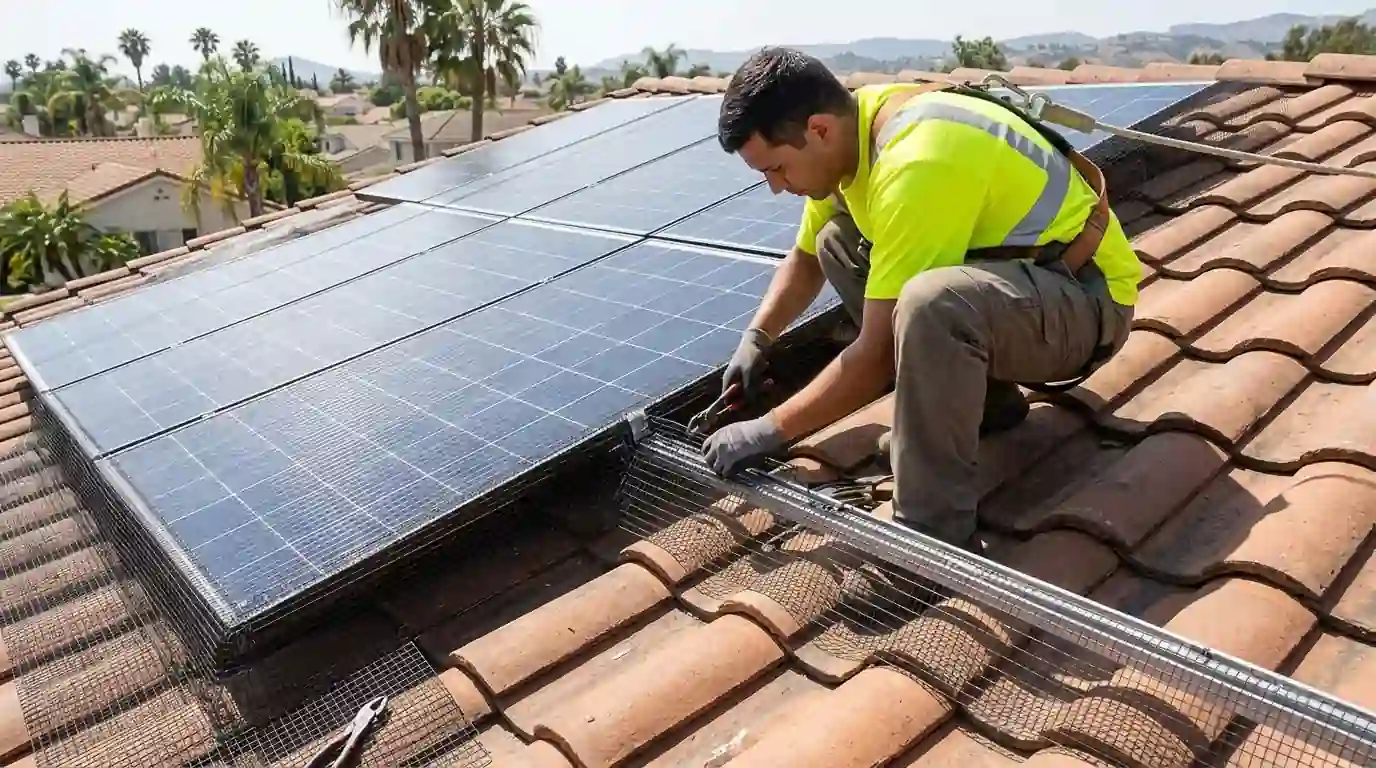
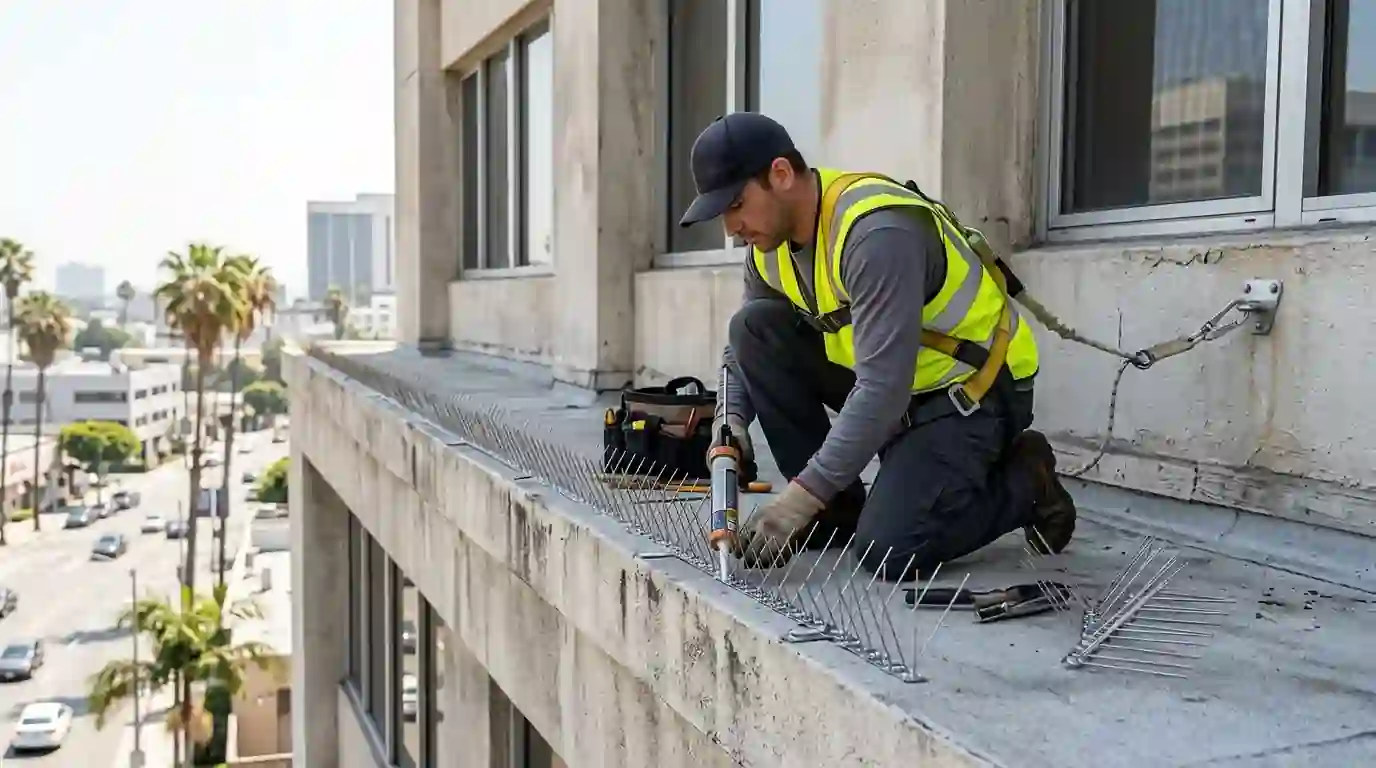
Lasting bird control removes the spot rather than chasing the birds. Netting closes off alcoves, loading docks, under-eave spaces and courtyards. Spikes and post-and-wire systems keep pigeons from landing on ledges, parapets and signs. Vents and openings are screened so sparrows and starlings cannot nest inside walls and attics, and mesh skirting closes the gap under solar panels. Existing nests from non-native species are removed, droppings are cleaned up with protective equipment and the area sanitized. Where native birds such as cliff swallows are involved, deterrents go up before nesting season or after the young fledge, because their active nests are protected.
Common problem spots
Where birds cause trouble
Solar panels
Pigeons nesting underneath, damaging wiring and leaving droppings across the roof.
Ledges and signs
Storefronts, parapets and signage where pigeons roost and foul entrances below.
Vents and eaves
Sparrows and starlings nesting in dryer vents, roof vents and soffit gaps.
Parking and loading areas
Beams and structures under cover, where netting closes the space.
The visit
How bird control runs
Inspect
Species identified, roosting and nesting spots mapped.
Plan with timing
Exclusion scheduled around protected native nesting where it applies.
Clean
Nests from non-native birds and droppings removed with protective equipment.
Install
Netting, spikes, post-and-wire, vent screens or panel mesh fitted.
Check
Follow-up to confirm birds have moved off and barriers are holding.
Local pressure
Pigeons, panels and protected swallows
Los Angeles has a large feral pigeon population living on commercial corridors, freeway overpasses, parking structures and rooftops, and the region's rapid growth in rooftop solar has handed pigeons thousands of new sheltered nesting sites. Southern California is also home to large numbers of cliff swallows that build mud nests under eaves and bridges each spring, and because they are protected, the effective approach is deterring them before they start building. Getting the species and the timing right is most of the job.
What it costs
How bird control is priced
Bird control is priced by the method, area and access: a run of spikes on one ledge is a small job, while netting a loading dock or skirting a large solar array is quoted by size and roof access. Cleanup is listed separately. For scale, one-time pest jobs in the LA market start from about $300, and the inspection returns a written quote for the exact installation.
Common questions
Asked before booking this service
Pigeons, house sparrows and European starlings are non-native and can be excluded and deterred. Most native birds, including the swallows that build mud nests under eaves, are protected under federal law, so their active nests cannot be removed. Deterrents are installed before nesting season or after the young have left.
Physical exclusion and deterrents: netting for ledges, alcoves and under-structure spaces, spikes and post-and-wire systems on ledges and signs, and screening of vents and openings. The right mix depends on where they roost and nest.
Accumulated droppings can carry fungi and bacteria and become a problem when they dry and are disturbed. They are also acidic and damage roofs, solar panels, paint and equipment. Cleanup is done with protective equipment and the area sanitized.
The gap under rooftop panels is sheltered, warm and hard for predators to reach, so pigeons nest there in large numbers, leaving droppings, debris and noise. Mesh skirting around the panel edges closes the gap without touching the panels themselves.
Usually only briefly. Birds get used to static decoys and visual deterrents within days or weeks. Physical barriers that remove the roosting or nesting spot are what work long term.
Yes, and commercial sites are where most pigeon work happens: storefront ledges and signs, parking structures, loading docks, rooftop equipment and courtyards. Netting and spike installations are planned around access, lifts and business hours, and droppings cleanup at entrances is scheduled so customers and staff are not walking through it. The work pairs naturally with a commercial pest program where the building already has one.
Related treatments
Often booked alongside this one
The line is on right now
Birds taking over the roof?
Call and describe where they roost. The inspection maps the spots and returns a written installation quote.
Answered 24/7, including weekends and holidays.
Call us or find us
- Phone
- (323) 329-3792
- Hours
- Open and answering 24/7, every day
- Service office
- 3123 Cahuenga Blvd W #390, Los Angeles, CA 90068
- Head office
- 7623 Atlanta Ave, Ste 284, Huntington Beach, CA 92646
- Coverage
- Los Angeles, Orange and neighboring counties