Attics, tile roofs and wall voids
Bat exclusion done the legal, humane way
Bats are protected, so the only right way out is through a one-way door. Exclusion timed outside pup season, followed by sealing every gap, removes the colony without harming it.
Updated October 2026
This treatment, at a glance
- Job type
- One-way exclusion and sealing
- Timing
- Outside maternity season
- Cleanup
- With protective equipment
- Line
- Answered 24/7
Bat exclusion in Los Angeles is the legal, humane way to remove a colony: one-way devices at the entry points let bats fly out at dusk and keep them from returning, and every other gap gets sealed. It is scheduled outside the maternity season so no young are trapped inside. Call (323) 329-3792 to schedule an inspection.
What the service covers
Out through the door, never back in
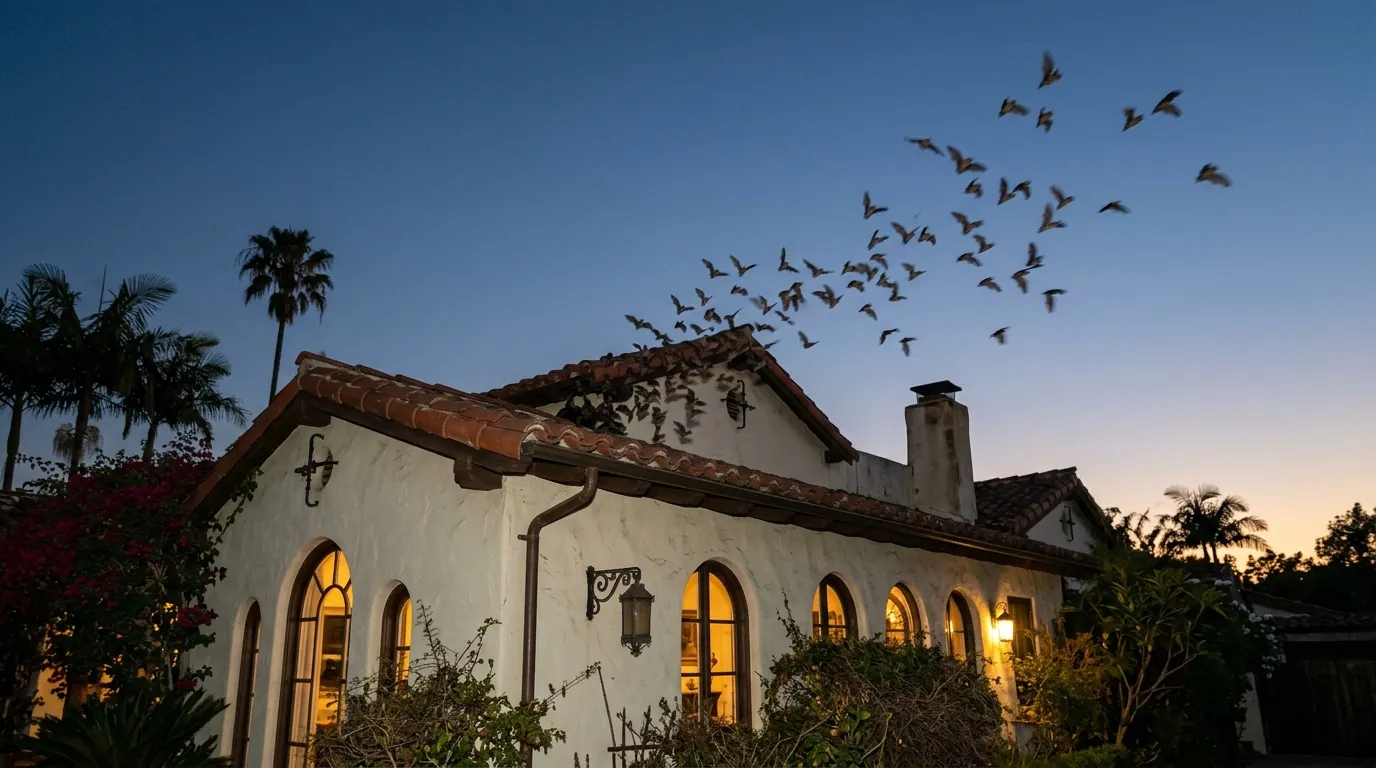
Bats roost in attics, wall voids, gaps under roof tiles, behind loose fascia and in the expansion gaps of buildings, and they need very little room: a gap the width of a finger is enough for many species. Colonies can grow over years, leaving piles of droppings, stains around entry points, odor and the occasional bat that ends up inside the living space.
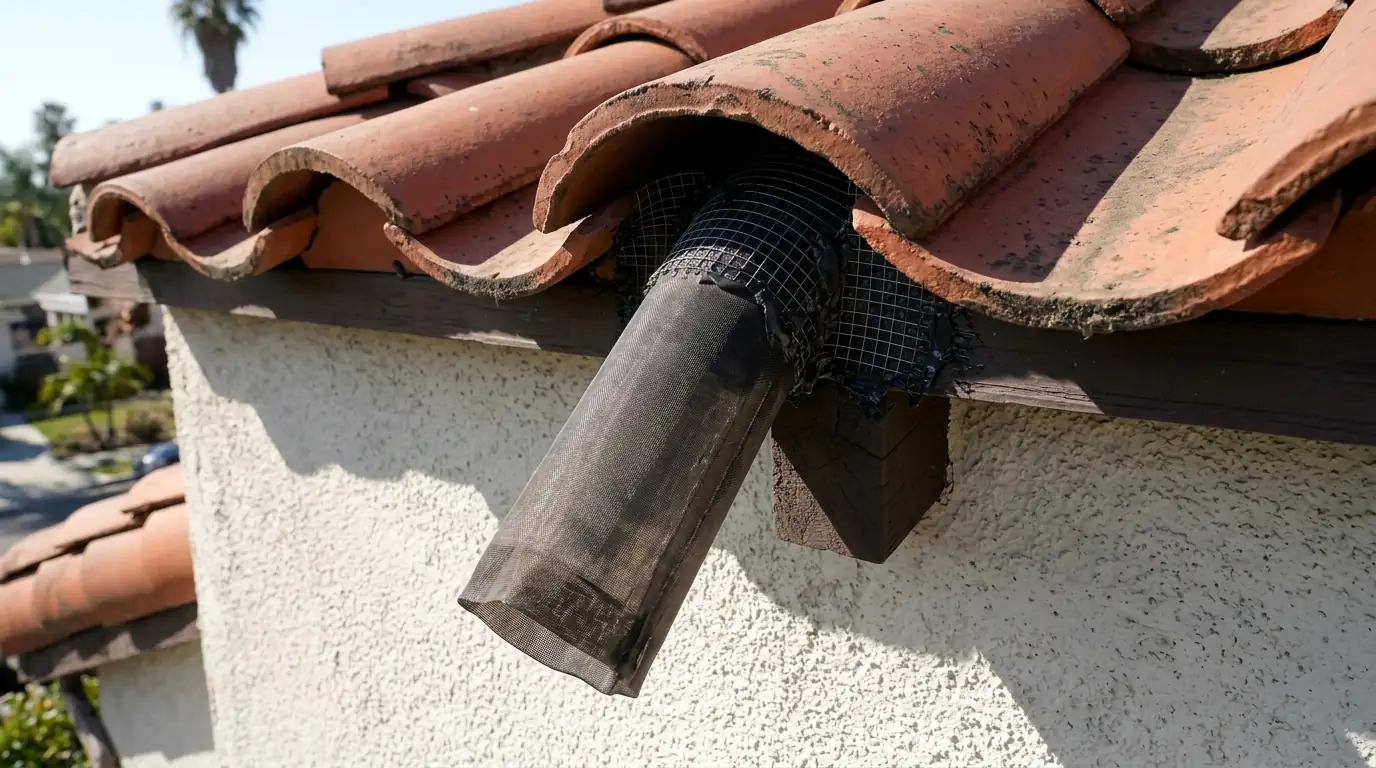
Because bats are protected, the only acceptable approach is exclusion. The inspection, often including a dusk watch, identifies every place bats are leaving the structure. One-way devices are fitted over the active exits, letting bats fly out to feed but blocking the way back in, and all the other potential entries along rooflines, tiles, vents and chimneys get sealed. After a set period, when the colony is confirmed out, the devices come off and those openings are sealed permanently. Droppings and soiled insulation are then cleaned under protective equipment, with attic cleanup scoped where the buildup is heavy.
Signs of bats
What gives a colony away
Droppings below a gap
Small dark pellets collecting on sills, walls or attic insulation beneath an entry.
Dusk flights
Bats emerging from the roofline, tiles or a vent just after sunset.
Staining at entries
Dark, greasy rub marks around the gaps they squeeze through.
Sounds in walls
Squeaking or scratching in a wall or ceiling, especially at dusk and dawn.
The process
How bat exclusion runs
Inspect and watch
Roost located and every exit found, often with a dusk watch.
Check timing
Work scheduled outside maternity season so no young are trapped.
Install one-way devices
Fitted on active exits; all other gaps sealed.
Confirm and seal
Devices removed once bats are out and openings sealed permanently.
Clean up
Droppings and soiled insulation removed with protective equipment.
Local pressure
Tile roofs and urban colonies
Los Angeles and Orange County support many bat species, and the region's architecture suits them: clay tile roofs with gaps at the eaves, stucco homes with expansion joints, and commercial buildings with gaps under flashing. Bats are valuable insect eaters and part of why they are protected, but a colony inside a home is a health and odor concern, and LA County public health tests and reports rabid bats every year. Exclusion keeps both the bats and the household safe.
What it costs
How bat exclusion is priced
Pricing depends on the number of entry points, roof type and height, how much sealing the structure needs and whether cleanup is required, quoted after inspection. For scale, sealing work on a typical LA home runs in the $600-$1,200 exclusion range, with tile roofs and heavy cleanup quoted as their own lines.
Common questions
Asked before booking this service
Yes. Bats are protected, which means they cannot be killed or poisoned. The legal and humane approach is exclusion: letting them leave through one-way devices and sealing the building so they cannot return.
Outside the maternity season. From roughly spring through late summer, colonies can hold young that cannot fly yet, and excluding the adults then would trap the pups inside to die. Exclusion is scheduled for the periods when all bats can fly out.
Bats leave small dark droppings that collect in piles below where they roost, often on attic insulation, window sills or along a wall under an entry gap, and they crumble into shiny fragments when crushed. You may also see them leave at dusk from a gap at the roofline or hear squeaking in a wall.
Bats are the main carrier of rabies in California, and LA County reports rabid bats every year. Never handle a bat with bare hands. If someone has had contact with a bat, or a bat is found in a room where someone was sleeping, contact your doctor or public health right away.
Close interior doors to confine it to one room, open a window or exterior door in that room, turn off the lights and wait; most bats will find the way out. Do not try to catch it barehanded. If anyone may have been bitten or it was in a sleeping area, contact public health before letting it go.
Related treatments
Often booked alongside this one
The line is on right now
Seeing bats leave the roof at dusk?
Call and describe where they come out. The inspection confirms the colony and schedules exclusion at the right time of year.
Answered 24/7, including weekends and holidays.
Call us or find us
- Phone
- (323) 329-3792
- Hours
- Open and answering 24/7, every day
- Service office
- 3123 Cahuenga Blvd W #390, Los Angeles, CA 90068
- Head office
- 7623 Atlanta Ave, Ste 284, Huntington Beach, CA 92646
- Coverage
- Los Angeles, Orange and neighboring counties