Apartments, HOAs and rental portfolios
Pest control programs for Los Angeles properties
Pests in a building do not respect unit numbers. A building-level program with common-area service, unit calls, turnover treatments and one record is how property managers stop paying for the same problem twice.
Updated October 2026
This treatment, at a glance
- Job type
- Building-level program
- Units
- Calls and turnovers handled
- Records
- Per building and per unit
- Line
- Answered 24/7
Property management pest control in Los Angeles runs as a building program: scheduled service on common areas and exteriors, on-call unit treatments coordinated with your notice process, turnover treatments between tenants, and per-unit documentation for your files. German roaches, bed bugs and rodents move through shared walls, so the building is treated as one system. Call (323) 329-3792 to set it up.
What the program covers
One building, one record
Multi-unit buildings fail at pest control in a predictable way: each unit gets treated as its own emergency, nobody sees the pattern, and German roaches or mice cycle between apartments through shared walls and plumbing chases for years. The fix is a building-level program with a single record.
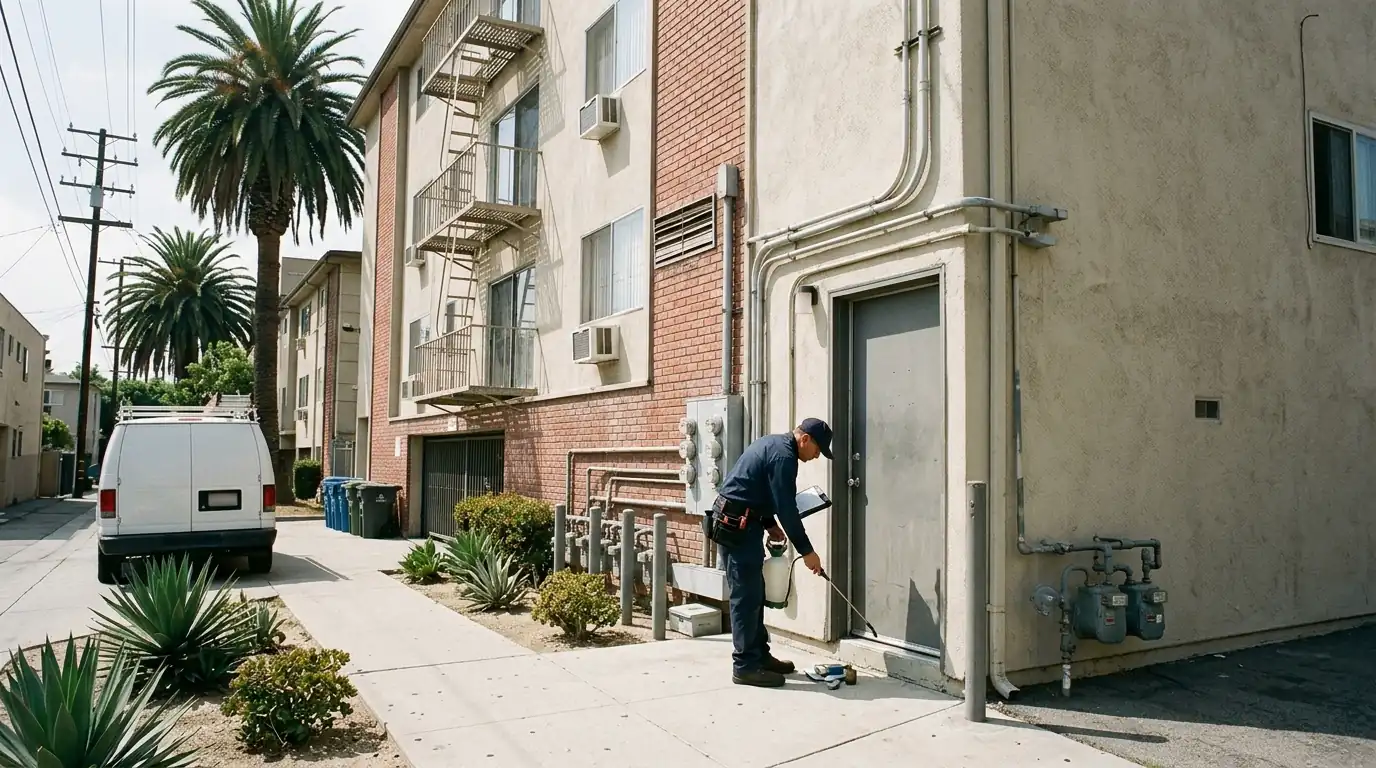
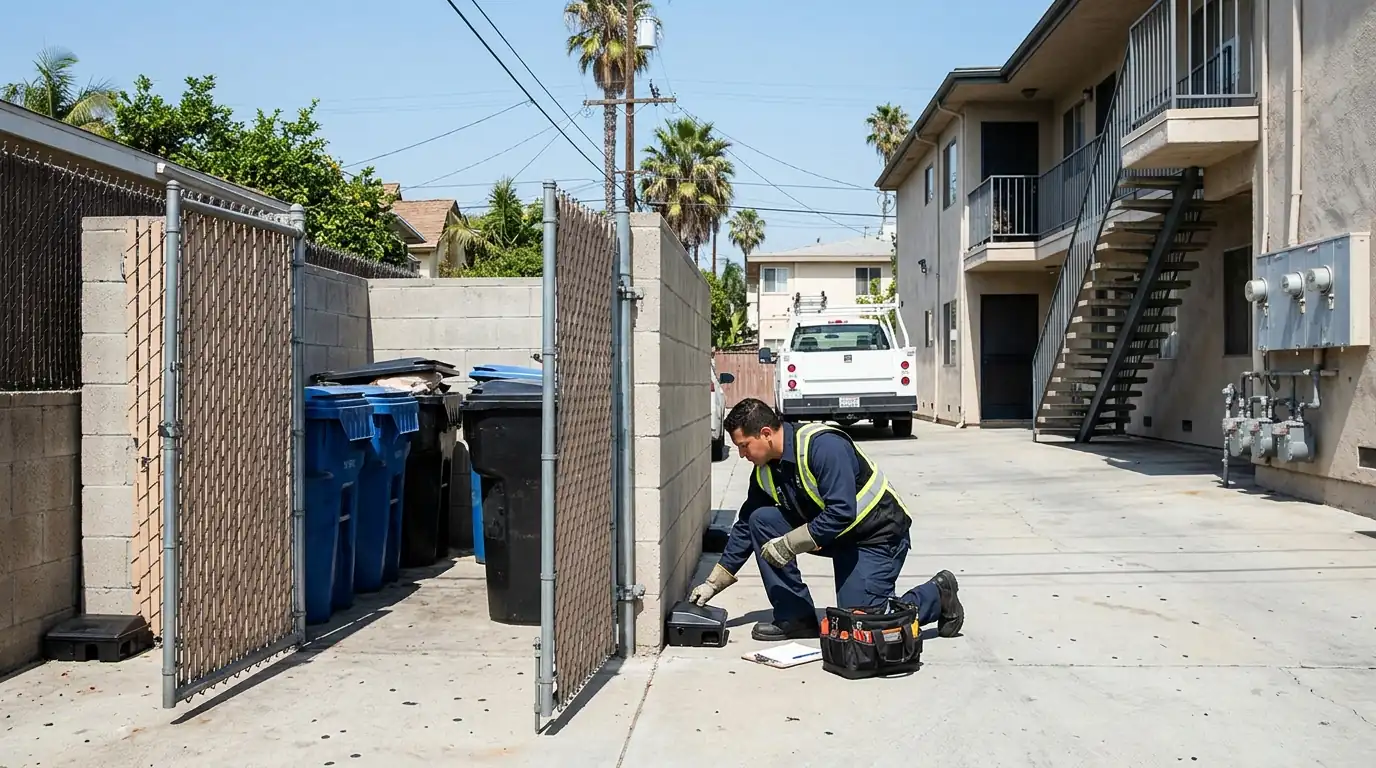
Common areas carry the scheduled work: trash rooms and enclosures, laundry rooms, parking garages, mailrooms, landscaping and the building perimeter, where roaches, rats and flies stage before they reach units. Unit calls come in on top of that and are handled inside your notice window, with every finding logged against the building, so the third roach call on one stack tells you where the source is. Turnover treatments close the loop: an empty unit gets inspected and treated completely before move-in, which is far cheaper than treating a furnished unit after the new tenant calls.
Who this fits
Properties we set programs up for
Apartment buildings
Garden-style and mid-rise complexes with shared walls, central trash rooms and tenant turnover.
HOAs and condo associations
Common areas, landscaping and exteriors on the association's schedule, with unit work coordinated through owners.
Single-family rental portfolios
Scattered rentals handled as one account, with turnover and complaint calls tracked per address.
Mixed-use buildings
Retail or restaurant ground floors with apartments above, where food-service pressure has to stay downstairs.
How service runs
The building program cycle
Building inspection
Common areas, exterior, trash and a sample of units mapped for current pressure.
Initial knockdown
Active problems in common areas and reported units treated first.
Scheduled service
Monthly or quarterly common-area and perimeter visits sized to the property.
Unit calls and turnovers
Tenant complaints and vacant units handled inside your notice process.
Reporting
Per-building and per-unit records so trends and source units are visible.
Local pressure
The LA multi-unit reality
Los Angeles housing is dense and old: a large share of renters live in buildings decades old, with connected plumbing chases, aging stucco and shared trash rooms that give German roaches, mice and roof rats a network to work with. Mild winters mean no seasonal break in breeding, and a busy rental market moves furniture and luggage, and with them bed bugs, between buildings constantly. A building-level program is the realistic answer to pressure that never stops at one unit's door.
What it costs
How property programs are priced
Programs are priced per property from the inspection: unit count, common-area size, building age, current pressure and service frequency. For scale, standard recurring visits in the LA market run in the $150-$250 range for a single home, and building programs scale from there; unit treatments and turnovers are priced per unit in the agreement so your budget is predictable.
Common questions
Asked before booking this service
Yes, and treating them together is the point. Common areas, trash rooms, laundry rooms, garages and exteriors run on a building schedule, while unit calls get handled as they come in, with every visit logged against the building so patterns across units show up in one place.
Work is scheduled around your notice process: you send the entry notice, we arrive inside the window, and the technician carries a short prep sheet for tenants on the jobs that need one, like German roach or bed bug work. Units that are not ready get documented so the follow-up is not lost.
Turnover is the best time to treat. An empty unit can be inspected and treated fully, wall voids, appliances and all, before the next tenant moves in, which stops one resident's problem from becoming the next resident's complaint.
Visit reports per building and per unit: findings, products, placements and recommendations. That record supports habitability files, owner reporting, insurance questions and the conversation with a tenant whose housekeeping is feeding the building's problem.
Monitoring placement across neighboring units shows the direction pressure travels, and documented findings let you address the source unit directly. Building-wide treatment of shared lines, pipe chases and wall voids stops the spread while that happens.
Related treatments
Often booked alongside this one
The line is on right now
Managing a building with a recurring problem?
Call and describe the property and the complaints. The inspection maps where the problem actually lives in the building.
Answered 24/7, including weekends and holidays.
Call us or find us
- Phone
- (323) 329-3792
- Hours
- Open and answering 24/7, every day
- Service office
- 3123 Cahuenga Blvd W #390, Los Angeles, CA 90068
- Head office
- 7623 Atlanta Ave, Ste 284, Huntington Beach, CA 92646
- Coverage
- Los Angeles, Orange and neighboring counties