Paper wasps, yellowjackets and hornets
Wasp and hornet removal, usually in one visit
A wasp nest only goes quiet when the queen does. Direct treatment that reaches the colony, careful removal, and sealing done in the right order make it a one-visit fix instead of a summer-long standoff.
Updated October 2026
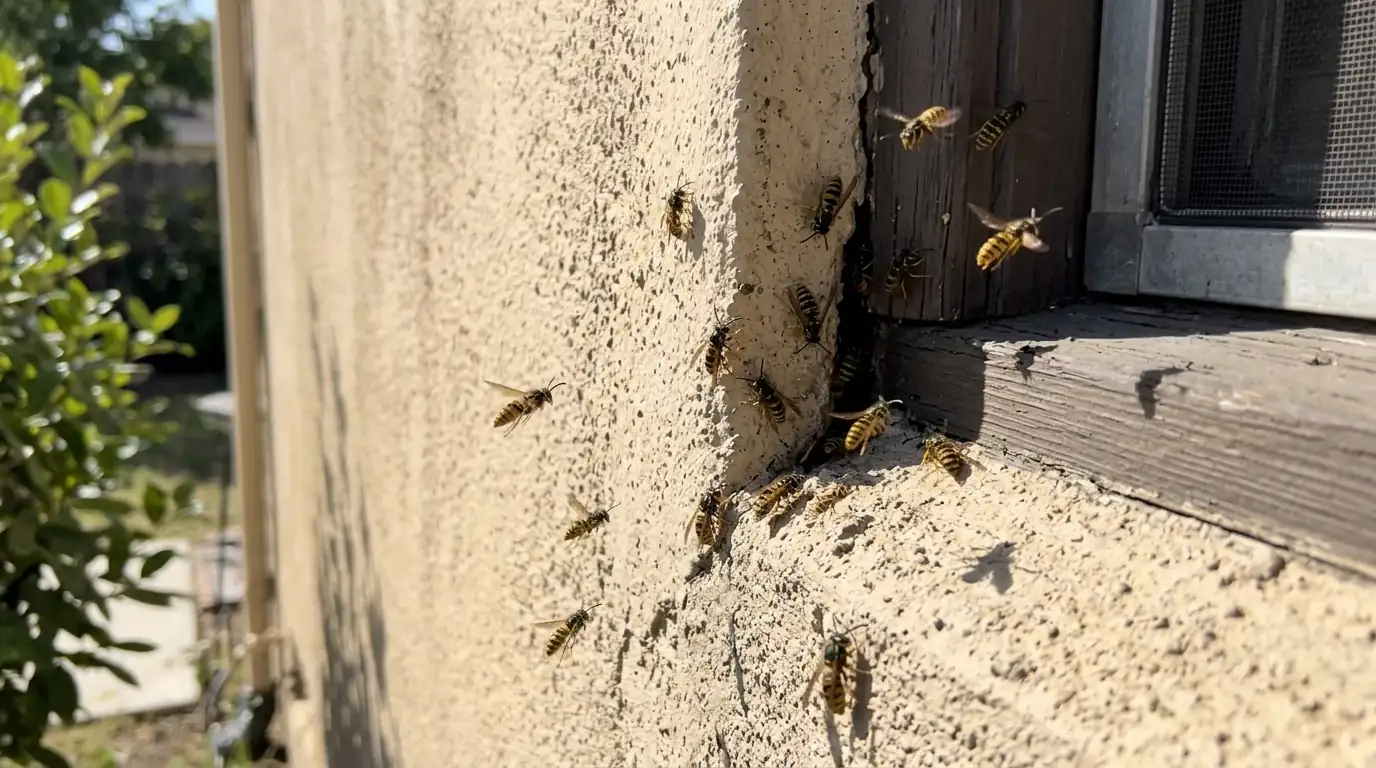
This treatment, at a glance
- Job type
- Nest treatment and removal
- Speed
- Same-day for active nests
- Hardest case
- Yellowjackets in walls
- Line
- Answered 24/7
Wasp and hornet removal in Los Angeles is usually a same-day, one-visit job: the nest is treated directly to reach the queen, then removed, and wall or attic entrances are sealed only after the colony is dead. Yellowjackets in walls or the ground need extra care. Call (323) 329-3792 any hour; nests near doors and play areas get priority.
First response
Before the technician arrives
Keep everyone back
Mark the area and keep kids and pets well clear. Avoid mowing, trimming or running equipment near a ground nest.
Do not seal the hole
A blocked wall nest forces wasps to chew inward. Leave the entrance alone until the colony is treated.
Note the traffic
Where wasps enter and leave, how many, and whether they come from the ground, a wall or an eave. It speeds the visit.
How removal works
Reach the queen, then remove the comb
A wasp problem only ends when the colony and its queen are dead. Paper wasp nests under eaves are visible and straightforward: the comb is treated, workers die on contact as they return, and the nest comes down the same visit. Yellowjackets are the harder call. They nest in wall voids, attics, ground burrows and dense shrubs, colonies can run into the thousands by late summer, and the visible entrance tells you nothing about the nest's size.
Those nests get treated through the entrance with dust formulations that workers carry deep into the colony, reaching the queen and the brood. Once activity stops, accessible nests are removed and wall entrances sealed so a new colony does not move in. Work around homes and public spaces is done with protective gear and timed for when colonies are least active, early morning or evening, to keep the people around the nest safe. If what you have turns out to be honeybees, that is a different job, handled at bee removal.
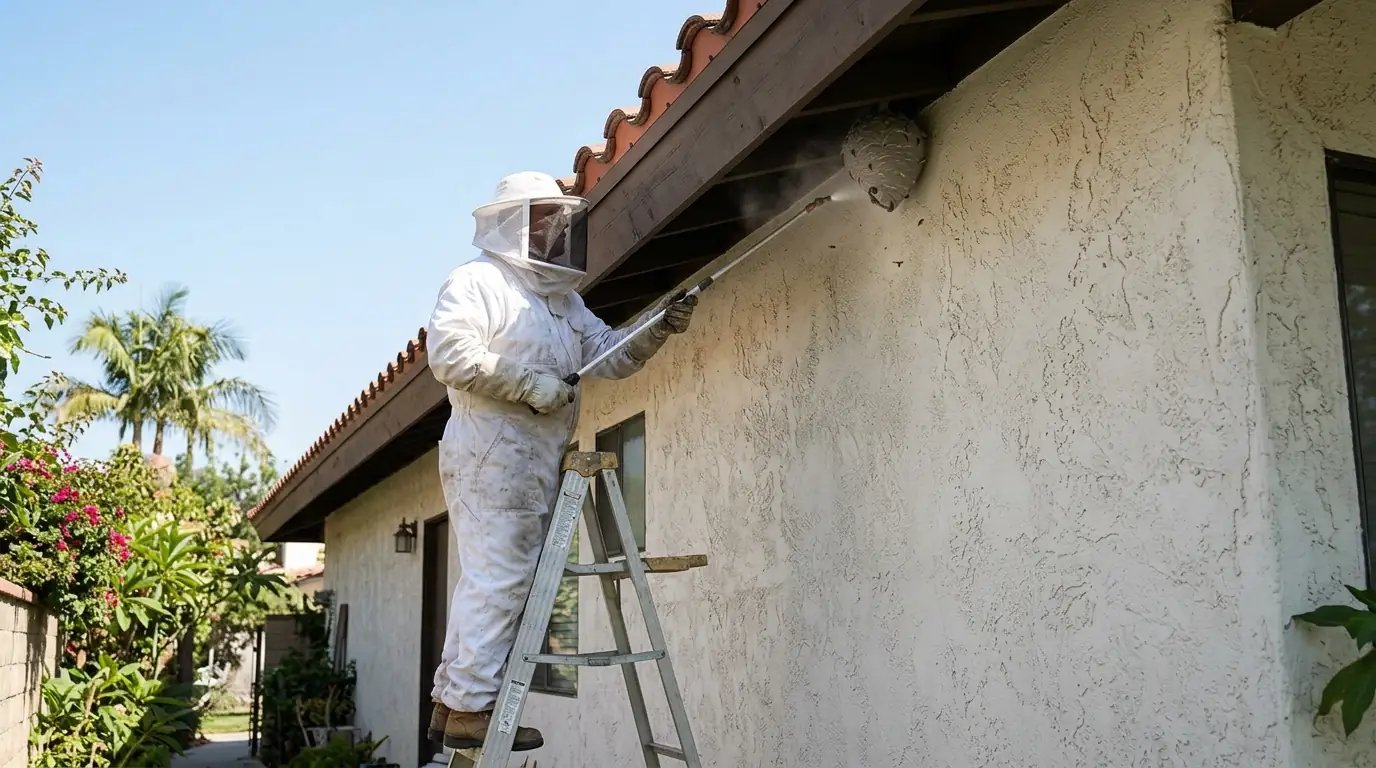
The visit
From buzzing to sealed
Identify
Paper wasp, yellowjacket or honeybee, and where the nest really sits.
Protect the area
People and pets moved clear, timing chosen for low colony activity.
Treat the colony
Direct nest treatment or entrance dusting that reaches the queen and brood.
Remove the nest
Exposed combs taken down once activity stops.
Seal and prevent
Wall entrances closed after the colony dies, favorite nesting spots flagged.
Local pressure
Why LA yellowjackets get so big
In most of the country, the first hard frost kills wasp colonies each fall and only the new queens survive the winter. The Los Angeles Basin rarely delivers that frost, so some yellowjacket colonies carry on through the mild winter and keep growing, producing the oversized nests that show up in attics and wall voids. Late summer is still peak season, when colonies are largest and yellowjackets turn aggressive around barbecues, trash and pool decks, which is exactly when weekend yard work tends to find a hidden ground nest the hard way.
What it costs
Current LA market ranges
Figures are current Los Angeles market ranges from published pricing surveys, not a quote. Property size, construction, how established the problem is and access all move the number; we confirm pricing after an inspection.
Common questions
Asked before booking this service
Usually, yes. Active nests near doors, play areas and walkways get priority, and most exposed nests are treated and removed in one visit. Nests inside walls, attics or the ground take a little longer to reach safely but are still handled in the same visit wherever access allows.
Yellowjackets and paper wasps defend aggressively and sting repeatedly, and a disturbed colony can send dozens out at once. Ground and wall nests are worse, because you cannot see how big they are. Store sprays often fail to reach the queen and leave an angry colony behind.
Paper wasps build open, umbrella-shaped combs under eaves and are relatively calm. Yellowjackets are a type of wasp that nests in the ground, walls and attics, and they are the aggressive ones around food and trash. True hornets are uncommon in LA; most hornet calls turn out to be yellowjackets or the bald-faced kind.
No. Sealing a wall-void nest entrance while the colony is alive forces the wasps to chew a new way out, often into the living space. Leave it open for treatment, and the opening gets sealed after the colony is dead.
Old nests are not reused, but a sheltered spot that suited one colony will suit another. Removing the old comb, sealing wall gaps after treatment and treating favorite eave spots early in the season cuts the chance of a repeat.
Related treatments
Often booked alongside this one
The line is on right now
Nest right where people walk?
Call now and describe where it is. Nests near doors and play areas are treated as same-day priority.
Answered 24/7, including weekends and holidays.
Call us or find us
- Phone
- (323) 329-3792
- Hours
- Open and answering 24/7, every day
- Service office
- 3123 Cahuenga Blvd W #390, Los Angeles, CA 90068
- Head office
- 7623 Atlanta Ave, Ste 284, Huntington Beach, CA 92646
- Coverage
- Los Angeles, Orange and neighboring counties