Sealing rats and mice out for good
Rodent exclusion that closes the house for good
Los Angeles rodent pressure is permanent; your house being open to it is optional. Exclusion seals every entry in materials teeth cannot beat, and it is the difference between removing rats and being done with them.
Updated October 2026
This treatment, at a glance
- Job type
- Full-structure sealing
- Materials
- Metal and hardware cloth
- Market range
- $600-$1,200 typical
- Line
- Answered 24/7
Rodent exclusion in Los Angeles is the permanent half of rodent control: a full survey of every entry a roof rat or mouse can use, then sealing in metal and hardware cloth, with the work documented point by point. The LA market range for a typical home runs $600-$1,200. Call (323) 329-3792 to book the survey.
What gets sealed
The standard LA entry list
Roofline and returns
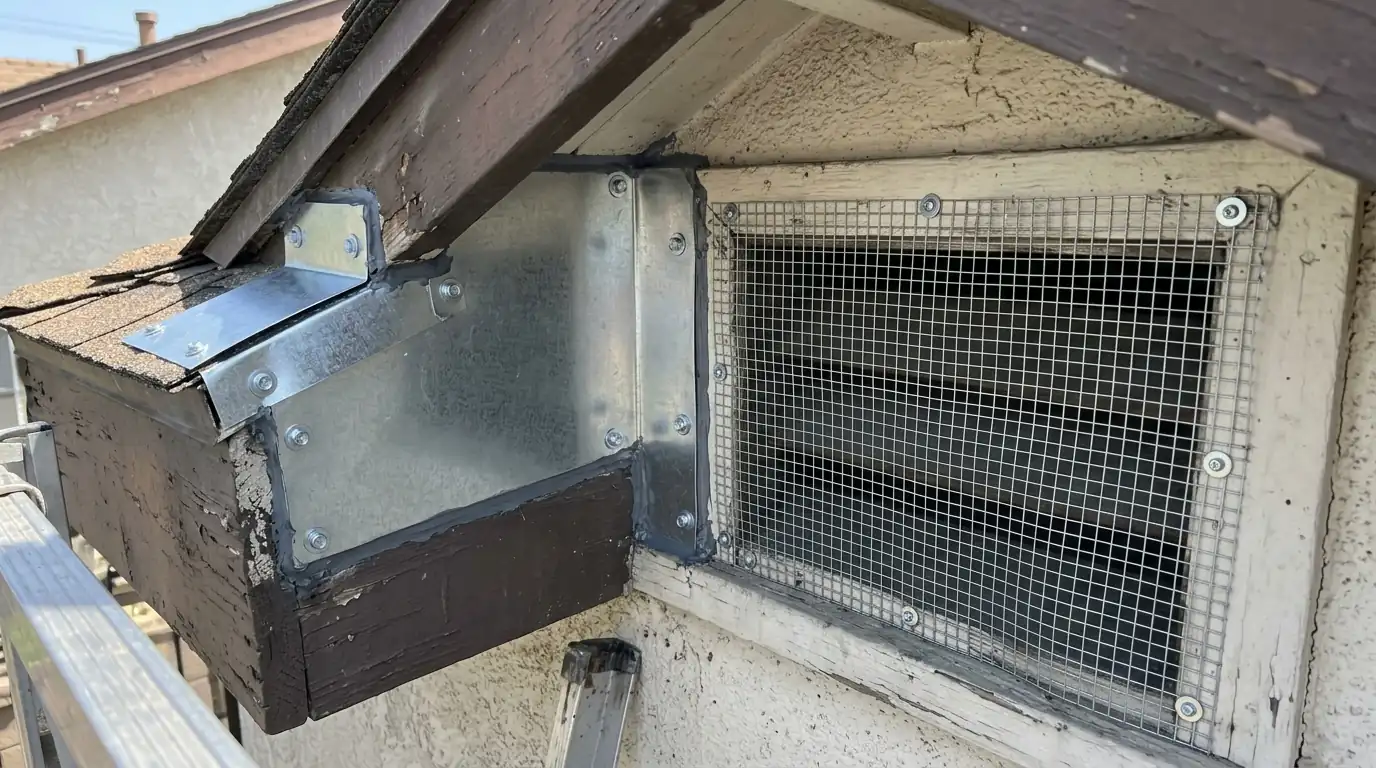
Gaps where roof planes meet walls and eaves return, the roof rat's front door, closed in sheet metal.
Vents
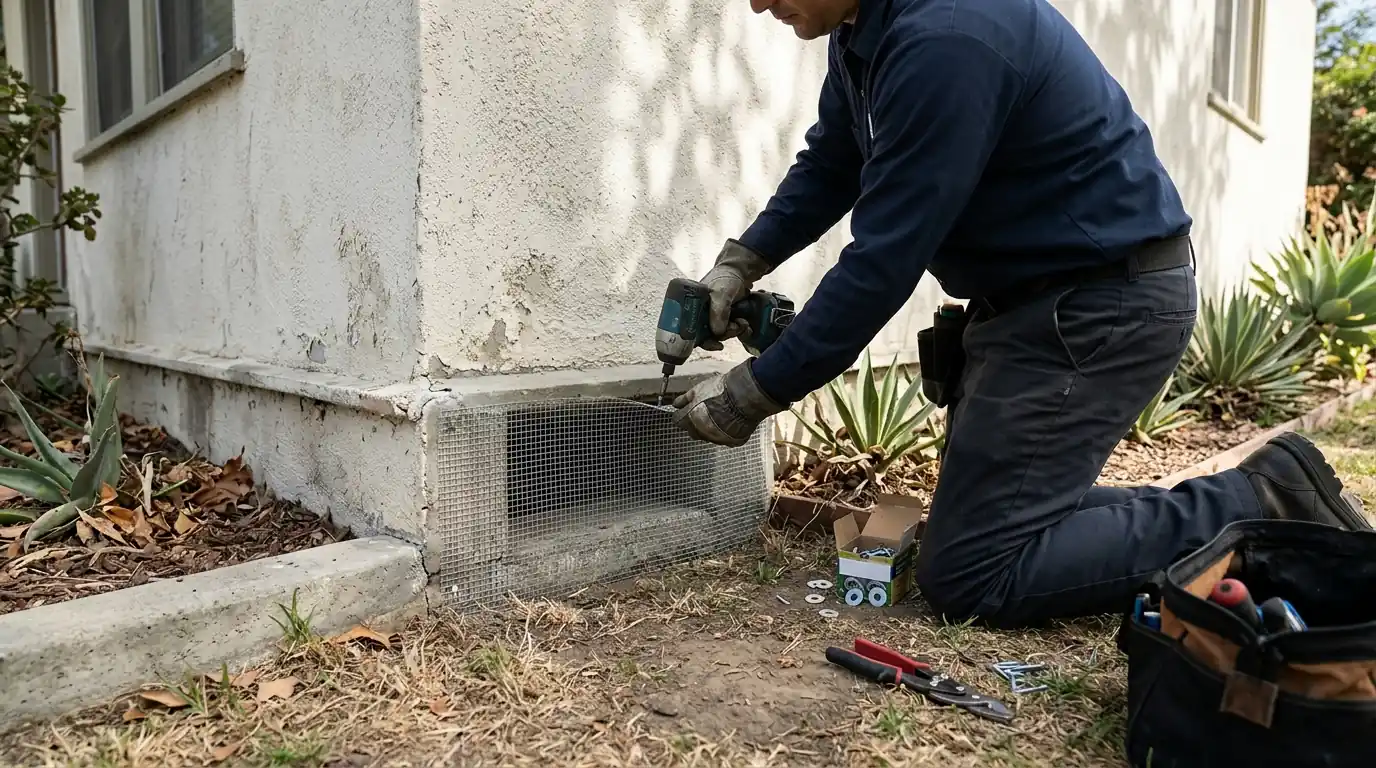
Attic, foundation and gable vents screened in quarter-inch galvanized hardware cloth that passes air and stops teeth.
Penetrations
Every pipe, conduit, cable and AC line-set entry sealed around in chew-proof material.
Doors and screeds
Garage corner gaps, door sweeps and stucco weep screeds protected with guards that keep drainage working.
Why exclusion is the real fix
Trapping removes rats; sealing removes the vacancy
Everything else in rodent work manages a population; exclusion ends access, and in Los Angeles access is the whole game. The roof rat population outside is permanent, networked across every fence line and utility wire on the block, and continuously producing dispersers looking for warm vacancies. Trap an attic without sealing it and the vacancy gets refilled; this is why bait-station subscriptions can run for years without a house ever being actually closed.
Good exclusion is a trades job as much as a pest job. The survey covers the structure the way a rat does, from the utility lines down: roof returns, vent screens aged to lace, the gap behind the chimney flashing, the AC chase, the garage door's corner daylight. Sealing uses materials rodents cannot defeat, metal and galvanized mesh, fitted so ventilation and drainage keep working. Where animals are currently inside, exclusion sequences with trapping so nothing gets sealed into the walls, and the final closure happens only when monitoring says the structure is empty.
The visit
How exclusion runs
Survey
Every reachable entry point located and photographed, roofline to foundation.
Scope in writing
A point-by-point list with materials, so you know exactly what is being closed and why.
Seal
Metal, hardware cloth and rated sealants, fitted to keep airflow and drainage legal and working.
Sequence with trapping
Occupied structures get cleared first; the final seal waits for empty.
Document
The finished map of sealed points, for your records and for any future contractor cutting new penetrations.
Local pressure
Built against the LA grid
Exclusion matters more in Los Angeles than almost anywhere because the pressure never resets and arrives from above. Mild winters keep roof rat breeding year-round, mature canopy and utility lines hand them aerial access to every block, and with AB 1788 restricting the rodenticides that once papered over open structures, closing the building is now both the effective answer and the responsible one. The same sealed points also hold out mice and cut off the wall-void routes other pests ride, which is why exclusion pairs naturally with a quarterly plan as the structural half of keeping a house quiet.
What it costs
Current LA market ranges
Figures are current Los Angeles market ranges from published pricing surveys, not a quote. Property size, construction, how established the problem is and access all move the number; we confirm pricing after an inspection.
Common questions
Asked before booking this service
A full-structure entry survey, then sealing every opening rodents can use: attic and foundation vents screened in hardware cloth, roofline and roof-return gaps closed in metal, pipe and cable penetrations sealed, door sweeps and garage seals fitted, and weep screeds protected without blocking their drainage.
In Los Angeles, yes, and that timing is actually the cheap version of the job. The neighborhood roof rat population is permanent; sealing before they move in costs the exclusion alone, while sealing after adds trapping, and often cleanup, to the bill.
No. Vents get screened, not blocked: quarter-inch galvanized hardware cloth keeps rodents out while passing the same airflow. Anything that must stay open for code or drainage gets protected with purpose-made guards instead of sealant.
The materials are the point: galvanized mesh, sheet metal and rated sealants rather than foam and screen scraps, so the work holds for years. The weak point over time is new penetrations, a solar run, a new cable line, which is why the report maps what was sealed so future work does not quietly reopen the house.
We stand behind the sealed points, and if rodents reopen or bypass covered work, we come back. What no honest company guarantees is the whole future of a structure that keeps changing; what you get is every current entry closed, documented, and warrantied work on the sealing itself.
Related treatments
Often booked alongside this one
The line is on right now
Want the attic closed before the next tenant moves in?
The survey is the first step and it comes back as a written point-by-point scope. One call books it.
Answered 24/7, including weekends and holidays.
Call us or find us
- Phone
- (323) 329-3792
- Hours
- Open and answering 24/7, every day
- Service office
- 3123 Cahuenga Blvd W #390, Los Angeles, CA 90068
- Head office
- 7623 Atlanta Ave, Ste 284, Huntington Beach, CA 92646
- Coverage
- Los Angeles, Orange and neighboring counties