Mulch beds, thresholds and gardens
Earwig control that starts in the flower beds
Every earwig in the kitchen came from a damp bed a few feet outside. Treating the mulch and perimeter, and drying the yard out, is what stops the nightly visits.
Updated October 2026
This treatment, at a glance
- Job type
- Perimeter and bed treatment
- Source
- Damp mulch and ground cover
- Harm
- Nuisance, garden damage
- Line
- Answered 24/7
Earwig control in Los Angeles is an outdoor job: treating the foundation perimeter and the damp mulch, ground cover and beds where earwigs hide by day, sealing threshold gaps, and pulling moisture back from the walls. Indoor sightings drop when the yard population does. Call (323) 329-3792, answered 24/7.
What the service covers
Treat the yard, not just the floor
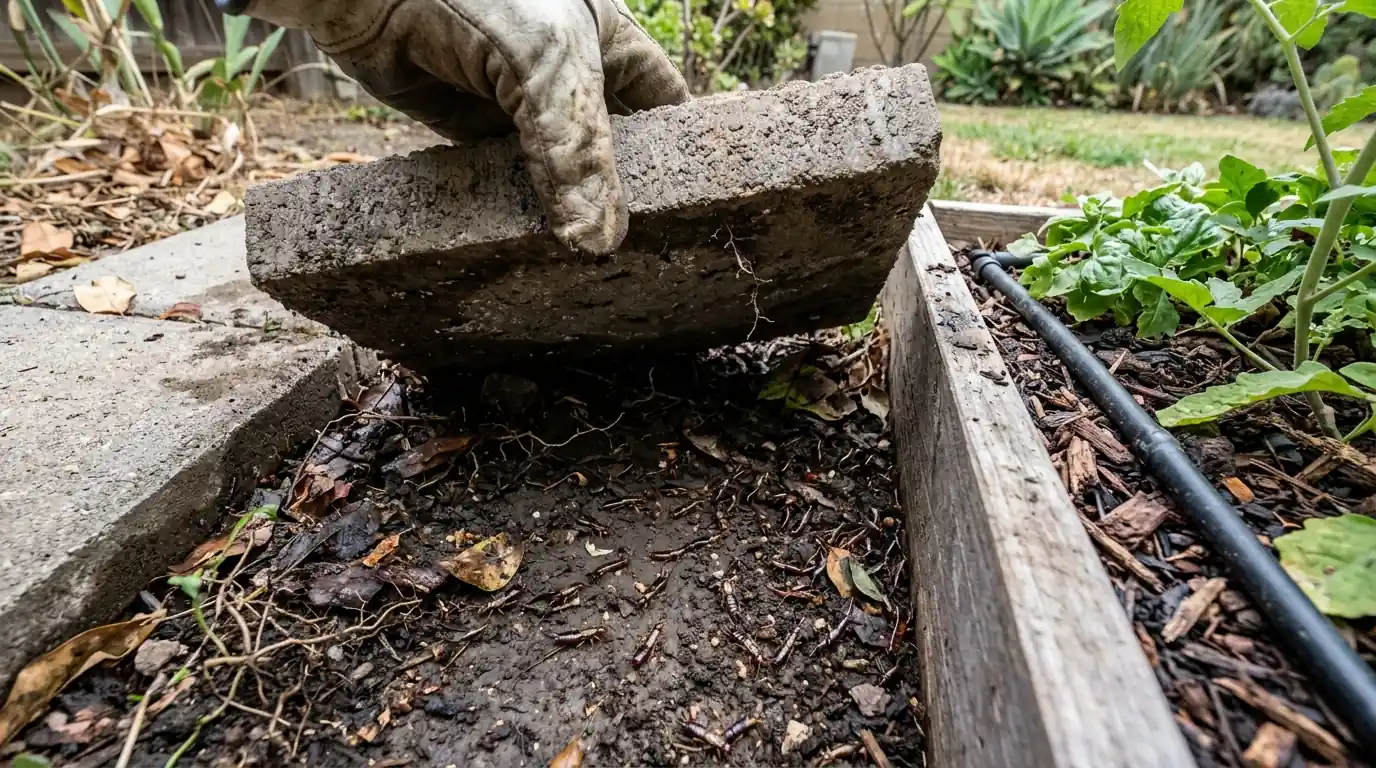
Earwigs found indoors are almost always visitors from a large outdoor population living within a few feet of the foundation. By day they hide in damp mulch, under ground cover, in irrigated planters and beneath pavers, stepping stones and stacked wood. At night they forage, and when the weather shifts, heat drying out the beds or heavy watering flooding them, they move toward the house and through any gap at the threshold.
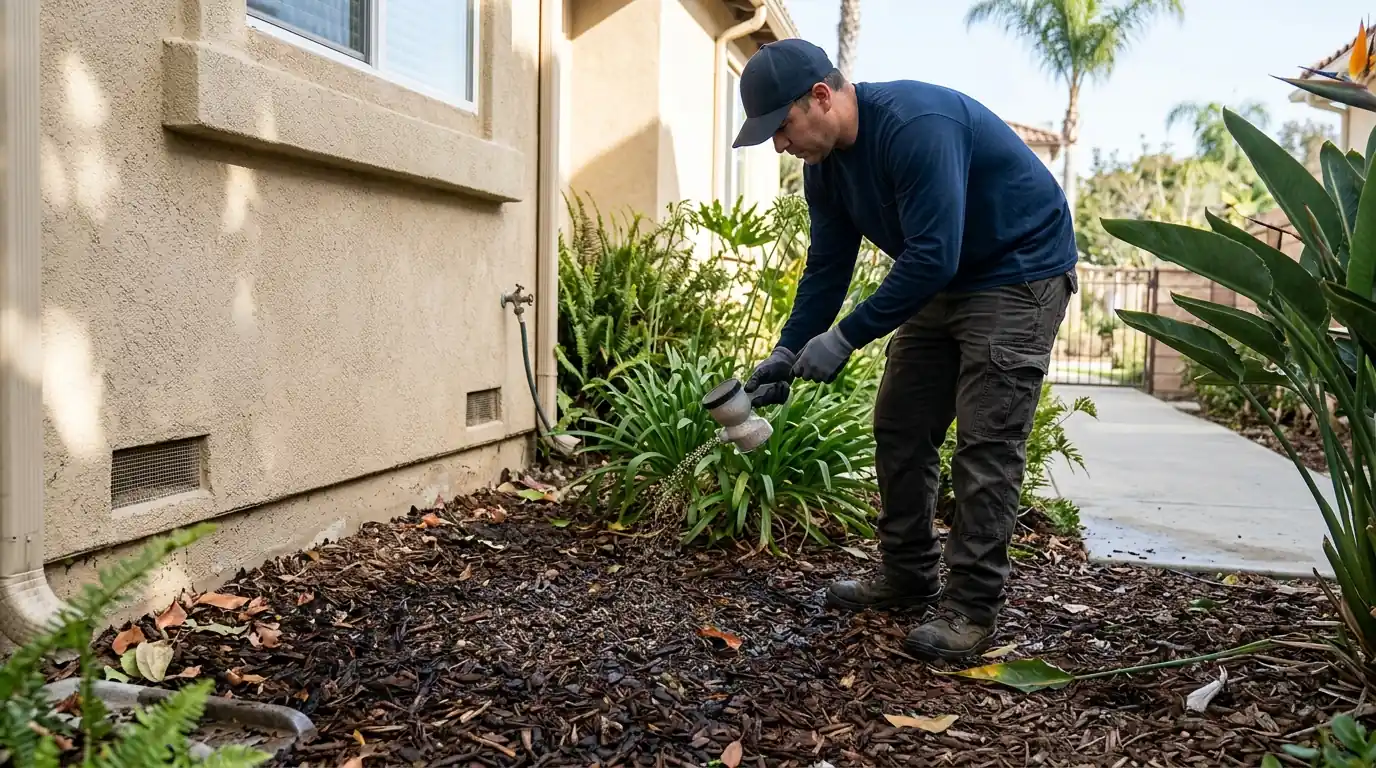
So the treatment goes to them. A perimeter band along the foundation, door thresholds and weep screeds stops the nightly push, and granular treatment worked into the mulch and ground cover reduces the population at the source. The rest is landscape housekeeping: pulling mulch back a few inches from the walls, fixing over-spraying irrigation heads, lifting pavers and wood off the soil, and fitting door sweeps where light shows under doors.
Reduce the habitat
Changes that cut earwig numbers
Pull mulch back
Keep a dry strip of a few inches between mulch or ground cover and the foundation.
Fix the irrigation
Overspray and leaks keep beds and walls wet; adjusting heads dries out the hiding spots.
Lift the clutter
Pavers, boards, pots and stored items resting on soil are earwig shelters.
Close the doors
Door sweeps and threshold seals where light shows under doors and garage edges.
The visit
How earwig service runs
Inspect
Beds, mulch, irrigation, pavers and entry points around the house checked.
Treat the perimeter
Foundation, thresholds and weep screeds treated against nightly movement.
Treat the source
Granular treatment worked into mulch, ground cover and planters.
Advise
Specific moisture and landscape changes for your yard.
Follow up
Recheck after a few weeks or roll into a quarterly plan where pressure is high.
Local pressure
Irrigated yards, coastal damp
Earwigs thrive in the combination Los Angeles and Orange County yards provide: thick decorative mulch, ivy and ground cover, and irrigation that keeps beds damp through dry summers. Coastal neighborhoods and beach towns add the marine layer's steady moisture. Mild winters mean populations never collapse, so earwig calls come in spikes after heat waves and heavy watering rather than in a single season. Where they are a standing nuisance, the perimeter is best held through a quarterly plan.
What it costs
Current LA market ranges
Figures are current Los Angeles market ranges from published pricing surveys, not a quote. Property size, construction, how established the problem is and access all move the number; we confirm pricing after an inspection.
Common questions
Asked before booking this service
No. Despite the old myth, they do not crawl into ears, and their pincers can give a light pinch but rarely break skin. They are a nuisance indoors and a garden pest outside, chewing seedlings, soft fruit and flowers.
They live in damp mulch, ground cover and under pavers outside, and come in when conditions change: heat and dryness push them toward moisture, and heavy irrigation or rain floods them out. Door thresholds, weep screeds and gaps under garage doors are the usual entries.
Moisture and cover. Thick mulch against the foundation, ivy and ground cover, wet planters, leaky irrigation heads and stacked pavers or wood all give earwigs the dark, damp hiding places they need by day.
Indoor sightings come from the outdoor population, so the treatment that matters is outside: a perimeter band at the foundation and granular treatment in the mulch and beds they live in, plus pulling moisture and mulch back from the walls.
No, they do not damage wood or structures. The concern is the nuisance indoors and the damage to garden plants outside.
Weather and watering drive them. A heat wave dries out the surface of beds and sends earwigs looking for moisture near and inside the house, and a heavy watering schedule or a rare storm floods their hiding spots and pushes them out in numbers. That is why sightings come in bursts, and why the perimeter band is placed to catch them during exactly those movements rather than chasing individuals indoors.
Related treatments
Often booked alongside this one
The line is on right now
Finding them on the kitchen floor every morning?
Call and the visit will find the beds they are coming from and treat them at the source.
Answered 24/7, including weekends and holidays.
Call us or find us
- Phone
- (323) 329-3792
- Hours
- Open and answering 24/7, every day
- Service office
- 3123 Cahuenga Blvd W #390, Los Angeles, CA 90068
- Head office
- 7623 Atlanta Ave, Ste 284, Huntington Beach, CA 92646
- Coverage
- Los Angeles, Orange and neighboring counties