Hillsides, slopes and gardens
Ground squirrel control for hillside properties
Ground squirrel burrows do more than ruin a garden; they undermine slopes and walls. Trapping the colony, closing the burrows and removing their cover protects the property, not just the plants.
Updated October 2026
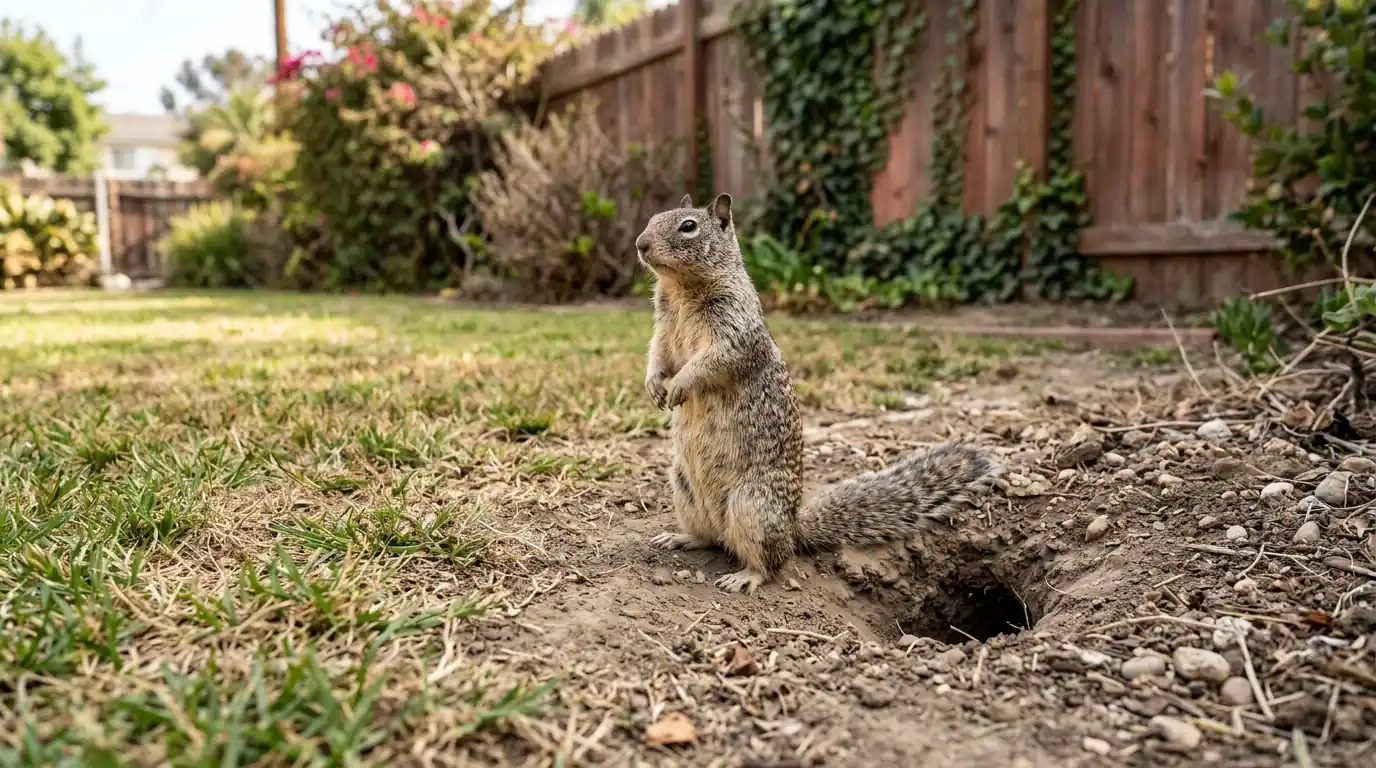
This treatment, at a glance
- Job type
- Trapping and burrow closure
- Highest risk
- Slopes and retaining walls
- Approach
- Pet and child safe
- Line
- Answered 24/7
Ground squirrel control in Los Angeles relies on trapping at active burrows, then filling burrow systems and removing the cover that invites recolonization. It matters most on hillsides and near open space, where burrows undermine slopes, walls and hardscape. Call (323) 329-3792, answered 24/7.
What the service covers
Colonies, burrows and slopes
California ground squirrels are colony animals. A few become a dozen quickly, and their connected burrow systems spread under lawns, slopes, retaining walls, patios and foundations. Above ground they strip gardens, eat fruit and nuts, and gnaw irrigation; below ground, their tunnels loosen soil and channel water, which on hillside lots can turn a burrow problem into an erosion and drainage problem.
Residential control starts with mapping the active burrows and runways, then trapping at those burrows in a way that keeps pets and children safe. Once the colony is cleared, burrows get filled and compacted so they cannot be reopened, and the cover they rely on, brush piles, wood stacks and dense ground cover near holes, gets named for removal. On larger or hillside properties, monitoring visits catch new arrivals from neighboring land early.
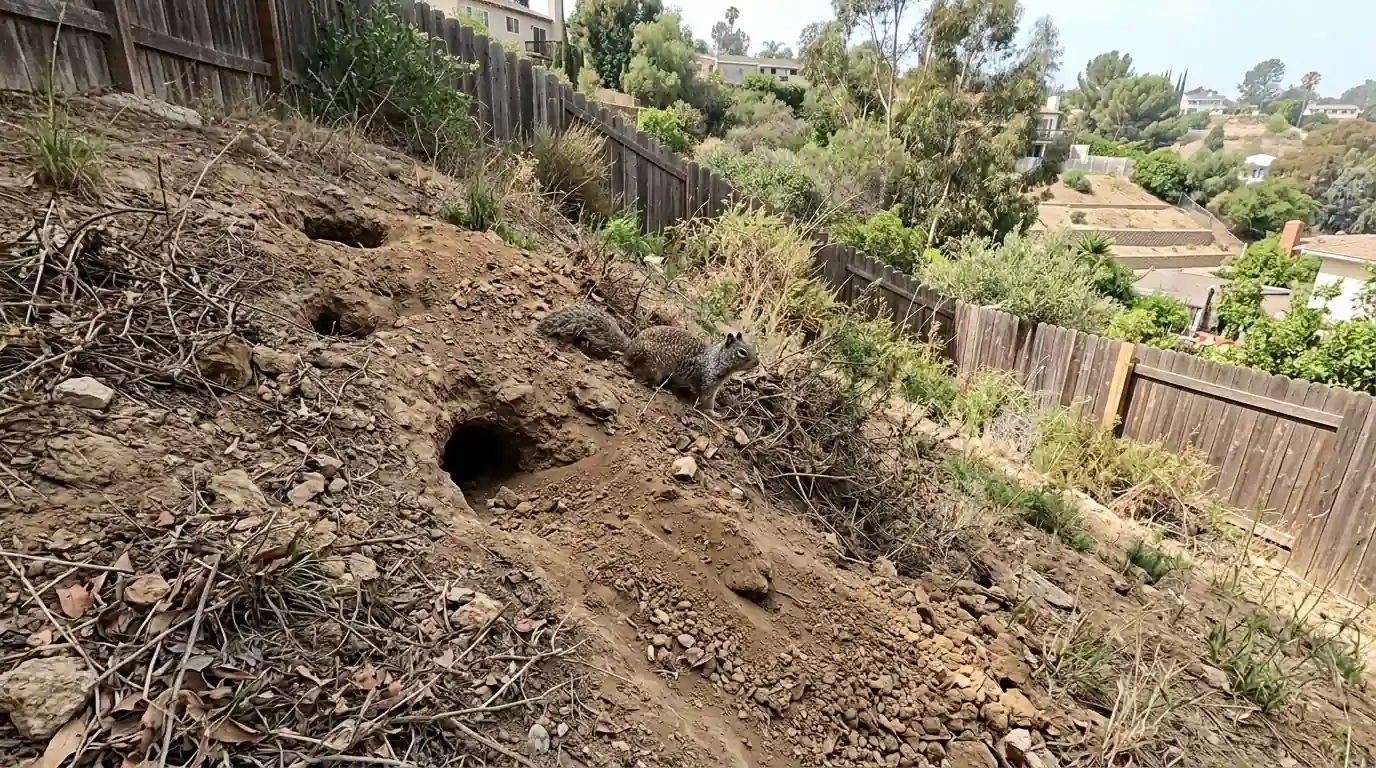
Signs of ground squirrels
What gives them away
Open burrow holes
Holes about three to four inches wide with no mound plug, often near walls, rocks and slopes.
Daytime activity
Squirrels standing upright near holes and darting underground when approached.
Garden damage
Seedlings, fruit, nuts and vegetables eaten or dug up.
Undermined hardscape
Cracking or settling at patios, steps and retaining walls where burrows run underneath.
The visit
How ground squirrel control runs
Inspect
Active burrows, runways and colony size mapped.
Trap
Traps set at active burrows with pet and child safety in mind.
Follow up
Visits until the colony is cleared.
Close burrows
Systems filled and compacted so they cannot be reused.
Prevent
Cover removal and monitoring against recolonization.
Local pressure
Hillsides and open space
Ground squirrels are a fixture of the Los Angeles foothills, canyon edges, parks and flood control channels, and properties bordering that land feel the most pressure. Hillside homes in particular deal with burrows under slopes and retaining walls, where the stakes are drainage and soil stability rather than just a damaged garden. With rodenticide use restricted in California under AB 1788, trapping and exclusion are the standard approach around homes, and properties that also have gophers often get both handled together through gopher control. Spring is the busiest stretch, when young squirrels leave their birth burrows and spread into new yards, and early action then keeps a pair from becoming a colony by summer.
What it costs
How ground squirrel control is priced
Pricing depends on colony size, property size and slope, and the number of follow-up visits needed, quoted after the first inspection. For scale, one-time pest jobs in the LA market start from about $300; larger hillside properties and ongoing monitoring are quoted per visit.
Common questions
Asked before booking this service
California ground squirrels live in burrows, have a speckled gray-brown coat and a less bushy tail, and dive into holes in the ground when startled. Tree squirrels nest in trees and attics. The control methods are completely different.
Their burrow systems can undermine slopes, retaining walls, foundations, patios and irrigation, and they eat garden plants, fruit, nuts and seedlings. On hillsides, burrows can channel water and contribute to erosion.
Trapping at active burrows is the main method in residential areas, combined with exclusion where possible and burrow closure once the colony is cleared. The approach is chosen to keep pets, children and other wildlife safe.
Their fleas can carry disease, and California public health agencies monitor ground squirrel populations in wildland areas for that reason. Avoid handling squirrels or disturbing burrows bare-handed, and keep pets on flea prevention.
Neighboring land can resupply a property, especially on hillsides and near open space. Filling old burrows, removing brush piles and cover, and monitoring for new holes keep a cleared property from being recolonized.
Filling holes while the colony is still active does little; ground squirrels simply dig back out or open new entrances nearby, often in a worse spot such as under a step or wall. Burrow closure works as the final step after the colony is cleared, when systems can be filled and compacted properly. Before that, mark the active holes and leave them open so the technician can read which ones are in use.
Related treatments
Often booked alongside this one
The line is on right now
Holes appearing along the slope?
Call and the inspection will map the colony and the burrows threatening the slope before more soil goes missing.
Answered 24/7, including weekends and holidays.
Call us or find us
- Phone
- (323) 329-3792
- Hours
- Open and answering 24/7, every day
- Service office
- 3123 Cahuenga Blvd W #390, Los Angeles, CA 90068
- Head office
- 7623 Atlanta Ave, Ste 284, Huntington Beach, CA 92646
- Coverage
- Los Angeles, Orange and neighboring counties