Least-toxic, still effective
Eco-friendly pest control for Los Angeles homes
The greenest treatment is the one that fixes why the pest got in. Sealing and sanitation come first, and any product goes exactly where pests live, not across the floor your dog sleeps on.
Updated October 2026
This treatment, at a glance
- Job type
- Integrated, least-toxic program
- First step
- Exclusion and sanitation
- Products
- Baits, IGRs, dusts, traps
- Line
- Answered 24/7
Eco-friendly pest control in Los Angeles means the least-toxic approach that still works: exclusion and sanitation first, then baits, dusts and growth regulators placed where pests live instead of sprayed across open surfaces. It is the right fit for homes with pets, kids and gardens, and it usually costs the same as conventional service. Call (323) 329-3792, answered 24/7.
What the approach is
Least-toxic, most-targeted
Eco-friendly pest control is integrated pest management done honestly. Every job starts by asking why the pest is there: a gap under the door, a leaking pipe, pet food in the garage, a tree branch on the roof. Fixing those conditions is the first and cheapest control, and it is the part that keeps working after the technician leaves.
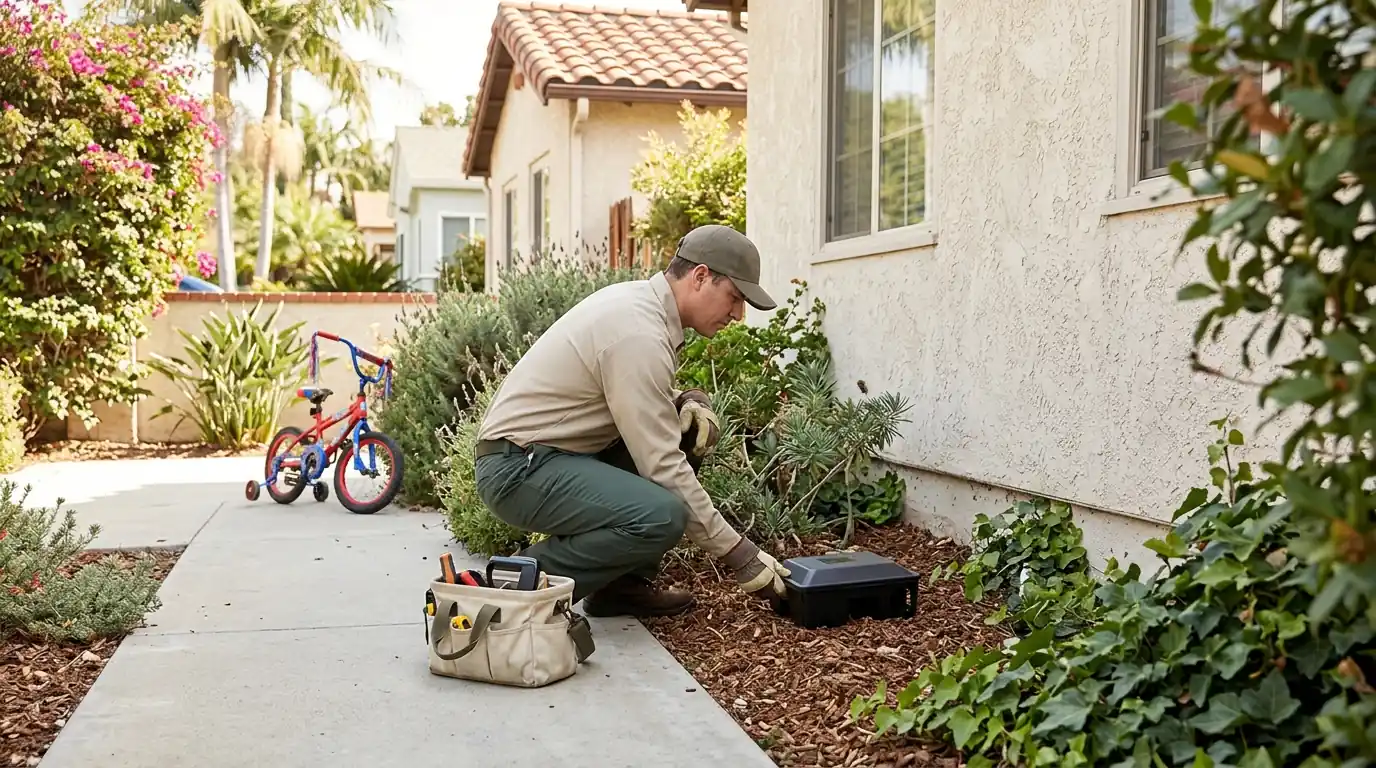
Where treatment is needed, the products go to the pest rather than the room. Gel and granular baits that ants and roaches carry home, insect growth regulators that stop the next generation from maturing, silica and borate dusts tucked into wall voids, botanical oil products for some contact work, and snap traps and sealing for rodents instead of poison. California already regulates pesticides more tightly than most states; this approach goes a step further by choosing the lowest-exposure option that actually solves the problem.
Who it suits
Homes where exposure matters most
Pets at home
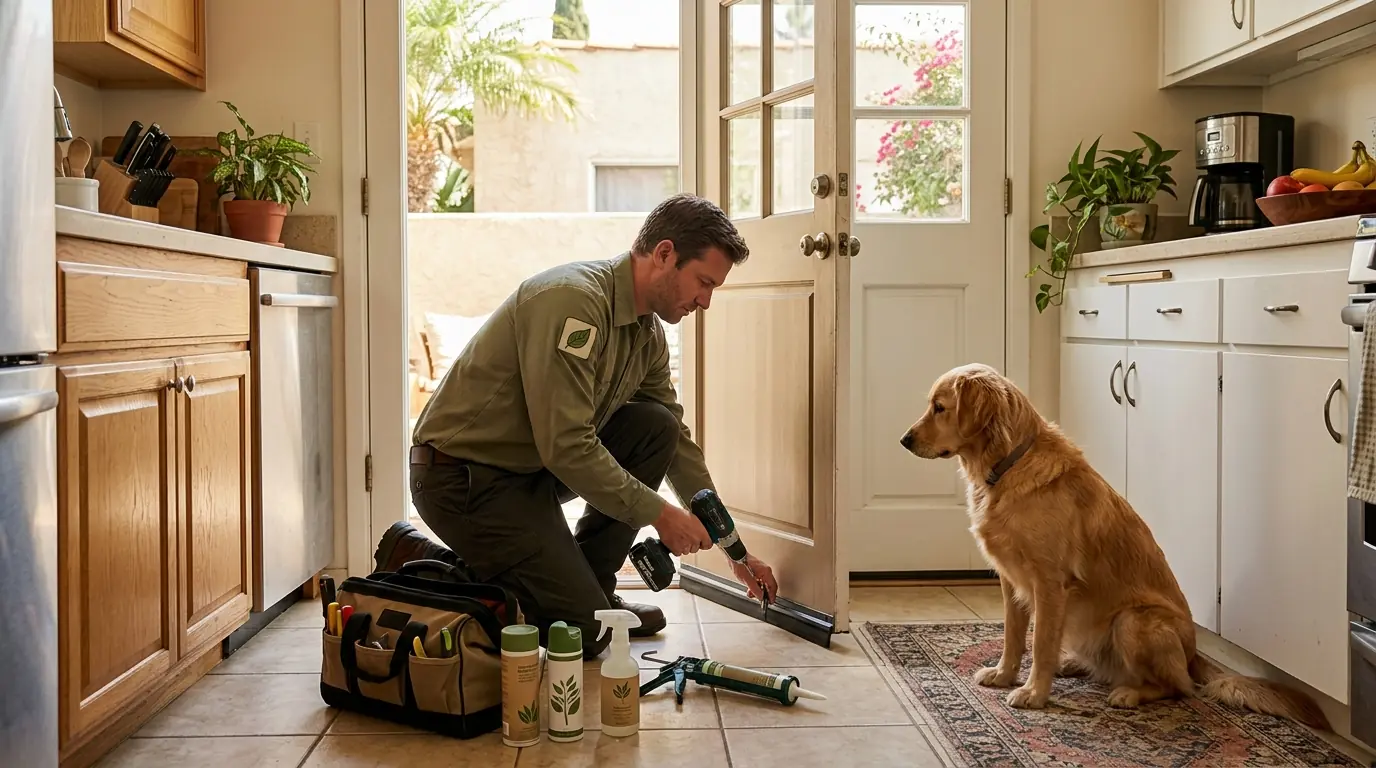
Dogs, cats, birds and fish tanks shape where and what gets placed.
Infants and kids
Floors and play areas stay product-free; placements go into voids and stations.
Gardens and pollinators
Exterior work avoids blooming plants and focuses on foundations and entry points.
Health sensitivities
Asthma, allergies or chemical sensitivity get the lowest-exposure plan available.
How a visit runs
Prevention first, product second
Inspect the conditions
Entry points, moisture, food sources and harborage found and explained.
Fix what can be fixed
Door sweeps, gap sealing and sanitation steps before any product.
Place, do not spray
Baits, growth regulators and dusts go into cracks, voids and stations.
Monitor
Traps and monitors show whether activity is falling or needs another step.
Hold the line
A quarterly visit keeps the perimeter and the fixes working, if pressure warrants it.
Local pressure
Why it works well in LA
Los Angeles pest pressure is mostly outdoor populations pushing in: Argentine ants, roof rats, earwigs, spiders. That suits a prevention-first approach, because sealing, baiting and perimeter placement do most of the work. Argentine ant supercolonies in particular collapse faster on bait than on spray, and California's restrictions on the strongest rodenticides already push rodent work toward trapping and exclusion. Where an infestation genuinely needs stronger tools, a widespread drywood termite problem or an entrenched bed bug case, you are told so, with the options laid out.
What it costs
Current LA market ranges
Figures are current Los Angeles market ranges from published pricing surveys, not a quote. Property size, construction, how established the problem is and access all move the number; we confirm pricing after an inspection.
Common questions
Asked before booking this service
Not usually, and any company that promises zero products for every problem is overselling. Eco-friendly pest control means using the least-toxic method that actually works: exclusion, sanitation and trapping first, then baits, dusts and growth regulators placed exactly where pests live, and broad sprays only when nothing else will do.
That is the main reason people ask for it. Placements go into cracks, voids, bait stations and the exterior perimeter rather than open floors, and the technician tells you which spots need drying time. Telling us about pets, fish tanks, infants or anyone with health sensitivities shapes product choice from the start.
For most household pests, yes, because targeted baits and growth regulators are often more effective than broad sprays anyway. Ant colonies collapse faster on bait than on spray, and German roaches are cleared by gel baits, not fog. Heavy termite or bed bug infestations sometimes need stronger tools, and you are told plainly when that is the case.
Usually about the same. Visits run in the normal Los Angeles market ranges, roughly $150 to $250 for a quarterly visit and from about $300 for a one-time treatment. Exclusion work, which is the heart of the approach for rodents, is quoted separately.
It depends on the pest: gel and granular baits for ants and roaches, insect growth regulators that stop insects from maturing, silica and borate dusts in wall voids, botanical oil products for some contact work, and traps and sealing for rodents. You can ask for the label of anything used in your home.
Related treatments
Often booked alongside this one
The line is on right now
Want treatment that is safe around the family?
Call and tell us who lives in the house, pets included. The plan starts from there.
Answered 24/7, including weekends and holidays.
Call us or find us
- Phone
- (323) 329-3792
- Hours
- Open and answering 24/7, every day
- Service office
- 3123 Cahuenga Blvd W #390, Los Angeles, CA 90068
- Head office
- 7623 Atlanta Ave, Ste 284, Huntington Beach, CA 92646
- Coverage
- Los Angeles, Orange and neighboring counties