Drains, dumpsters and kitchens
Fly control that follows each fly to its source
Spraying flies is like bailing water without fixing the leak. Each fly species points to a breeding source, and treating that source is what actually ends the problem.
Updated October 2026
This treatment, at a glance
- Job type
- Source removal and treatment
- Key step
- Species identification
- Common source
- Drains and trash areas
- Line
- Answered 24/7
Fly control in Los Angeles starts with identifying the fly, because each one points to a different breeding source: house flies to trash and pet waste, fruit and drain flies to drains and produce, blow flies to something dead. Remove the source, treat drains and resting areas, and the flies stop. Call (323) 329-3792 for homes or businesses.
What the service covers
Every fly points to its breeding source
Flies are a breeding-source problem. An adult house fly lives a few weeks, but a single source can produce new adults every day, so spraying what is in the air buys an afternoon at best. Lasting fly control identifies the species and follows it back to where it is breeding.
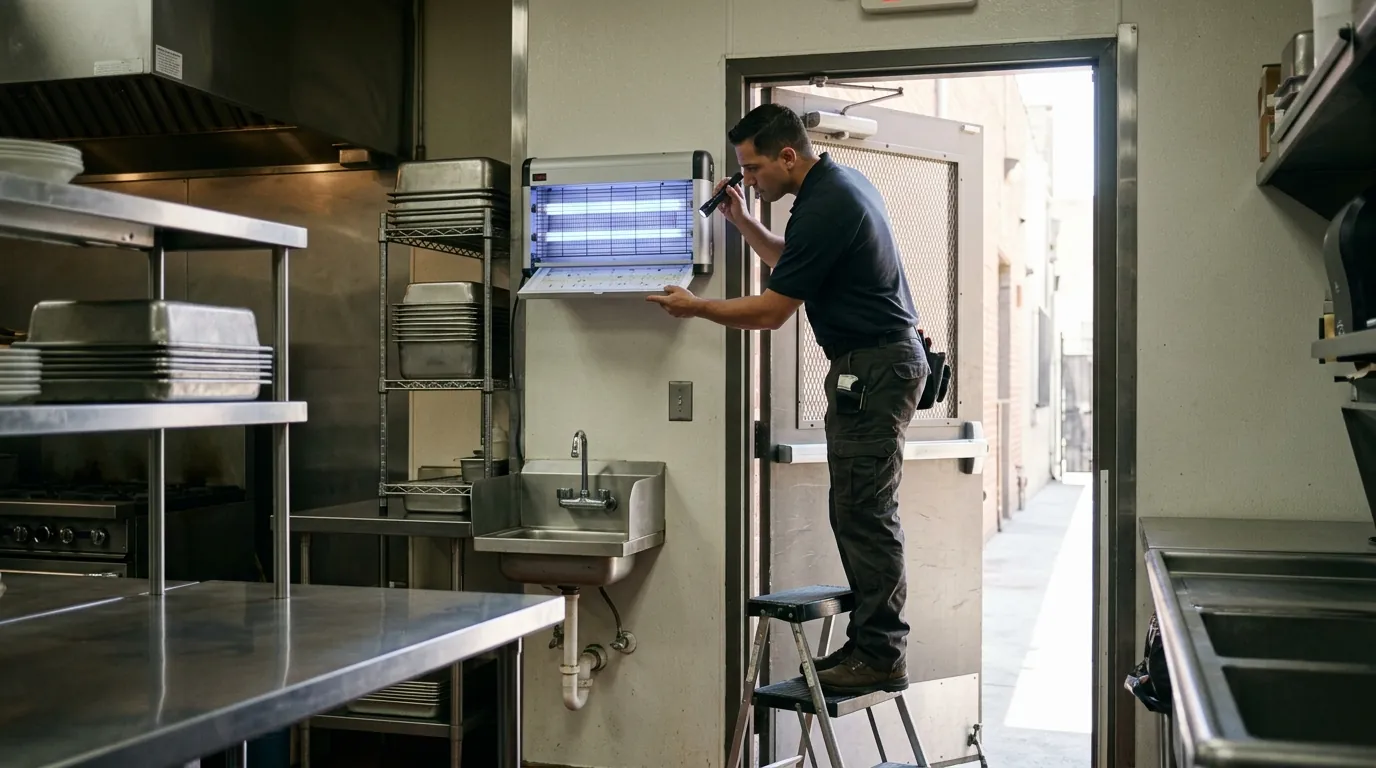
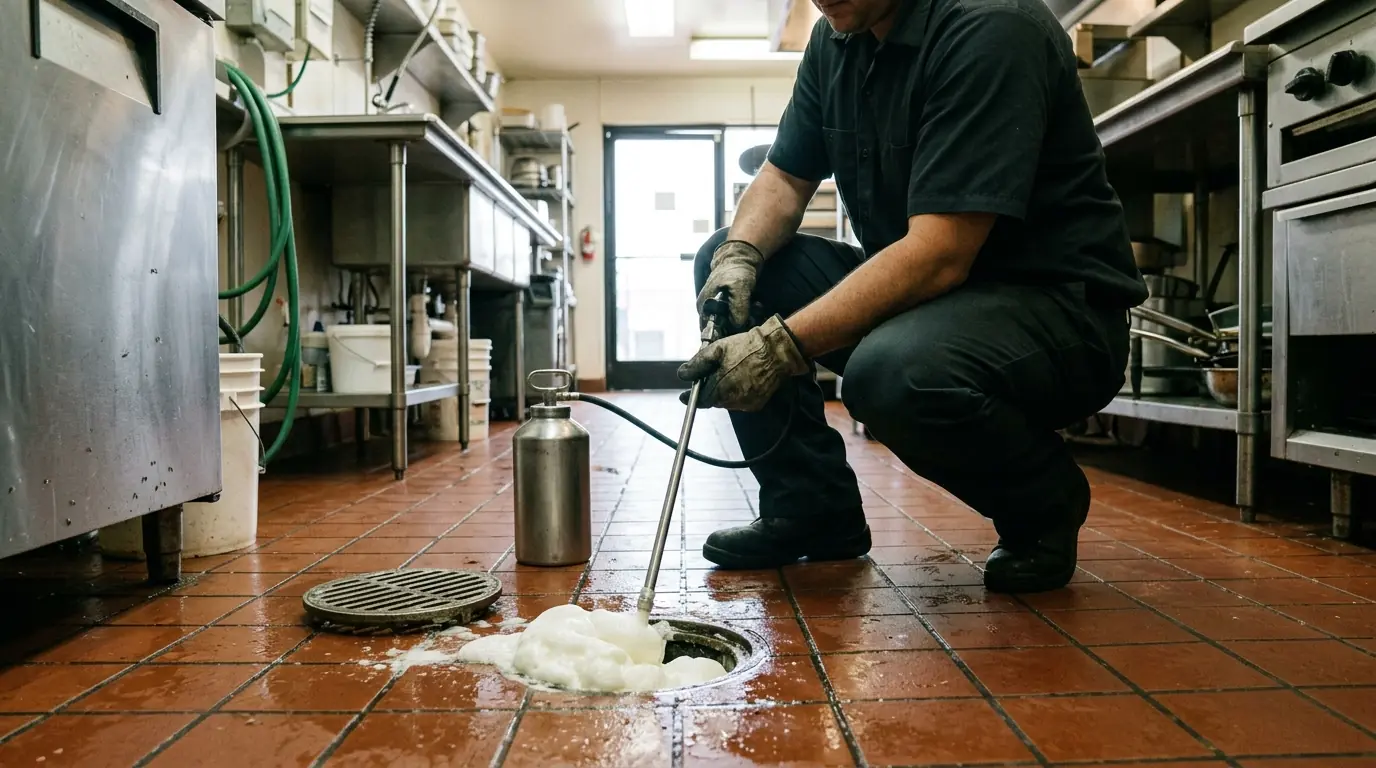
Indoors, that usually means drains: the organic film lining sink drains, floor drains, dishwasher lines and disposals, where drain flies and fruit flies breed. Those get treated with bio-foam products that break the film down, alongside a clear cleaning routine. Outdoors, trash cans, dumpster corrals, compost, pet waste and loading areas get treated and the sanitation gaps named. Where blow flies show up suddenly, the job becomes finding the dead animal feeding them. For businesses, fly lights are placed where they intercept flies without pulling more toward food, and the program is documented for inspections.
Know your fly
Four common fly problems
House flies
Breed in garbage, pet waste and compost. Problem around trash areas, patios and back doors.
Fruit flies
Breed in overripe produce, recycling and drain film. Kitchens, bars and grocery areas.
Drain flies
Fuzzy, moth-like, resting on bathroom and kitchen walls near drains they breed in.
Blow flies
Large metallic green or blue flies, often a sign of a dead animal nearby.
The visit
How fly control runs
Identify
Fly species confirmed, which tells us where to look.
Find the source
Drains, trash, produce, compost, pet waste or a carcass located.
Treat
Bio-foam in drains, exterior treatment at trash and resting areas.
Fix the sanitation gap
Clear cleaning and storage changes so breeding stops.
Monitor
Fly lights or follow-up for businesses and persistent sites.
Local pressure
A long warm fly season
Warm weather speeds fly development, and Los Angeles has a long warm season with no hard winter to break it, so fly problems that fade in colder cities continue here for most of the year. Dense restaurant corridors, shared dumpster areas and backyard compost and pet areas keep house fly pressure steady. Orange County's vector control district lists flies among the pests it surveys in public spaces, but problems inside homes and businesses are handled by the owner, which is where commercial service or a residential visit comes in.
What it costs
Current LA market ranges
Figures are current Los Angeles market ranges from published pricing surveys, not a quote. Property size, construction, how established the problem is and access all move the number; we confirm pricing after an inspection.
Common questions
Asked before booking this service
It depends on the fly. House flies breed in garbage, pet waste and compost; fruit flies in overripe produce and drain slime; drain flies in the organic film inside drains; and big metallic blow flies usually mean something dead nearby, often a rodent in a wall or attic.
Drain flies or fruit flies. Both breed in the gelatinous film that builds up inside drains, garbage disposals and floor drains. Pouring bleach down the drain rarely reaches it; the film has to be physically scrubbed out or treated with a bio-foam that breaks it down.
Yes. Commercial fly control combines drain treatment, exterior treatment at dumpsters and loading areas, sanitation recommendations, and fly lights placed correctly so they catch flies without drawing more toward food areas.
Sprays only kill the adults you see. Flies breed fast, so a lasting fix finds and removes the breeding source, whether that is a drain, a trash area or a dead animal, and treats the resting spots outdoors.
Often a sign that a rodent or bird has died in a wall, attic or chimney nearby and blow flies are emerging. Finding and removing the carcass ends it; see dead animal removal.
Keep trash cans lidded and rinsed, bag kitchen waste before it goes out, pick up pet waste daily, store ripe produce in the refrigerator, and run hot water and a brush through rarely used drains weekly. Fit screens and door sweeps on back doors, and keep bright lights away from entries at night. Most fly problems are fed by one small sanitation gap, and closing it does more than any spray.
Related treatments
Often booked alongside this one
The line is on right now
Flies everywhere and no idea why?
Call and describe the fly. That one detail usually tells us where the source is before the technician even arrives.
Answered 24/7, including weekends and holidays.
Call us or find us
- Phone
- (323) 329-3792
- Hours
- Open and answering 24/7, every day
- Service office
- 3123 Cahuenga Blvd W #390, Los Angeles, CA 90068
- Head office
- 7623 Atlanta Ave, Ste 284, Huntington Beach, CA 92646
- Coverage
- Los Angeles, Orange and neighboring counties