New homes, ADUs and additions
Pre-construction termite treatment for new builds
The cheapest moment to protect a building from termites is before the concrete goes down. Soil pretreatment and borate framing build protection in instead of drilling it in later.
Updated October 2026
This treatment, at a glance
- Job type
- Soil and framing pretreat
- Timing
- Before the slab pour
- Projects
- Homes, ADUs, additions
- Line
- Answered 24/7
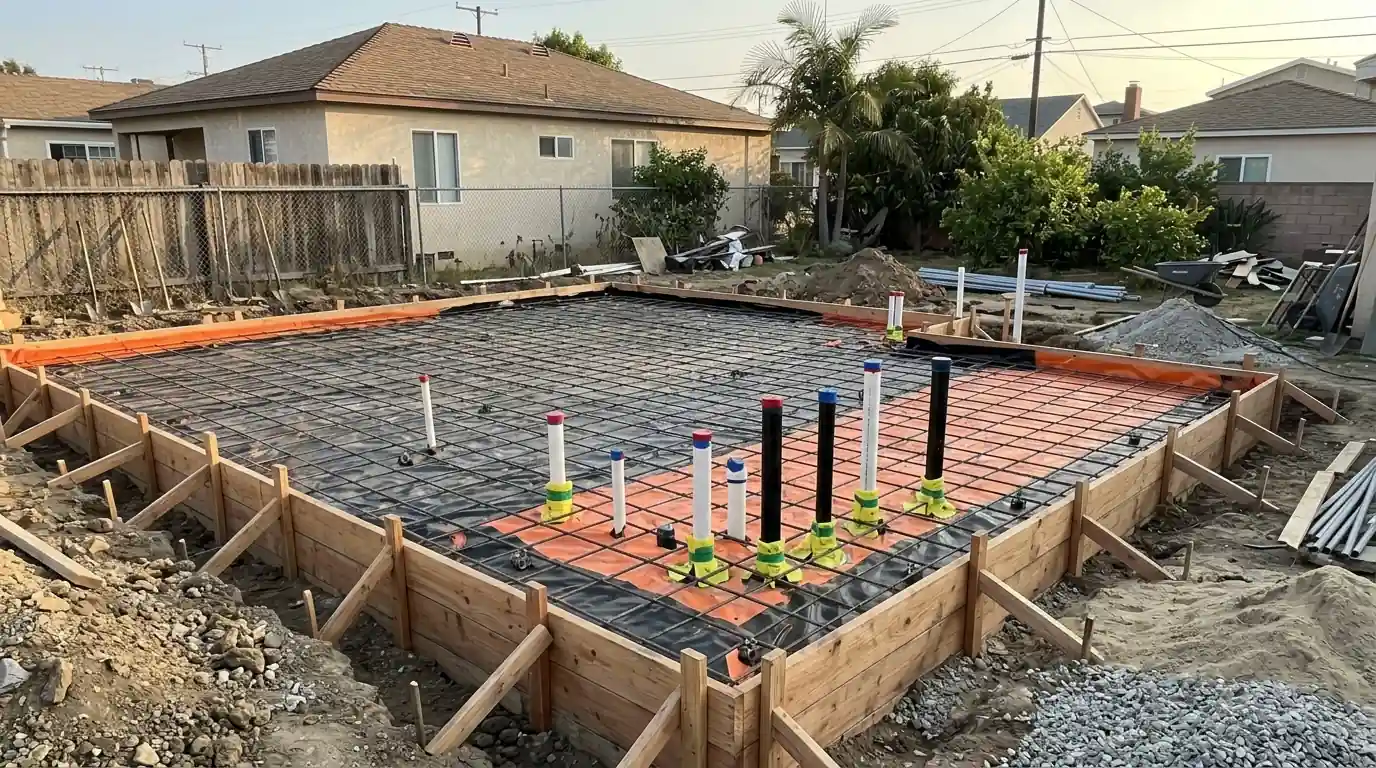
Pre-construction termite treatment in Los Angeles protects a new home, ADU or addition before it is built: soil under the slab is treated after grading and plumbing rough-in and before the pour, and framing can be treated with borates before the walls close. It costs far less than retrofitting through finished concrete. Call (323) 329-3792 to schedule around your pour date.
What gets treated
Soil, framing and the gaps between
Soil under the slab
A treated zone in the soil beneath the slab and along footings, applied before the vapor barrier and pour.
Plumbing penetrations
Extra attention where pipes rise through the slab, the most common subterranean entry.
Wood framing
Borate treatment of framing and sheathing before walls are closed, for resistance to both termite types.
Perimeter at final grade
Treated soil along the foundation once landscaping and grading are finished.
Why build it in
Cheaper now than later
Subterranean termites reach a house from the soil, through expansion joints, plumbing penetrations and cracks in the slab. Once concrete is poured, treating that soil means drilling through the slab and sidewalks, which is slower and more expensive. Treating the soil before the pour puts protection exactly where it is needed at a fraction of the effort.
The same logic applies to wood. Borate-treated framing resists termites from the start, which matters in a region with heavy drywood pressure. For an ADU or addition attached to an older house, pretreatment also keeps the new slab from becoming a fresh highway into the existing structure, where termites may already be working.
How it runs
Scheduled around your build
Review the plans
Slab size, footings and plumbing layout reviewed with the builder.
Schedule with the pour
Treatment timed after grading and rough-in, before the vapor barrier.
Treat the soil
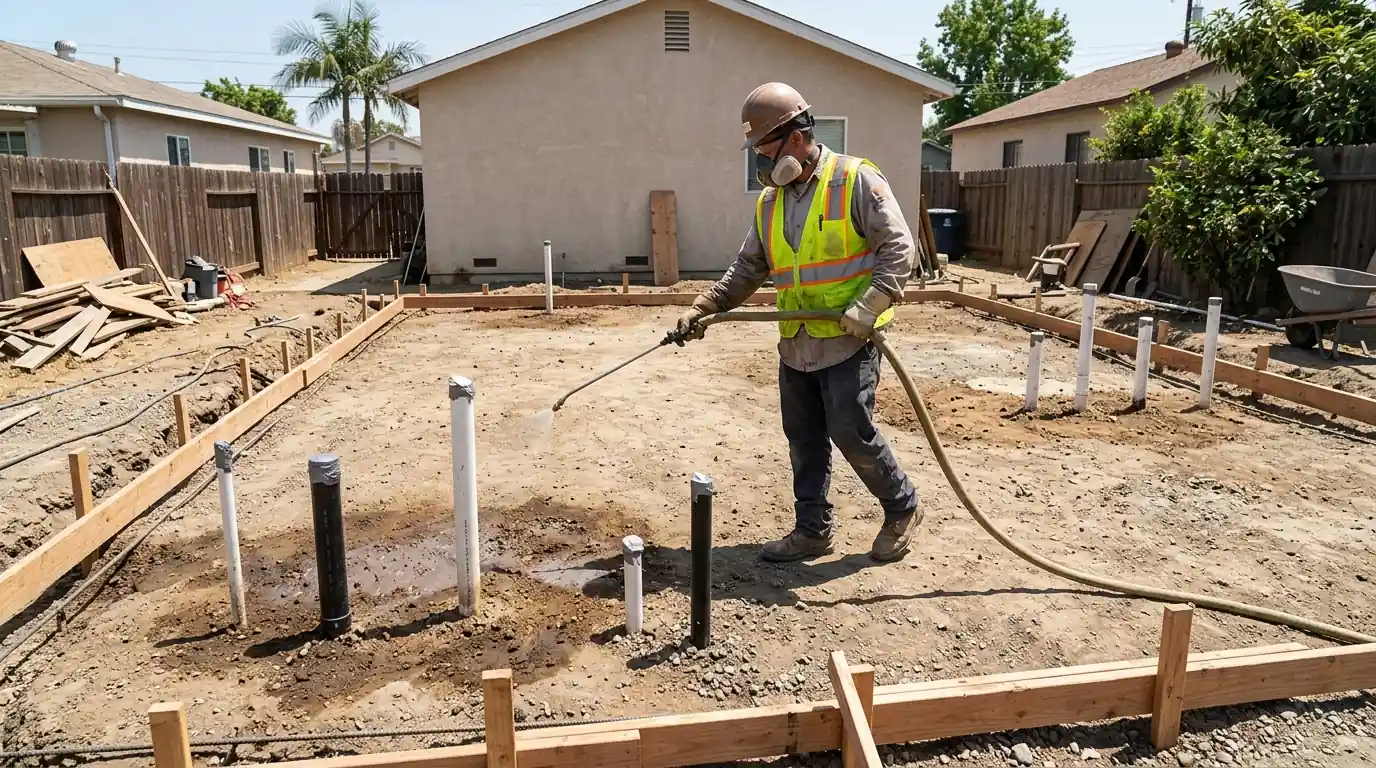
Treated zone applied under the slab, along footings and at penetrations.
Treat the framing
Borate treatment of framing before walls are closed, if included.
Document
Records for the builder, inspector, lender and future owners.
Local pressure
Building in termite country
Los Angeles carries both termite families at once, drywood colonies in framing and subterranean colonies in the soil, and coastal Southern California has the highest drywood prevalence in the continental US. The region has also seen a wave of ADU construction in recent years, which means thousands of new slabs going down right next to older homes. Pretreatment is one of the few moments when termite protection is easy; after that, it is soil treatment through concrete and annual inspections.
What it costs
How pretreatment is priced
Pretreatment is quoted from the plans: slab area, footing length, number of plumbing penetrations and whether framing treatment is included. For scale, treating soil around an existing foundation in the LA market runs about $3 to $16 per linear foot plus drilling; pretreating before the pour avoids that drilling and is usually the lower-cost way to protect the same structure.
Common questions
Asked before booking this service
For slab construction, after grading, plumbing rough-in and forming are done but before the vapor barrier and concrete go down. Timing matters because the treated soil has to be undisturbed when the slab is poured, so the builder schedules it with the pour.
Usually, yes. A new slab beside an older house is exactly where subterranean termites find a fresh path in, and treating soil before the pour costs far less than drilling through finished concrete later.
Framing can be treated with borate products before walls are closed, giving the wood itself resistance to drywood and subterranean termites. It pairs well with a soil pretreat.
Yes. You receive a record of what was treated, where and when, for the builder, the inspector, the lender and future buyers.
No treatment lasts forever. Soil treatments break down over time and drywood swarmers can still land on exposed wood, so annual inspections continue after the house is built.
Heavy rain on freshly treated soil can wash treatment away from where it needs to be, so the application is timed close to the pour and, if a storm hits in between, the soil is checked and re-treated where needed before the vapor barrier goes down. Keeping the builder and the treatment on the same schedule is the simplest way to avoid paying for it twice. The same goes for any later trenching for utilities, which can cut through a treated zone and should be flagged so it gets touched up.
Related treatments
Often booked alongside this one
The line is on right now
Pour date on the calendar?
Call with the date and the plans. The treatment gets scheduled around your builder, not the other way round.
Answered 24/7, including weekends and holidays.
Call us or find us
- Phone
- (323) 329-3792
- Hours
- Open and answering 24/7, every day
- Service office
- 3123 Cahuenga Blvd W #390, Los Angeles, CA 90068
- Head office
- 7623 Atlanta Ave, Ste 284, Huntington Beach, CA 92646
- Coverage
- Los Angeles, Orange and neighboring counties