Fascia, eaves, frames and sills
Termite damage repair after treatment
Treating termites stops the damage; repairing the wood finishes the job. Each item is matched to a finding on the report, so escrow and lenders get exactly what they need.
Updated October 2026
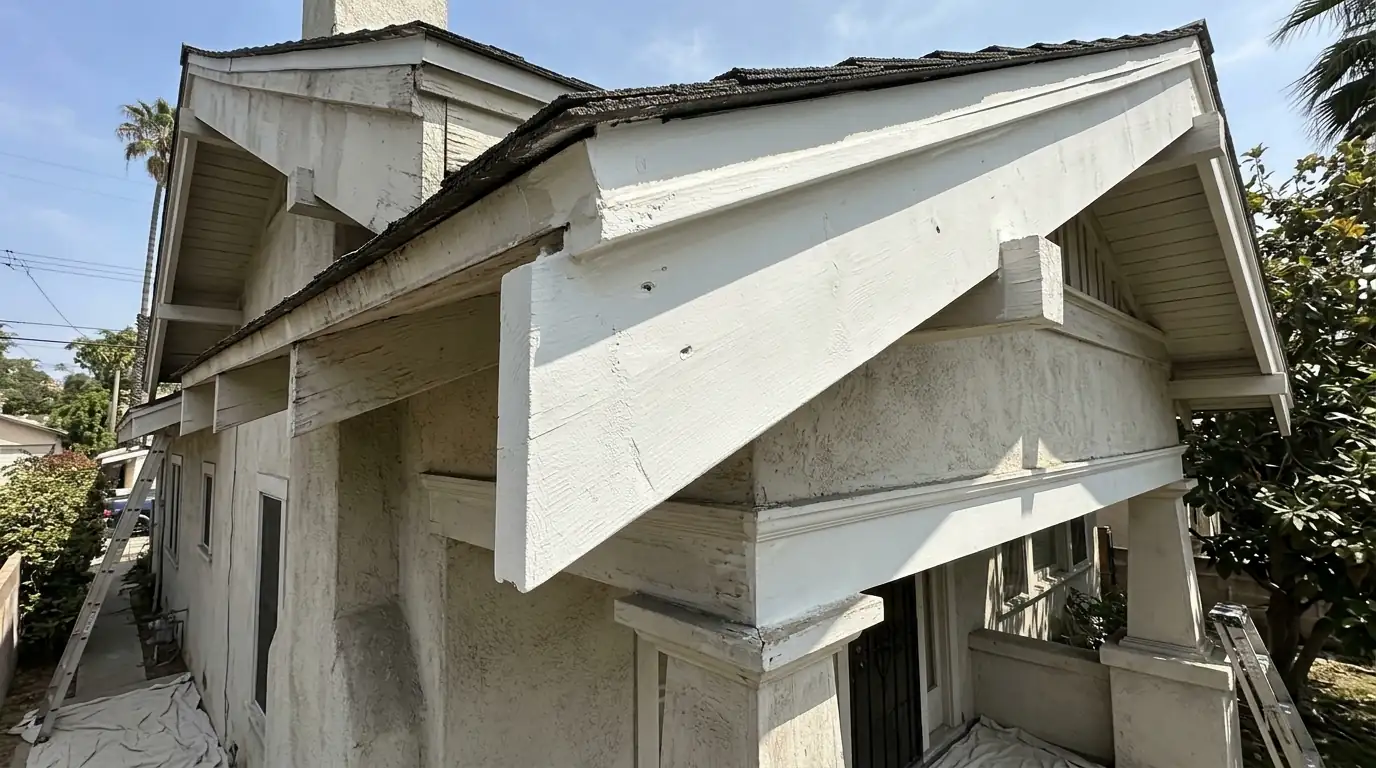
This treatment, at a glance
- Job type
- Wood repair after treatment
- Common items
- Fascia, rafter tails, frames
- Escrow
- Matched to report findings
- Line
- Answered 24/7
Termite damage repair in Los Angeles replaces or reinforces wood that termites or fungus have damaged, from fascia, rafter tails and eaves to window frames, trim and sills, after the infestation is treated. Repairs are scoped item by item from the inspection or the escrow report, so completion documentation lines up with each finding. Call (323) 329-3792 for a written scope.
What gets repaired
The usual items on an LA report
Fascia and rafter tails
Exposed roof-edge wood where drywood colonies and decay are most common.
Eaves and soffits
Overhang boards and trim that take sun, moisture and termite swarmers.
Window and door frames
Frames and sills where pellets often first appear.
Trim and sills
Baseboards, sill plates and siding trim damaged low in the structure.
Treat first, then repair
Doing it in the right order
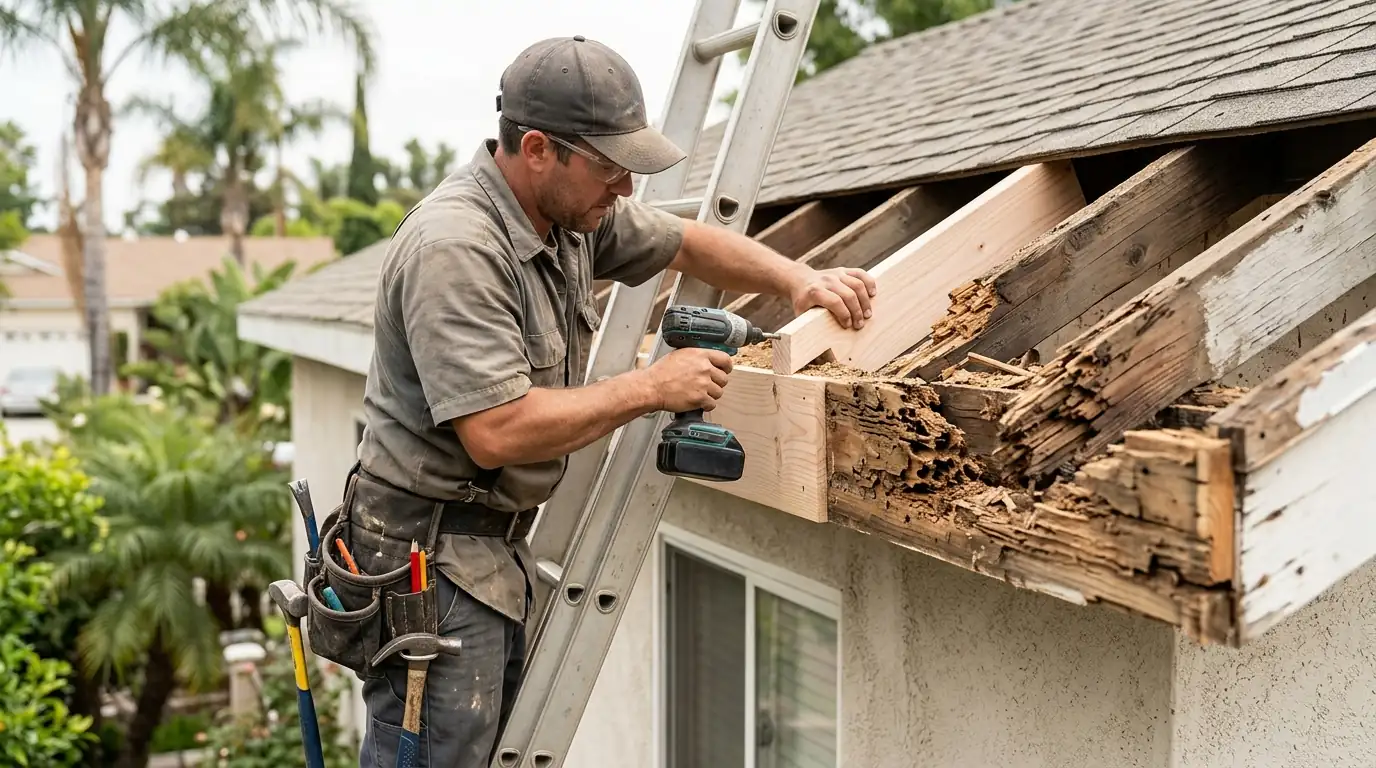
New wood over an active colony is a meal, not a repair. Every repair job starts by confirming the infestation has been treated, whether by localized treatment, fumigation or a soil program for subterranean termites. Once treatment is confirmed, damaged members are removed or reinforced, replacement wood is fitted and, where appropriate, treated with borates, then the work is primed and closed up so it matches the house.
Many LA reports also list fungus damage, wood softened by long-term moisture. The repair is the same, but the moisture source, a leaking gutter, a failed flashing, a sprinkler hitting the wall, gets named too, because replacing rotted wood without fixing the water just schedules the next repair.
The process
From report to completion
Review the findings
Inspection or escrow report items matched to the wood that needs work.
Confirm treatment
Active infestation treated before any new wood goes in.
Scope in writing
Each item listed with size, access and finish, priced before work starts.
Repair
Damaged members removed or reinforced, replacement wood fitted and protected.
Document
Completion records matched to each finding for escrow, lenders and your files.
Local pressure
Why repairs are so common here
Southern California's drywood termite pressure and its large stock of older wood-framed homes mean termite damage shows up in a big share of local inspections. California's termite report system splits findings into Section 1, active infestation or damage that typically has to be corrected before escrow closes, and Section 2, conditions likely to lead to it. Repairs are what turn Section 1 findings into a closed escrow. See termite reports in escrow for how those sections work.
What it costs
How repairs are priced
Repairs are priced per item from the report: the size and length of each damaged member, how hard it is to reach and the finish required. A single sill or frame section is a small job; a full run of fascia and rafter tails is a larger one. You get every item priced in writing before work starts, alongside the treatment it follows.
Common questions
Asked before booking this service
Damaged fascia, rafter tails, eaves, window and door frames, trim, sills and similar wood members, plus fungus-damaged wood that termite reports commonly list. Repairs are scoped from the inspection or the escrow report so each item matches a finding.
Yes, in nearly every case. Replacing wood before an active colony is treated just gives the termites new wood. The usual order is treat, verify, then repair and close up.
Yes. Section 1 items in a California termite report often include wood that must be replaced or repaired before escrow closes. Repairs are matched to the report so the completion documentation lines up with each finding.
No, but reports usually list both. Wood decay fungus, often called dry rot, softens wood that stays damp, and it shows up in the same places termites do: eaves, sills and trim near water. Both get repaired the same way, and the moisture source gets named.
Per item, from the report or inspection: the length and size of each member, access, paint and finish. You get the scope in writing before work starts.
Section 1 items on a California termite report typically need to be corrected before escrow closes, and wood repair is often part of those corrections. Because repairs come after treatment, the safest plan is to book both early in escrow, so treatment, verification, repair and completion paperwork all fit inside the closing date. Section 2 items, the conditions likely to lead to damage, are usually negotiable between buyer and seller.
Related treatments
Often booked alongside this one
The line is on right now
Report came back with Section 1 items?
Call with the report. You get a written scope for the treatment and every repair item on it.
Answered 24/7, including weekends and holidays.
Call us or find us
- Phone
- (323) 329-3792
- Hours
- Open and answering 24/7, every day
- Service office
- 3123 Cahuenga Blvd W #390, Los Angeles, CA 90068
- Head office
- 7623 Atlanta Ave, Ste 284, Huntington Beach, CA 92646
- Coverage
- Los Angeles, Orange and neighboring counties