Mosquitoes
Why LA mosquitoes bite your ankles at noon
If you get bitten in the backyard at lunchtime, you are meeting a newer, tougher mosquito. Here is who it is, where it is breeding and how to stop it.
Updated October 2026
This guide, at a glance
- Written by
- Hazel Winslow, Pest Control Guides Editor
- Updated
- October 2026
- Reading time
- About 6 minutes
- Questions
- Call, answered 24/7
By Hazel Winslow, Pest Control Guides Editor. Updated October 2026.
Daytime ankle bites in Los Angeles come from invasive Aedes mosquitoes, three species now established in the county. They breed in containers holding a teaspoon of water and their eggs survive dry for up to two years, so the fix is a weekly tip-and-toss routine plus treatment of shaded resting spots. Call (323) 329-3792 for a yard program.
Meet the daytime biters
Three invasive species, one new habit
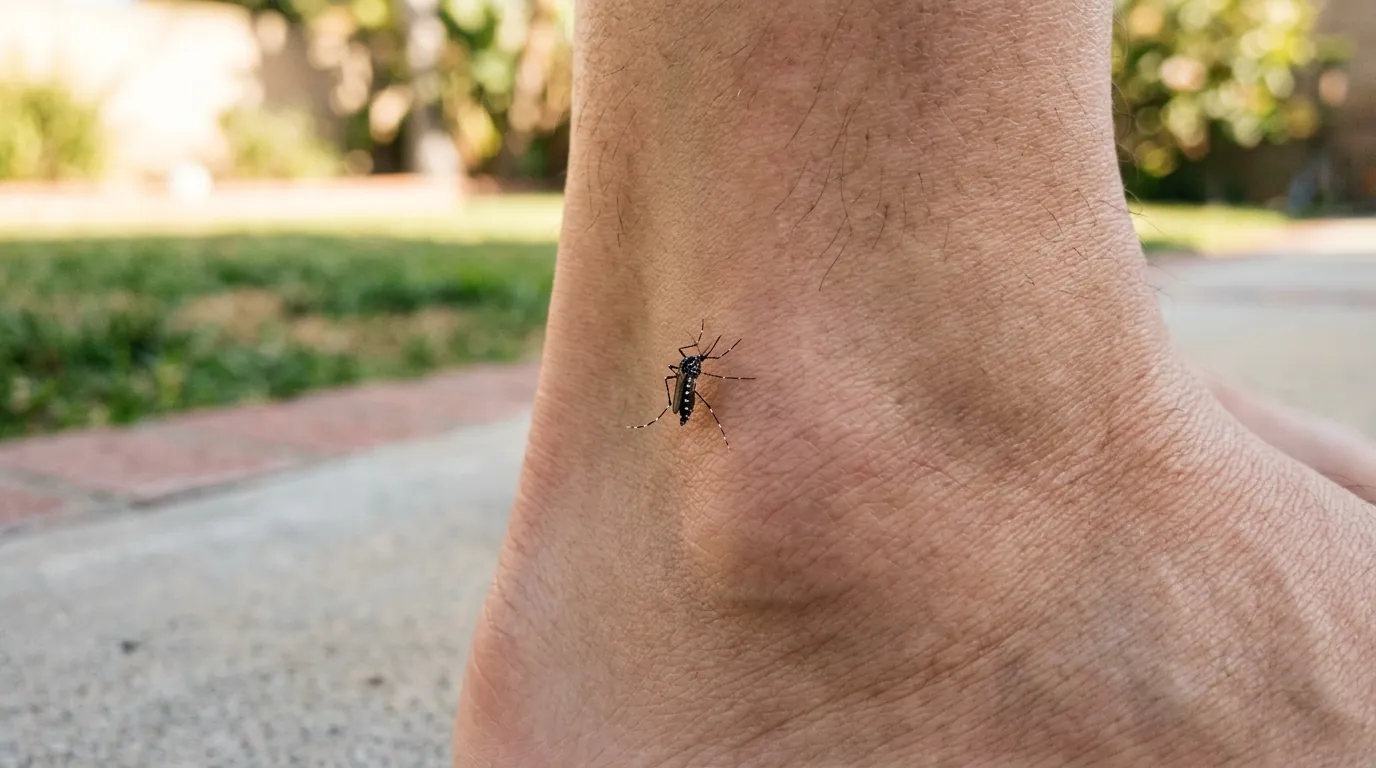
For most of the city's history, Los Angeles mosquitoes were evening insects: native Culex species that bite at dusk and breed in larger pools of standing water. Three invasive Aedes species have changed that: Aedes aegypti, Aedes albopictus and Aedes notoscriptus are all now established in LA County. They are small and black with white markings, they bite aggressively during the day, and they favor ankles and lower legs, which is why the classic complaint is getting bitten under the patio table at lunch.
Mosquito season here runs roughly June through November, with Culex species still carrying West Nile virus through the summer. Los Angeles has topped Orkin's annual mosquito city ranking multiple years running, and the daytime biters are a big part of why backyard life feels different than it did a decade ago.
Where they breed
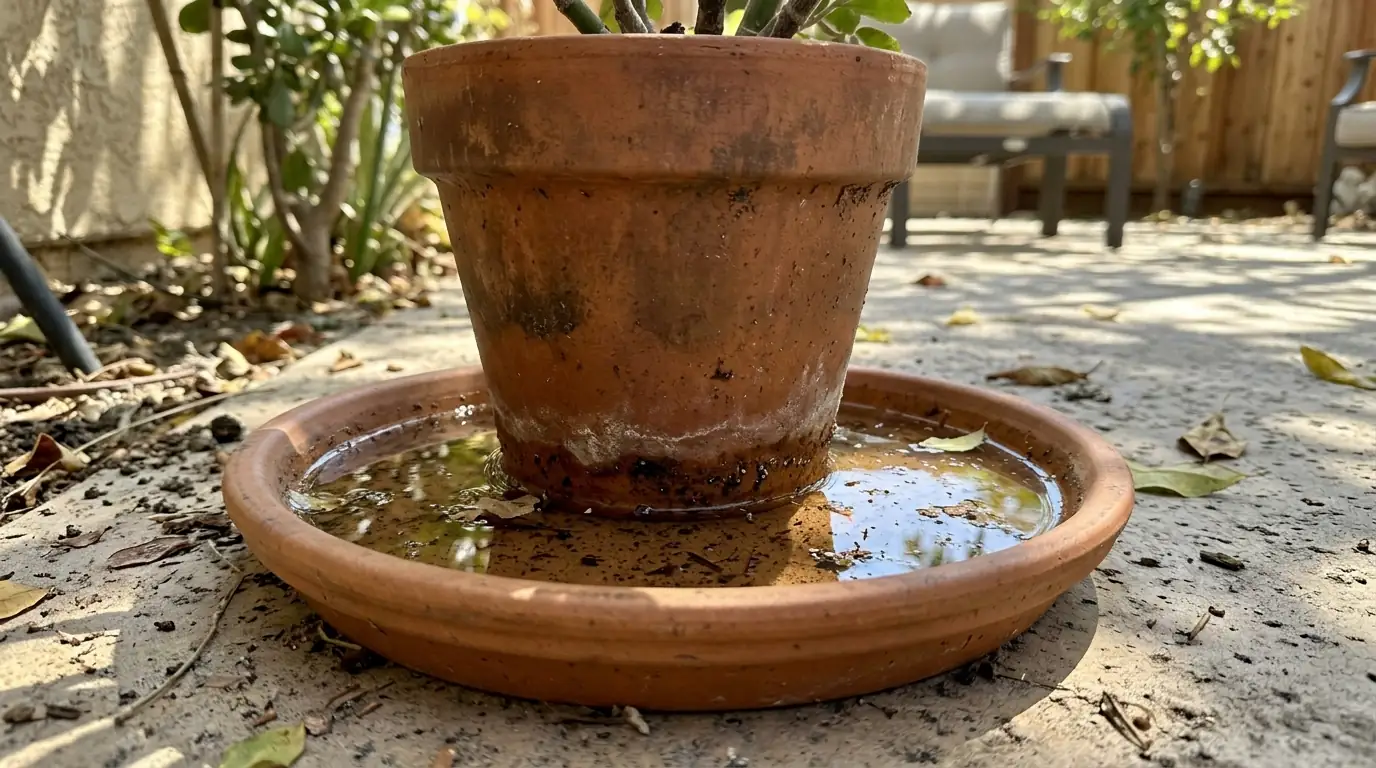
The teaspoon problem
Plant saucers
The single most common source. Empty them weekly or fill them with sand so water drains away.
Bromeliads and plant cups
Leaf cups hold water between waterings. Flush them weekly or switch to plants that do not hold water.
Toys, buckets and tarps
Anything that holds water after a sprinkler pass. Flip, store or drill drain holes.
Drains and gutters
Yard drains, downspout outlets and clogged gutters hold water out of sight.
Why eggs matter most
The two-year waiting game
Invasive Aedes lay their eggs just above the waterline on the inside wall of a container, not on the water itself. When the water dries up, the eggs survive, for up to two years, and hatch the next time the container refills. That is why dumping water is only half the job: the eggs stuck to the wall need scrubbing off, or the container needs to go.
It also explains why a yard can keep producing mosquitoes long after you think you have found every source. One forgotten saucer behind a planter or a bromeliad in a corner refills with every irrigation cycle. A weekly tip, toss and scrub routine on a fixed day is the single most effective thing a homeowner can do.
Taking the yard back
What a yard program adds
Source reduction stops the next generation; it does nothing about the adults already resting in your hedges. Invasive Aedes spend the hottest part of the day in shaded foliage, under decks and along fence lines, which is exactly where a barrier treatment goes. Paired with larval treatment in water that cannot be dumped, like drains and decorative features, and repeated about monthly through the season, a mosquito program cuts biting sharply while your weekly routine keeps new adults from hatching into the treated yard.
Public vector control districts in Los Angeles County field small staffs for millions of residents, so their crews focus on public water sources and surveillance. Your backyard is yours to manage, and the combination of a weekly routine and a seasonal program is what actually gives it back.
Common questions
Readers also ask
The invasive Aedes species now established in LA County: Aedes aegypti, Aedes albopictus and Aedes notoscriptus. They are small, black and white, and bite aggressively in daylight, often around the ankles and lower legs.
Invasive Aedes breed in containers holding as little as a teaspoon of water, and their eggs survive dry for up to two years. Every watering refills saucers, bromeliads, toys and drains, and each refill can hatch a new batch within days.
Yes. Local vector control districts track where invasive Aedes are spreading, and reports from residents help them map it. Public crews focus on public water sources and surveillance, so your own yard is still yours to manage.
EPA-registered repellents with ingredients such as DEET, picaridin or oil of lemon eucalyptus, used according to the label. For daytime biters, apply them before gardening or sitting outside in the afternoon, not just at dusk.
Related treatments
If this guide matches what you are seeing
Keep reading
More from The Bug Report
Why Ants Invade LA Homes After Heat and Rain
Argentine ant supercolonies, why sprays backfire, and what actually stops the next invasion.
Flea-Borne Typhus and Backyard Wildlife in LA
Why murine typhus clusters in eastern LA and Orange County, and how to cut the flea-wildlife link at home.
What Pest Control Costs in Los Angeles, CA
Market ranges for general service, termites, fumigation, bed bugs and rodent sealing, and what moves the number.
The line is on right now
Backyard unusable by afternoon?
Call and book a yard inspection. It finds the breeding sources you have not, and starts the season program.
Answered 24/7, including weekends and holidays.
Call us or find us
- Phone
- (323) 329-3792
- Hours
- Open and answering 24/7, every day
- Service office
- 3123 Cahuenga Blvd W #390, Los Angeles, CA 90068
- Head office
- 7623 Atlanta Ave, Ste 284, Huntington Beach, CA 92646
- Coverage
- Los Angeles, Orange and neighboring counties