Ants
Why ants invade LA homes after heat and rain
The ant trail across your counter is one finger of a network that can span the whole street. Understanding that network is the key to ending the invasion.
Updated October 2026
This guide, at a glance
- Written by
- Hazel Winslow, Pest Control Guides Editor
- Updated
- October 2026
- Reading time
- About 6 minutes
- Questions
- Call, answered 24/7
By Hazel Winslow, Pest Control Guides Editor. Updated October 2026.
Argentine ants invade Los Angeles homes in waves triggered by weather: heat and drought push them indoors for water, and first rains flood their nests. Their colonies have many queens and link into neighborhood-wide supercolonies, so sprays just split them. Baits and non-repellent perimeter treatment that the colony carries home are what work. Call (323) 329-3792.
The supercolony
Why your ants are everyone's ants
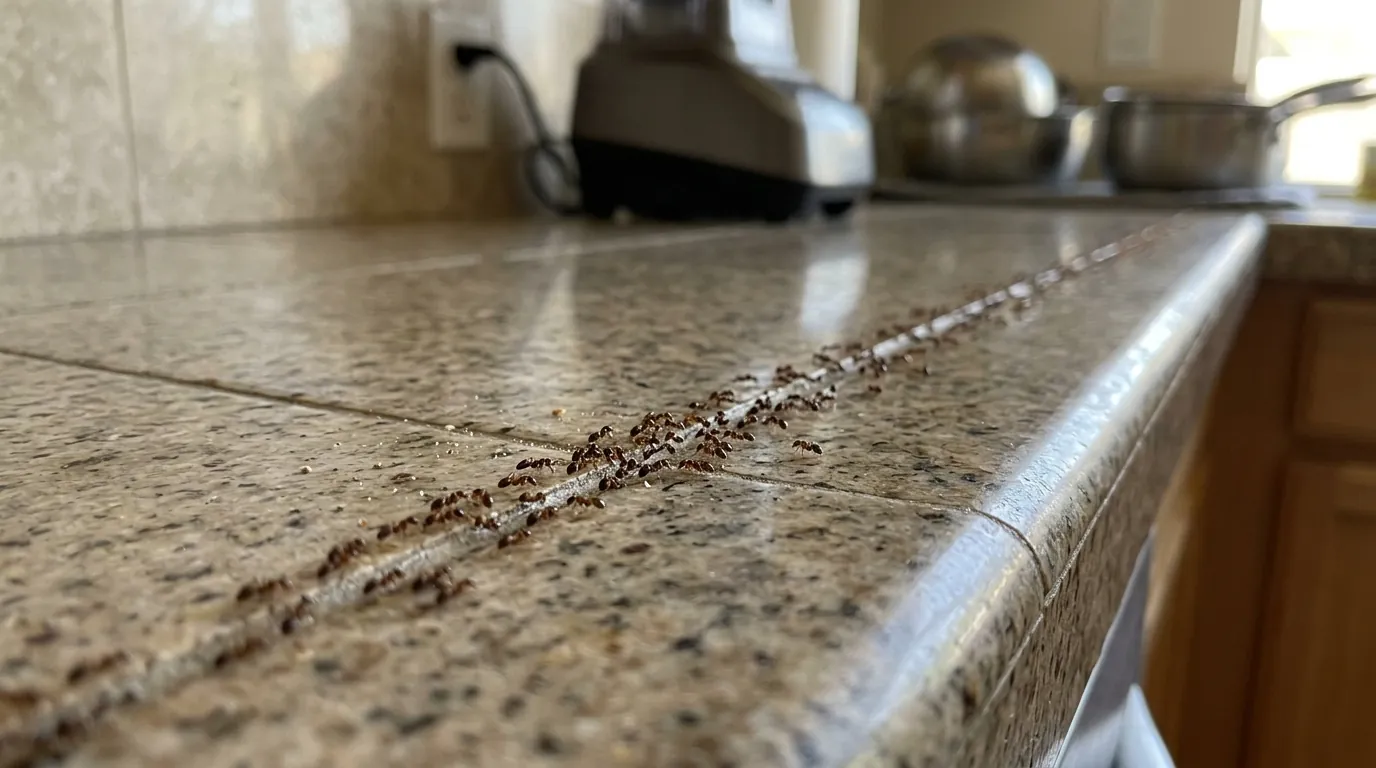
Argentine ants are small, brown and fast, and they behave unlike most ants. Their colonies have many queens rather than one, they do not fight neighboring nests of their own kind, and across Southern California they link into supercolonies that are among the largest cooperative insect networks ever mapped. The trail in your kitchen is one supply line in a network that may run the length of the block.
That changes the math of control. Kill every ant on your counter and the network simply reroutes; kill the nest under one shrub and another queen down the line takes over. The goal is not to win a fight with a colony but to make your house the part of the network that stays quiet.
What triggers an invasion
Weather, not housekeeping
Heat waves
Hot, dry spells drive ants indoors hunting water, especially into kitchens and bathrooms.
First rains
Rain floods shallow nests and colonies move brood to dry ground, often under your floor.
Cold snaps
Rare chilly nights push them toward warm wall voids and appliances.
Aphid booms
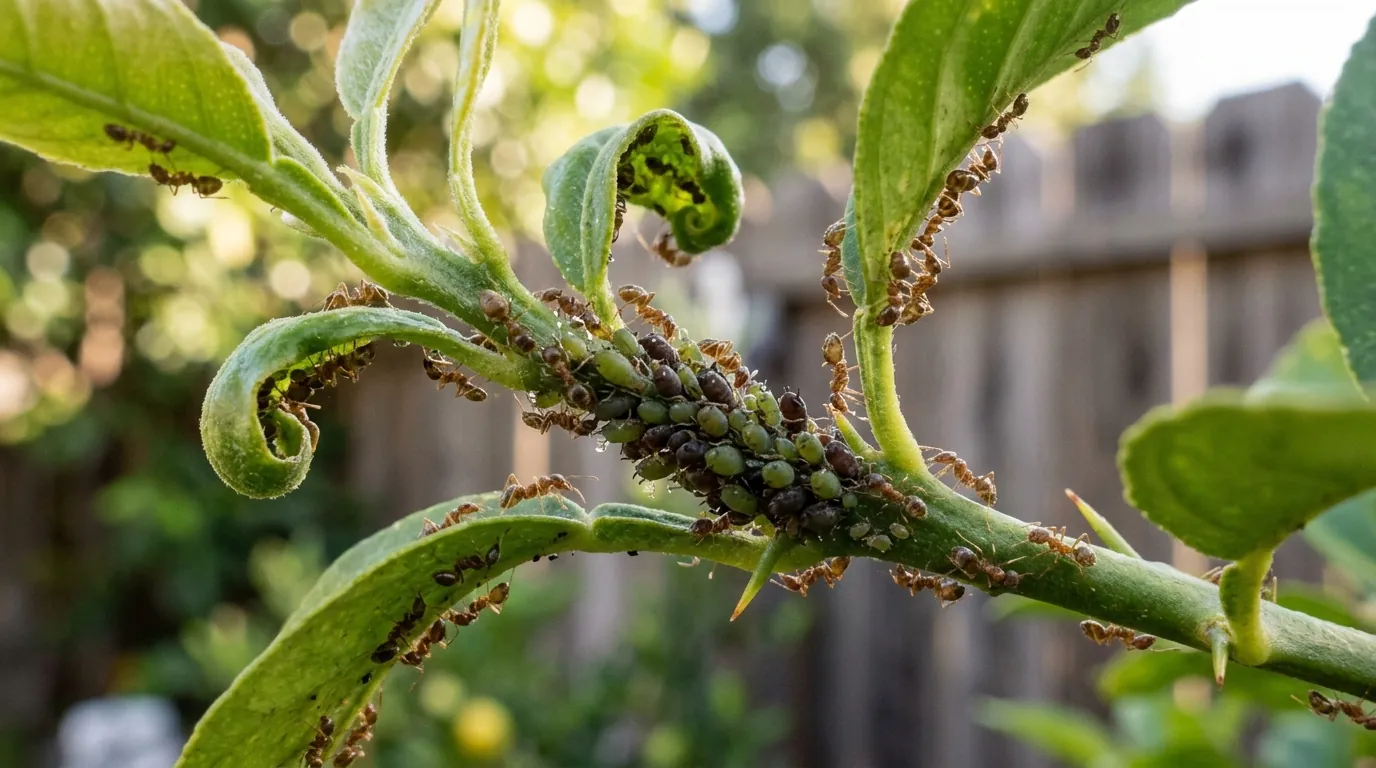
Ants farm aphids and scale for honeydew; a busy tree next to the house feeds a bigger colony.
Why sprays backfire
The budding problem
Repellent sprays are the most common homeowner response, and the worst one. They kill the visible workers, alarm the colony and cause it to split, a behavior called budding, into satellite nests. With many queens available, each satellite becomes a working colony, sometimes inside a wall void. The trail goes quiet for a day and returns from three directions.
If ants are on the counter right now, wipe the trail with soapy water, rinse and dry the sink, put food away, and leave the entry point visible so it can be treated at the source.
What actually works
Let the colony carry it home
Effective ant control uses the colony's own logistics. Baits, gels and liquids matched to what the ants are feeding on, often sugar in summer, are carried back and shared with the queens. Non-repellent products like Termidor, applied along the foundation, entry points and trail routes, are undetectable to the ants, so they walk through and spread them nest to nest. Together, they collapse activity within about a week, often after a brief surge as foragers recruit to the bait.
Keeping the next wave out means holding the perimeter, managing aphids on trees and shrubs touching the house, sealing obvious entry gaps and fixing moisture problems. That is why ant control here often rolls into a quarterly plan, which runs about $150 to $250 per visit in the LA market.
Common questions
Readers also ask
Rain floods their shallow nests and they move brood and workers to dry ground, often inside. Heat waves and long dry spells do the opposite, pushing them indoors to find water. Either way, weather moves them, not your housekeeping.
Repellent sprays kill the workers you can see and cause the colony to split into satellite nests, sometimes inside walls. Argentine ants have many queens, so the colony simply buds and keeps going.
Argentine ants do not sting and are not a health danger, but they contaminate food, invade in huge numbers, and protect aphids and scale insects on landscape plants, which damages gardens.
It will collapse the invasion, usually within about a week. But Argentine ant supercolonies span whole neighborhoods, so a held perimeter is what keeps the next wave out, which is why many homes pair treatment with a quarterly plan.
Related treatments
If this guide matches what you are seeing
Keep reading
More from The Bug Report
Why LA Mosquitoes Bite Your Ankles at Noon
The invasive daytime biters that changed LA backyards, where they breed, and how to take the yard back.
What Pest Control Costs in Los Angeles, CA
Market ranges for general service, termites, fumigation, bed bugs and rodent sealing, and what moves the number.
Brown Widow vs Black Widow in Southern California
Telling the two widows apart, where each hides around LA homes, and what to do after a bite.
The line is on right now
Ants pouring in right now?
Call and describe where the trail enters. Morning calls usually get same-day service.
Answered 24/7, including weekends and holidays.
Call us or find us
- Phone
- (323) 329-3792
- Hours
- Open and answering 24/7, every day
- Service office
- 3123 Cahuenga Blvd W #390, Los Angeles, CA 90068
- Head office
- 7623 Atlanta Ave, Ste 284, Huntington Beach, CA 92646
- Coverage
- Los Angeles, Orange and neighboring counties