Fleas and wildlife
Flea-borne typhus and backyard wildlife in LA
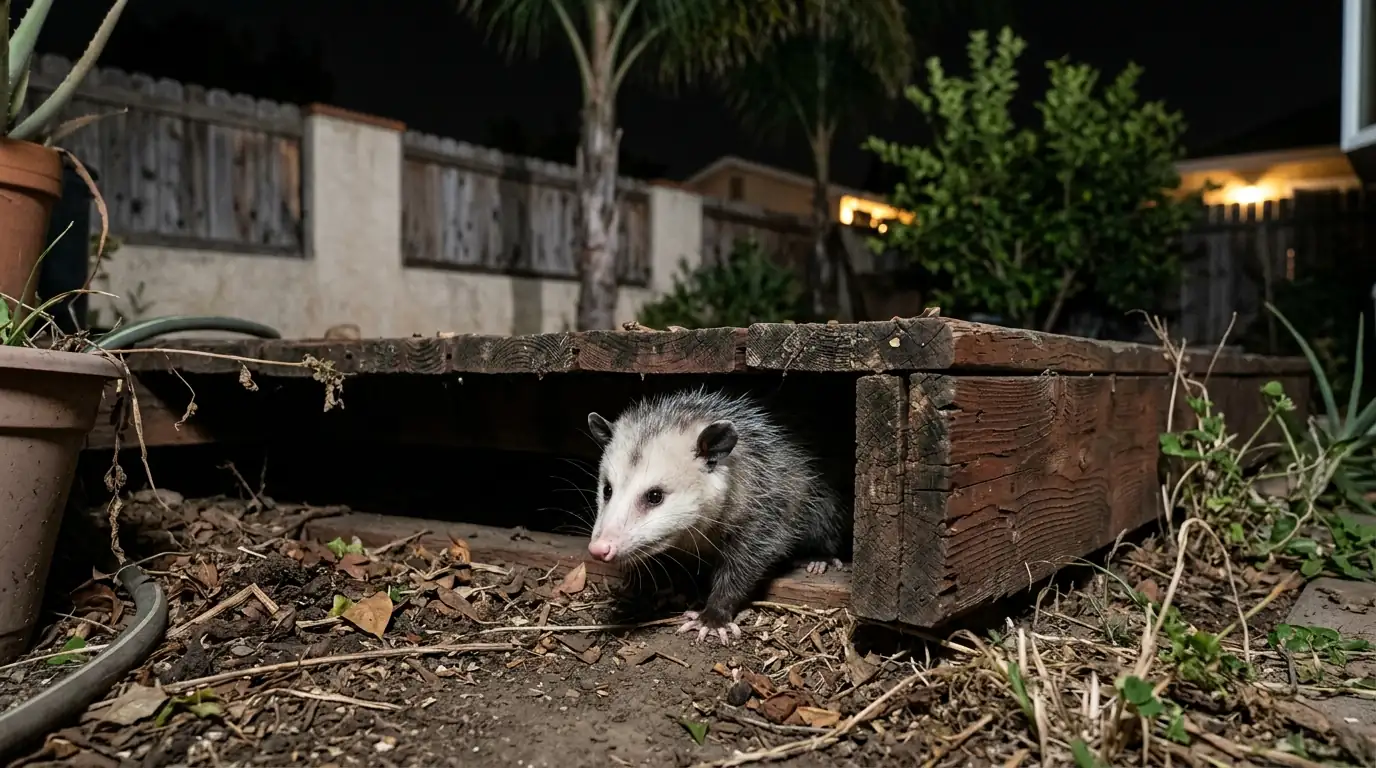
The opossum under the deck and the fleas on the dog can be part of the same story. Here is how flea-borne typhus connects to backyard wildlife, and how to cut the link.
Updated October 2026
This guide, at a glance
- Written by
- Hazel Winslow, Pest Control Guides Editor
- Updated
- October 2026
- Reading time
- About 6 minutes
- Questions
- Call, answered 24/7
By Hazel Winslow, Pest Control Guides Editor. Updated October 2026.
Flea-borne typhus is a treatable bacterial illness carried by fleas that live on opossums, roof rats and outdoor cats, and California cases now occur mostly in eastern Los Angeles and Orange counties. Cutting the link at home means flea prevention on pets, no food left out for wildlife, closing crawl spaces and decks, and treating fleas where animals bed. Call (323) 329-3792.
The connection
Fleas, wildlife and people
Murine typhus, often called flea-borne typhus, is caused by bacteria carried by infected fleas. In Southern California, those fleas travel on the animals that live alongside people: roof rats in attics and palms, opossums under decks and in crawl spaces, skunks under porches and feral or outdoor cats. People are usually infected when flea feces carrying the bacteria get into a bite or scratch, which is why controlling fleas around the home matters.
Cases in California now occur mostly in eastern Los Angeles and Orange counties. It is still uncommon, and treatable with antibiotics when diagnosed, but it gives a practical reason to treat the opossum under the deck as more than a nuisance.
Where the risk builds
Common setups around LA homes
Food left outside
Pet bowls, fallen fruit and food for stray cats draw opossums, rats and the fleas they carry.
Open crawl spaces and decks
Broken vent screens and gaps under decks and sheds give wildlife a place to bed and drop fleas.
Untreated pets
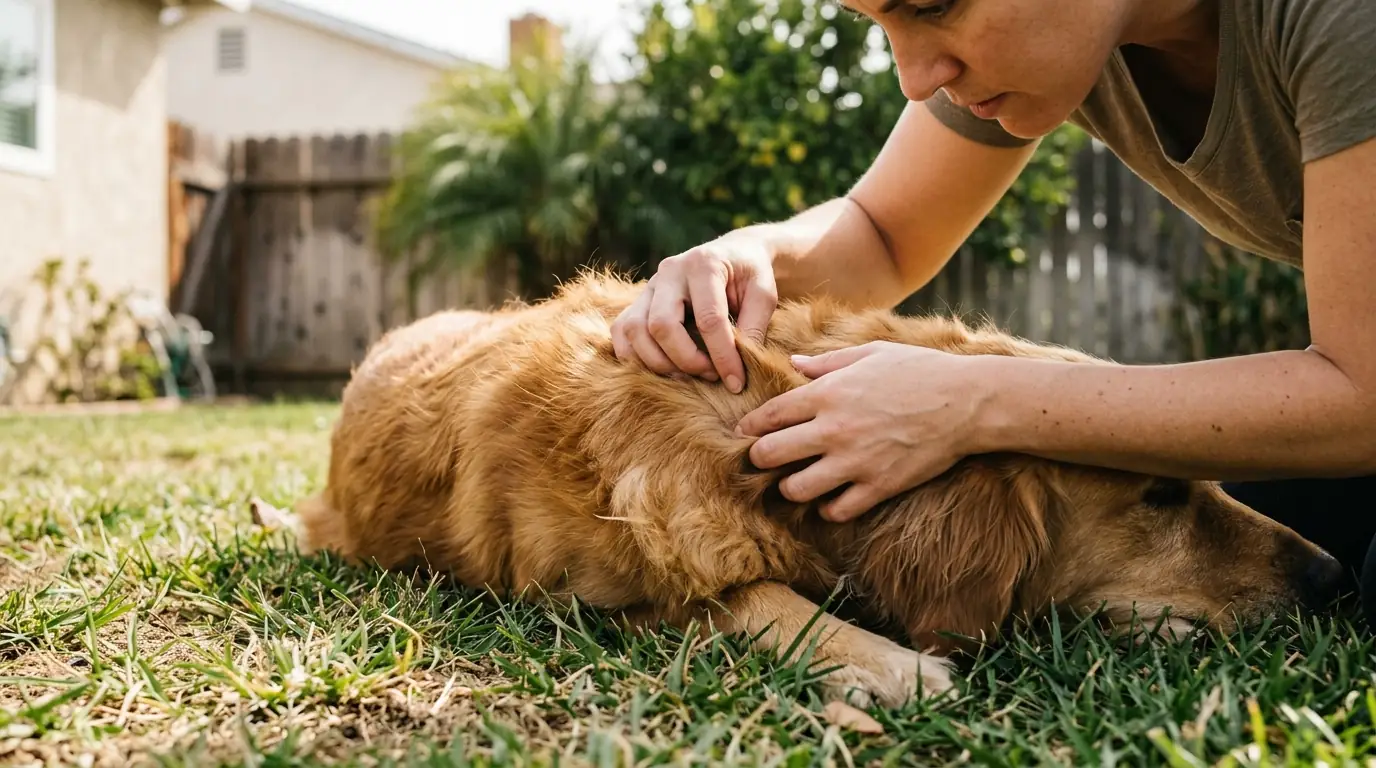
Dogs and cats without flea prevention bring wildlife fleas inside to carpets and bedding.
Rats in the attic
Roof rat nests overhead add fleas, droppings and a reason for attic cleanup.
Breaking the link
What works at home
Start with the simplest steps: keep every pet on vet-recommended flea prevention, bring pet food inside, pick up fallen fruit and do not feed wildlife or outdoor cats. Then close the places animals bed: crawl space vents, gaps under decks and sheds, and attic entries. Exclusion, letting the animal leave and sealing the way back in, is the standard approach, since California rules generally do not allow trapped wildlife to be moved and released elsewhere.
Where fleas are already in the house or yard, treat every life stage at once: adulticide plus a growth regulator indoors in carpets and pet zones, and the same pair outdoors in the shaded spots animals rest. See flea control, opossum removal and rat control for how each part runs.
When to see a doctor
Do not wait on a fever
If you develop a fever, headache or rash after flea bites or after handling an animal or its bedding, tell your doctor about the flea exposure. Flea-borne typhus is treatable, and mentioning fleas helps a clinician consider it. This guide is general information, not medical advice.
Common questions
Readers also ask
Also called murine typhus, it is a bacterial illness spread by infected fleas. In Southern California the fleas often come from opossums, roof rats and feral or outdoor cats. Symptoms commonly include fever, headache and sometimes a rash, and it is treatable, so see a doctor if you develop a fever after flea exposure.
Cases in California now occur mostly in eastern Los Angeles and Orange counties. It is still uncommon overall, but it is the reason public health agencies encourage people to control fleas and keep wildlife from bedding around homes.
Feeding wildlife and outdoor cats concentrates opossums, rats and the fleas they carry right next to your house. Keeping pet food indoors and not leaving food out for wildlife is one of the simplest ways to break the cycle.
If wildlife beds under your deck or house, or pets bring fleas inside, treating the shaded resting areas outdoors along with the indoor floor zones is part of a complete flea job. Closing the wildlife entry stops the yard from being reseeded.
Related treatments
If this guide matches what you are seeing
Keep reading
More from The Bug Report
Roof Rats in the Attic: A Los Angeles Field Guide
The sounds, the signs, how they get in and why trapping plus sealing beats bait under California rules.
Bed Bugs in LA Apartments and Shared Walls
How bed bugs move between units, what tenants and landlords should each do, and how to stop the spread.
Why LA Mosquitoes Bite Your Ankles at Noon
The invasive daytime biters that changed LA backyards, where they breed, and how to take the yard back.
The line is on right now
Something living under the deck and fleas in the house?
Call any hour. The visit handles the animal, the entry and the fleas together.
Answered 24/7, including weekends and holidays.
Call us or find us
- Phone
- (323) 329-3792
- Hours
- Open and answering 24/7, every day
- Service office
- 3123 Cahuenga Blvd W #390, Los Angeles, CA 90068
- Head office
- 7623 Atlanta Ave, Ste 284, Huntington Beach, CA 92646
- Coverage
- Los Angeles, Orange and neighboring counties