Rodents
Roof rats in the attic: a Los Angeles field guide
The scratching above the ceiling at 2am is almost always a roof rat. Here is how to confirm it, how they got in and what actually gets them out for good.
Updated October 2026
This guide, at a glance
- Written by
- Hazel Winslow, Pest Control Guides Editor
- Updated
- October 2026
- Reading time
- About 7 minutes
- Questions
- Call, answered 24/7
By Hazel Winslow, Pest Control Guides Editor. Updated October 2026.
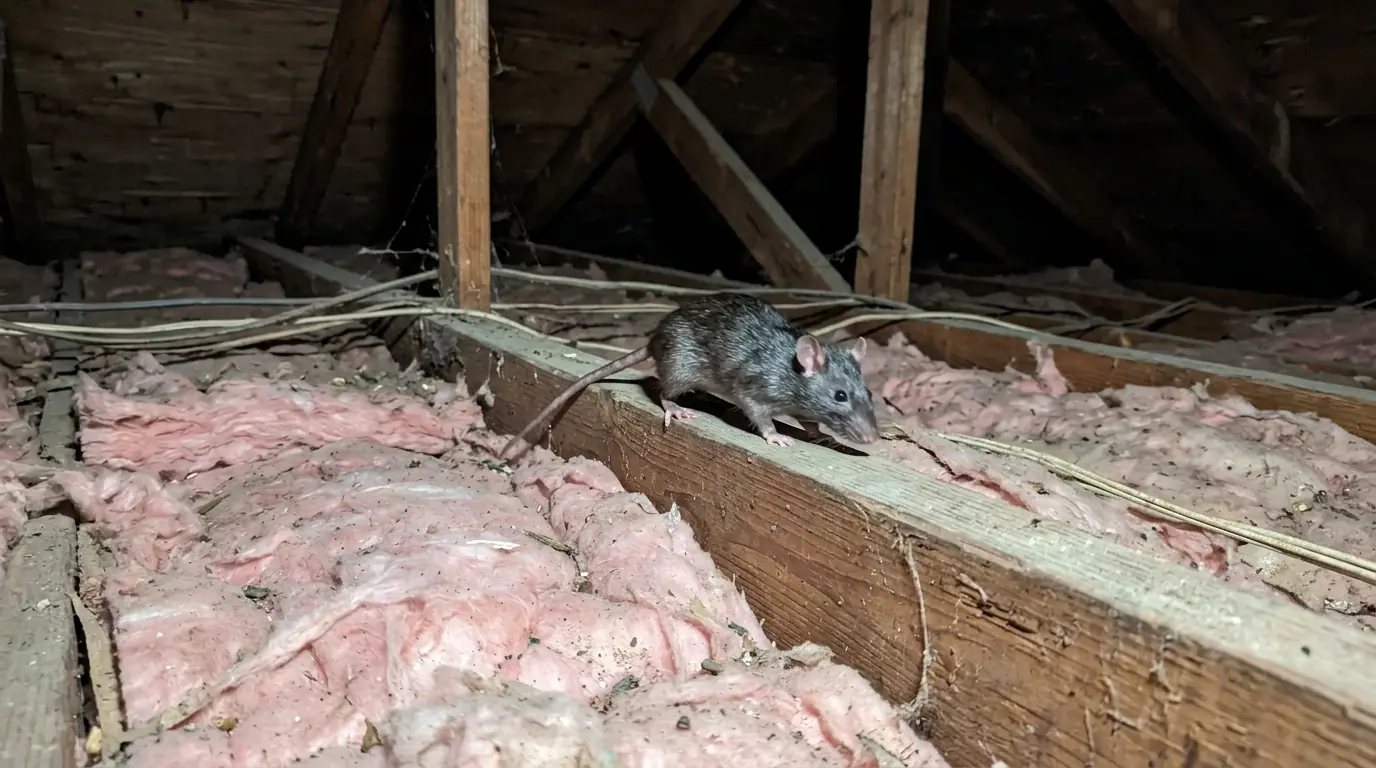
Roof rats are the dominant rat in the LA Basin and Orange County. They travel utility lines and tree limbs to your roof, slip in through quarter-sized gaps, and nest in attic insulation. Under California's rodenticide restrictions, the lasting fix is snap-trapping the residents, sealing every entry in metal and mesh, then cleaning up what they left. Call (323) 329-3792 any hour.
The signs
How to confirm roof rats
Night sounds
Scurrying, scratching and rolling sounds overhead after dark and before dawn, quiet through the day.
Droppings
About half an inch, dark and spindle-shaped, along attic runways, in garages and behind appliances.
Rub marks
Greasy dark smears along beams, pipes and entry holes where rats squeeze through repeatedly.
Hollowed fruit
Oranges and avocados hollowed out while still on the tree, a classic roof rat calling card.
How they get in
The aerial highway
Roof rats are climbers. In Los Angeles they live in palms, ivy, bougainvillea and dense ornamental hedges, and they move through neighborhoods along fence tops, power and cable lines and tree limbs touching rooflines. Backyard citrus and avocados feed them, and as nights cool they move indoors to the warmest, safest spot available: your attic.
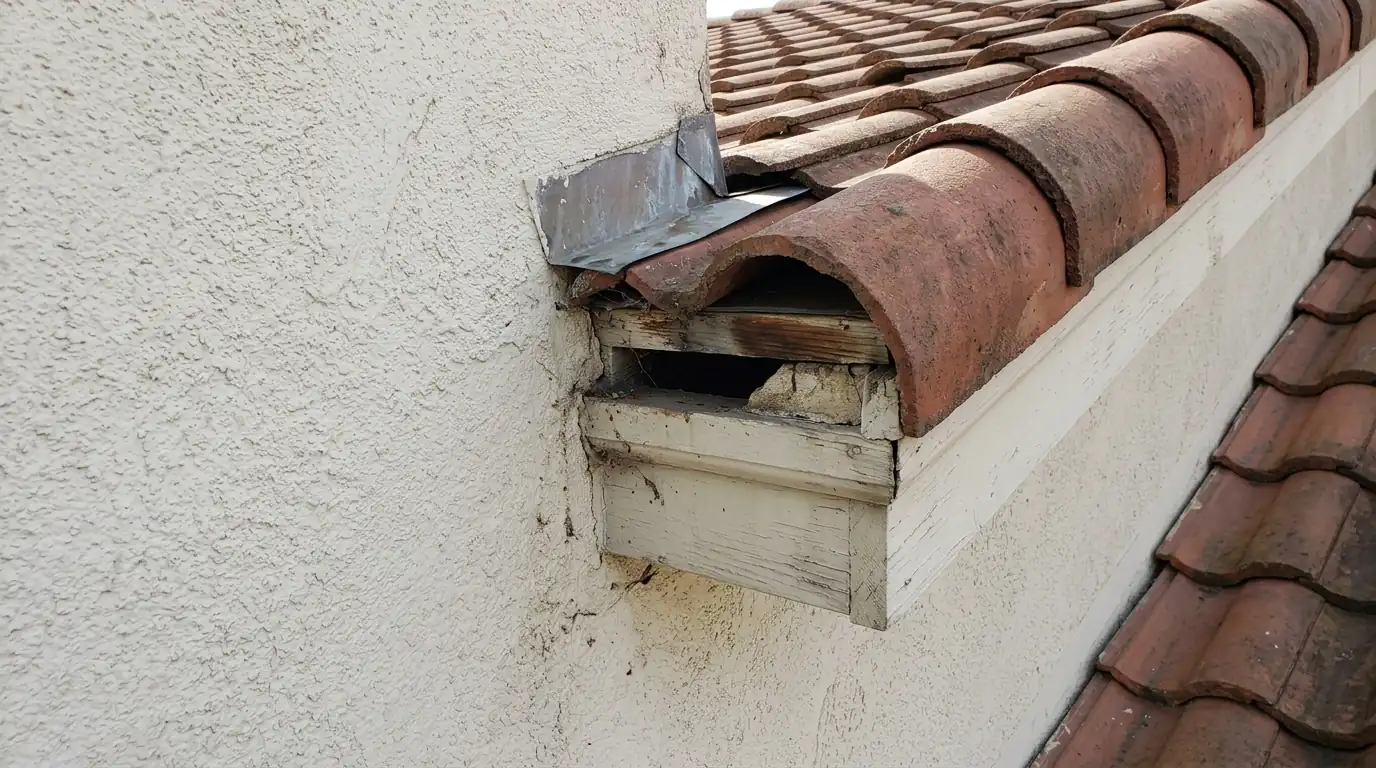
They need very little room. A gap about the size of a quarter is enough, and the usual entries are roof returns where roof planes meet walls, aged or torn attic vent screens, the gap around a cable or pipe entering the eave, and the corners of garage doors. Orange County's own vector district literature calls the roof rat a difficult animal to control and notes Norway rats are rare locally, which is why the work in this region focuses on rooflines rather than burrows.
What works
Trap, seal, verify, clean
The sequence matters. First, snap traps go on the runways the rats already use, checked and reset across follow-up visits until catches stop. While trapping runs, entries get sealed in materials rats cannot chew: sheet metal at roof returns, galvanized hardware cloth over vents, metal mesh around penetrations. The final openings are closed only once monitoring says the attic is empty, so no rat is sealed inside to die in a wall.
Then comes the part people skip: the cleanup. Droppings, urine-soaked insulation and nest material carry allergens and pathogens, and county public health tracks murine typhus, a flea-borne illness linked to roof rats, in eastern Los Angeles and Orange counties. Cleaning the attic under HEPA containment removes the health load and the scent trail that tells the next rats this attic is a proven home.
In the LA market, sealing a typical home runs about $600 to $1,200. See rat control, rodent exclusion and attic cleanup for how each step runs.
What you can do tonight
Before anyone arrives
Do not seal holes yet; a rat sealed inside will chew a new way out. Skip the hardware-store poison for the reasons above. Pick up fallen fruit, bring pet food inside, close trash lids and trim branches touching the roof if you can do it safely. Then call: rats overhead at night is exactly when the 24/7 line makes sense.
Common questions
Readers also ask
Roof rats scurry, scratch and roll small objects, mostly after dark and before dawn. Heavy thumping and walking usually means a raccoon. Droppings settle it: roof rat droppings are about half an inch long, dark and spindle-shaped.
California's AB 1788 restricts the strongest rodenticides, and a poisoned rat that dies in a wall void becomes a weeks-long odor problem you cannot reach. Trapping removes rats where they can be retrieved, and sealing ends the problem.
Roof rats squeeze through openings about the size of a quarter. Roof returns, torn vent screens, gaps around pipes and cables and the corners of garage doors are all big enough.
Often yes. Droppings and urine-soaked insulation carry allergens and pathogens, and their scent tells the next rats the attic is a proven home. Cleanup removes both the health load and the invitation.
Related treatments
If this guide matches what you are seeing
Keep reading
More from The Bug Report
Flea-Borne Typhus and Backyard Wildlife in LA
Why murine typhus clusters in eastern LA and Orange County, and how to cut the flea-wildlife link at home.
What Pest Control Costs in Los Angeles, CA
Market ranges for general service, termites, fumigation, bed bugs and rodent sealing, and what moves the number.
Why Ants Invade LA Homes After Heat and Rain
Argentine ant supercolonies, why sprays backfire, and what actually stops the next invasion.
The line is on right now
Hearing them above the ceiling right now?
Call any hour. Describe the sounds and you get a straight read on what is up there and when someone can start.
Answered 24/7, including weekends and holidays.
Call us or find us
- Phone
- (323) 329-3792
- Hours
- Open and answering 24/7, every day
- Service office
- 3123 Cahuenga Blvd W #390, Los Angeles, CA 90068
- Head office
- 7623 Atlanta Ave, Ste 284, Huntington Beach, CA 92646
- Coverage
- Los Angeles, Orange and neighboring counties