Bed bugs
Bed bugs in LA apartments and shared walls
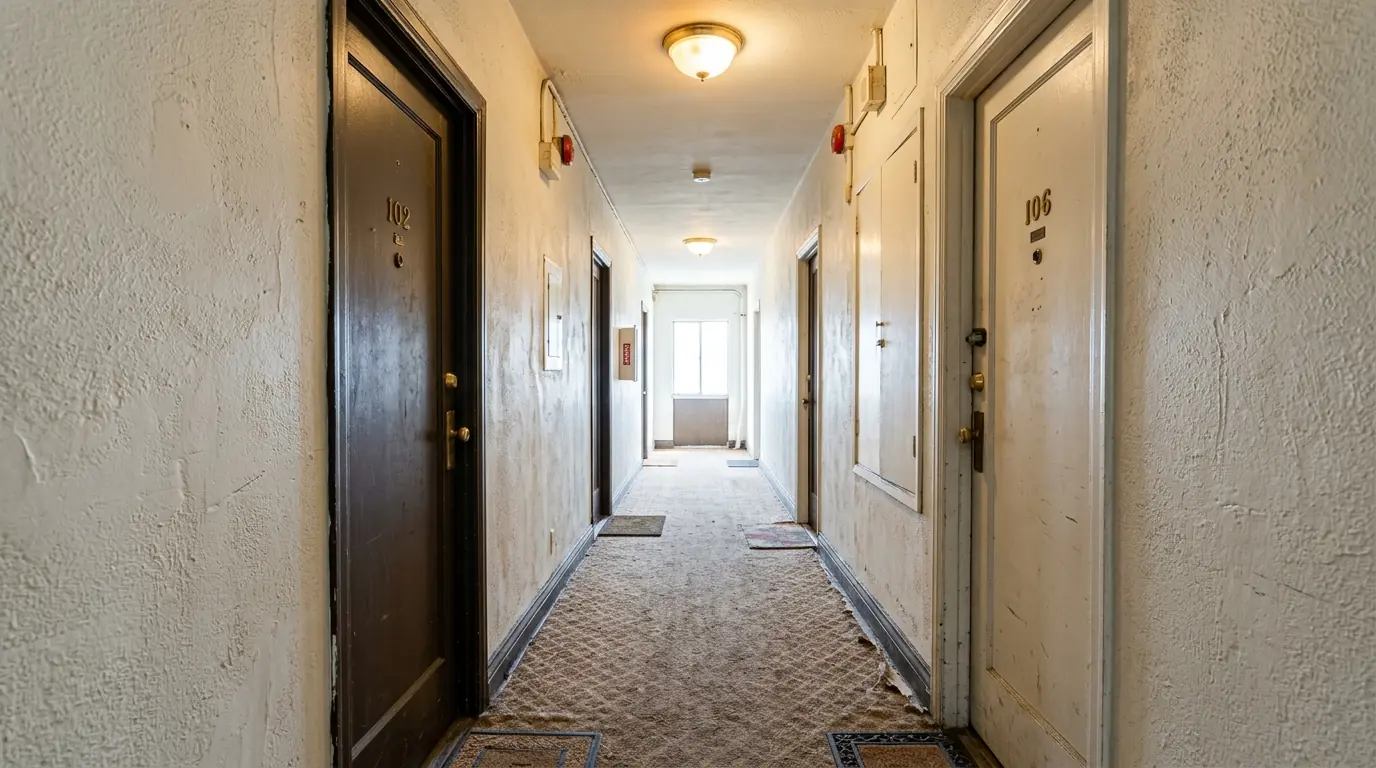
In an apartment building, a bed bug problem is never just one unit's problem for long. Here is how they travel, and how tenants and landlords stop them together.
Updated October 2026
This guide, at a glance
- Written by
- Hazel Winslow, Pest Control Guides Editor
- Updated
- October 2026
- Reading time
- About 6 minutes
- Questions
- Call, answered 24/7
By Hazel Winslow, Pest Control Guides Editor. Updated October 2026.
Bed bugs spread between Los Angeles apartments through wall voids, outlets, pipe chases and shared hallways, so the fix works at building level: early reporting, inspection of the treated unit and its neighbors, treatment by chemistry or heat, and monitoring. In the LA market, treatment runs about $800 to $2,000 per unit. Call (323) 329-3792 any hour.
How they travel
The routes between units
Wall voids and outlets
Bed bugs crawl through the hollow spaces between units and emerge from outlets and switch plates.
Pipe and wiring chases
The vertical runs that connect kitchens and bathrooms floor to floor are highways between apartments.
Baseboards and doors
Gaps along baseboards and under doors lead into shared hallways and the next unit.
Belongings
Furniture, laundry, luggage and boxes carried through shared spaces drop hitchhikers along the way.
Why LA buildings struggle
Density and turnover
Los Angeles ranks among the country's busiest bed bug markets, and the reasons are local: dense, older multi-unit buildings with connected wall voids and plumbing chases, one of the world's great travel hubs moving luggage through every neighborhood, a busy secondhand furniture economy, and a warm climate that never slows the breeding cycle. In that setting, treating one unit while the neighbors go unchecked tends to buy a few quiet months before the problem walks back in.
What tenants should do
The first week
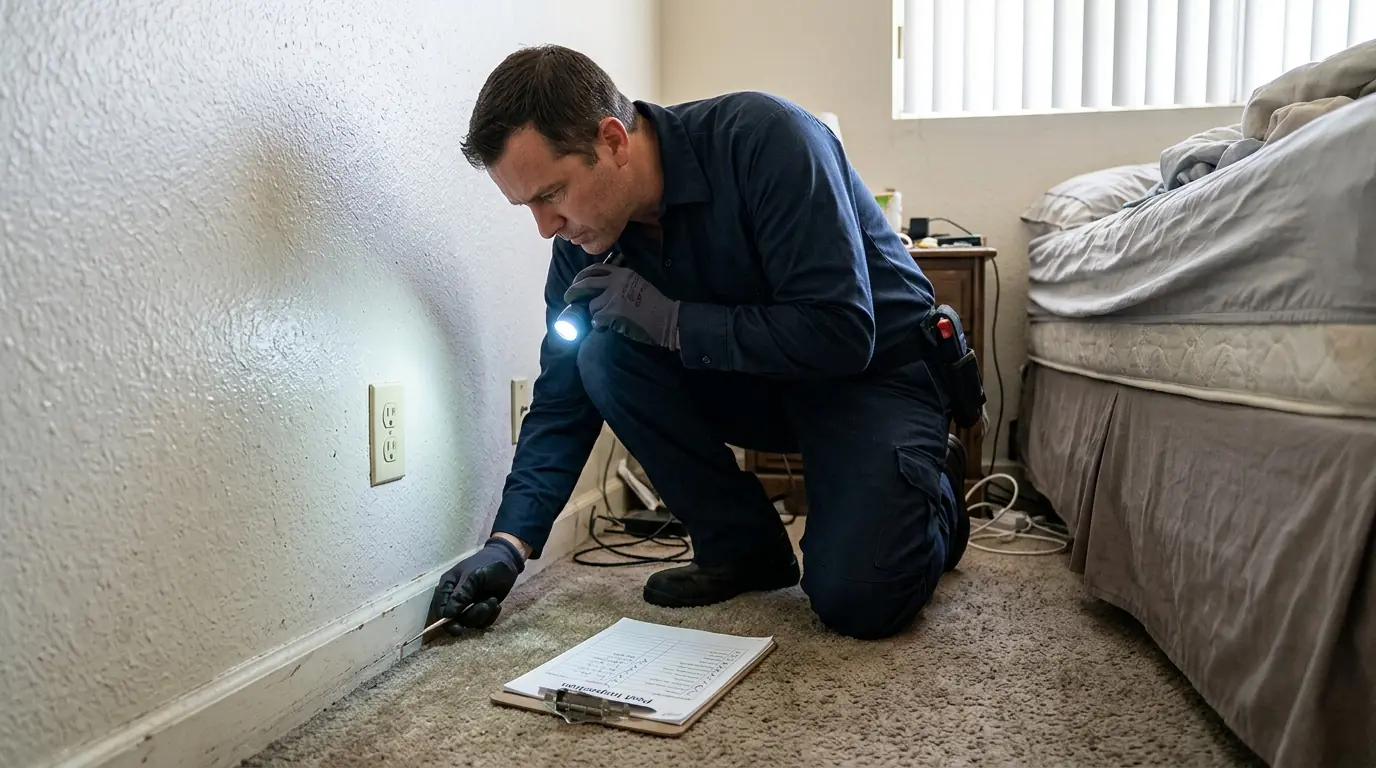
Confirm before you panic: look for rust-colored spotting on mattress seams and box springs, shed amber skins and the apple-seed-sized bugs themselves in seams and frame joints. Photograph what you find. Report it to your landlord or manager in writing right away, because early reporting is what keeps it contained. Keep sleeping in your bed, do not use foggers, and do not start hauling bagged belongings through the hallway, since that is exactly how bed bugs reach the next unit.
California law gives tenants and landlords specific roles around bed bugs, including written information for tenants, not renting out units with a known infestation, and sharing inspection findings with the tenants of inspected units. Tenants are expected to cooperate with inspection and treatment. This is general information, not legal advice; check the current statute or a tenant resource for your situation.
What landlords should do
Treat the building, not just the unit
Inspect the reported unit and the units sharing its walls, floor and ceiling. Treat confirmed units with a full chemical program or one-day heat treatment, and place interceptor monitors so recovery is measured, not assumed. Keep records per unit, because documentation is what shows where pressure is coming from and what was done about it.
For buildings with repeat problems, a building program with scheduled inspections and turnover treatments between tenants is far cheaper than chasing the same infestation around the floors. In the LA market, unit treatments run about $800 to $2,000 each, with heat at the upper end.
Common questions
Readers also ask
Yes. They move through wall voids, electrical outlets, pipe chases and gaps along baseboards, and they ride along on furniture, laundry and luggage moved through shared hallways. In multi-unit buildings, one untreated unit can restock its neighbors.
Yes. Early reporting keeps a one-unit problem from becoming a building problem, and California law sets out duties for landlords around bed bugs, including giving tenants written information and sharing inspection findings with tenants of inspected units. This is general information, not legal advice.
No. Sleeping somewhere else sends hungry bed bugs hunting through the apartment and spreads the infestation into sofas and other rooms. Stay in your bed until treatment and let it meet them where they are.
Usually the units sharing walls, above and below are the first to check, because that is how bed bugs travel. Inspecting adjacent units is how a building stops cycling the same infestation.
Related treatments
If this guide matches what you are seeing
Keep reading
More from The Bug Report
Flea-Borne Typhus and Backyard Wildlife in LA
Why murine typhus clusters in eastern LA and Orange County, and how to cut the flea-wildlife link at home.
What Pest Control Costs in Los Angeles, CA
Market ranges for general service, termites, fumigation, bed bugs and rodent sealing, and what moves the number.
Roof Rats in the Attic: A Los Angeles Field Guide
The sounds, the signs, how they get in and why trapping plus sealing beats bait under California rules.
The line is on right now
Found the spotting in your apartment?
Call any hour. The plan starts on the phone, including what to tell your landlord.
Answered 24/7, including weekends and holidays.
Call us or find us
- Phone
- (323) 329-3792
- Hours
- Open and answering 24/7, every day
- Service office
- 3123 Cahuenga Blvd W #390, Los Angeles, CA 90068
- Head office
- 7623 Atlanta Ave, Ste 284, Huntington Beach, CA 92646
- Coverage
- Los Angeles, Orange and neighboring counties